PDA

View Full Version : SW Fish Profiles


Rbishop
10-02-2008, 5:21 AM
Place your SW Fish Profiles in this thread, as individual posts. Use the Scientific name as the title for the post.

Catpicklesdog
10-02-2008, 6:36 AM
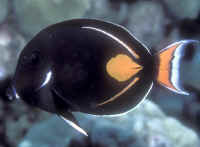
Scientific Name: Acanthurus achilles

Common Names: Achilles Surgeonfish (Achilles Tang)

Care Level: Relatively demanding

Adult Size: 9.4in

pH Range: 8.1 – 8.3

Temperature Range: (F/C) 77-79F/25-26C

Specific Gravity/Hardness Range: 1.023-1.026

Origin/Habitat: Indo- Pacific

Temperament/Behaviour: Can be very aggressive and will often terrorise other acanthurids.

Compatible Tank mates: Clowns, Blennies, Gobies, Angels.

Diet: Varied diet, mostly vegetable matter. Feed dried and frozen herbivore foods that contain marine algae and the blue green alga Spirulina. Supplement with pieces of zucchini, broccoli, leaf lettuce and sushi nori (dried seaweed).

Tank Size For Adult: 130 gal (379l)

Narrative: Generally reef safe. An attractive fish, but one of the more-demanding members of the Acanthurus clan. Needs a large aquarium, plenty of unobstructed swimming room, and prefers turbulent water flow. In a small tank, it will nervously pace back and forth along the front of the tank and gradually pine away. Keep singly unless the system is very large.

63470

Picture courtesy of WetWebMedia.com

Catpicklesdog
10-02-2008, 6:38 AM
Scientific Name: Acanthurus coeruleus

Common Names: Atlantic Blue Tang (Blue Tang)

Care Level: Easy

Adult Size: 9.1in

pH Range: 8.1 – 8.3

Temperature Range: (F/C) 77-79F/25-26C

Specific Gravity/Hardness Range: 1.023-1.026

Origin/Habitat: Tropical Atlantic

Temperament/Behaviour: Usually well-behaved in larger tanks, it can be belligerent in smaller tanks. Best kept singly, but small groups can be housed in extra-large aquariums.

Compatible Tank mates: Clowns, Blennies, Gobies, Angels.

Diet: Varied diet, mostly vegetable matter. Feed dried and frozen herbivore foods that contain marine algae and the blue green alga Spirulina. Supplement with pieces of zucchini, broccoli, leaf lettuce and sushi nori (dried seaweed).

Tank Size For Adult: 75 gal (284l)

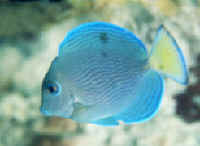
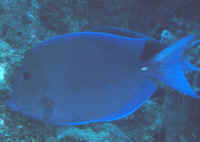
Narrative: Generally reef safe. Browses on filamentous microalgae and small fleshy macroalgae. If underfed, an occasional individual may nip at large-polyped stony corals. Juveniles are yellow overall with a blue ring around the eye and blue trim on the median fins. Adults are blue overall, although the intensity of the blue can vary depending on the individual’s mood. Some adults may also have a yellow tail.

Juvenile
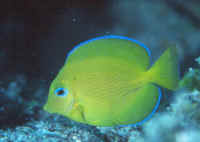
63471

Mid-size
63472

Adult
63473

Courtesy of WetWebMedia.com

Catpicklesdog
10-02-2008, 6:39 AM
Scientific Name: Ctenochaetus hawaiiensis

Common Names: Black Surgeonfish (Chevron Tang)

Care Level: Relatively Easy

Adult Size: 11.0in

pH Range: 8.1 – 8.3

Temperature Range: (F/C) 77-79F/25-26C

Specific Gravity/Hardness Range: 1.023-1.026

Origin/Habitat: Central Pacific

Temperament/Behaviour: It is not an overly aggressive fish and will usually coexist easily with most tankmates. Exceptions include members of its own species and close relatives.

Compatible Tank mates: Clowns, Blennies, Gobies, Angels.

Diet: Varied diet, mostly vegetable matter. Feed dried and frozen herbivore foods that contain marine algae and the blue green alga Spirulina. Supplement with pieces of zucchini, broccoli, leaf lettuce and sushi nori (dried seaweed).

Tank Size For Adult: 100gal (379l)

Narrative: generally reef safe. From a radiant juvenile with a blue herringbone pattern on an orange background, this surgeonfish grows into a dark olive-brown adult with thin lines on the body. Keep only one specimen per tank. It is likely to be picked on by other surgeonfishes. Spends a major part of its day grazing, so vegetanle matter must be introduced daily in an aquarium without microalgae.
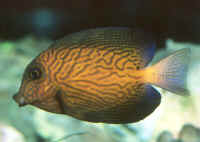
63474

courtesy of WetWebMedia.com

Catpicklesdog
10-02-2008, 6:40 AM
Scientific Name: Acanthurus pyroferus

Common Names: Chocolate Surgeonfish (Mimic Surgeonfish, Chocolate Yellow Mimic Tang)

Care Level: Relatively easy

Adult Size: 9.8 in

pH Range: 8.1 – 8.3

Temperature Range: (F/C) 77-79F/25-26C

Specific Gravity/Hardness Range: 1.023-1.026

Origin/Habitat: Indo-Pacific

Temperament/Behaviour: Moderately aggressive but keep just one specimen (of the same colour) per tank.

Compatible Tank mates: Clowns, Blennies, Gobies, Angels.

Diet: Varied diet, mostly vegetable matter. Feed dried and frozen herbivore foods that contain marine algae and the blue green alga Spirulina. Supplement with pieces of zucchini, broccoli, leaf lettuce and sushi nori (dried seaweed).

Tank Size For Adult: 75gal (284l)

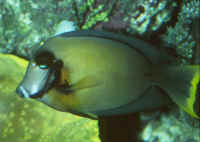
Narrative: generally reef safe. Browses on filamentous microalgae and small fleshy macroalgae. If underfed, an occasional individual may nip at large-polyped stony corals. Juveniles of this species mimic either the Lemonpeel Angel (Centropyge flavissima) or the Halfback(C. vroliki) Angelfish. The more-palatable surgeonfish thus resembles the spiny and less-appetizing angelfish. As it grows larger than the angelfish model, it begins to develop adult colouration. Juveniles tend to be durable and do well in a medium-to large-sized aquarium.

Juvenile

63475

Adult

63476

Courtesy of WetWebMedia.com

Catpicklesdog
10-02-2008, 6:41 AM
Scientific Name: Acanthurus tristis

Common Names: Indian Ocean Mimic Surgeonfish (Mimic Tang)

Care Level: Easy

Adult Size: 9.8in

pH Range: 8.1 – 8.3

Temperature Range: (F/C) 77-79F/25-26C

Specific Gravity/Hardness Range: 1.023-1.026

Origin/Habitat: Indian Ocean

Temperament/Behaviour: Not overly aggressive, except toward members of its own kind.

Compatible Tank mates: Clowns, Blennies, Gobies, Angels,

Diet: Varied diet, mostly vegetable matter. Feed dried and frozen herbivore foods that contain marine algae and the blue green alga Spirulina. Supplement with pieces of zucchini, broccoli, leaf lettuce and sushi nori (dried seaweed).

Tank Size For Adult: 75gal (284l)

Narrative: generally reef safe. Browses on filamentous microalgae and small fleshy macroalgae. If underfed, an occasional individual may nip at large-polyped stony corals. Juveniles of this species mimic Eibl's Angelfish (Centropyge eibli). The relationship, like those of the Chocolate Surgeonfish (A.pyroferus) and its Centropyge models, is Batesian. (The juvenile surgeonfish avoids predation because it resembles the less-palatable angelfish.) This is a desirable species that can be housed in an aquarium as small as 75gal (284l).
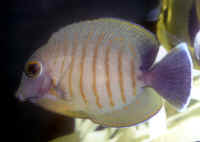

63477

Courtesy of WetWebMedia.com

Catpicklesdog
10-02-2008, 6:45 AM
Scientific Name: Zebrasoma desjardinii

Common Names: Indian Ocean Sailfin Tang (Red Sea Sailfin Tang, Desjardini Sailfin Tang, Desjardini Tang, Desjardin's Surgeonfish

Care Level: Relatively easy

Adult Size: 15.7in

pH Range: 8.1 – 8.3

Temperature Range: (F/C) 77-79F/25-26C

Specific Gravity/Hardness Range: 1.023-1.026

Origin/Habitat: Central and South Pacific

Temperament/Behaviour: It is the least feisty member of the family, although it may behave aggressively toward conspecifics.

Compatible Tank mates: Clowns, Blennies, Gobies, Angels.

Diet: Varied diet, mostly vegetable matter. Feed dried and frozen herbivore foods that contain marine algae and the blue-green alga Spirulina. Supplement with pieces of zucchini, broccoli, leaf lettuce, and sushi nori (dried seaweed).

Tank Size For Adult: 135gal (511l)

Narrative: generally reef safe and desirable. Browses on filamentous microalgae and small fleshy macroalgae. If underfed an occasional individual may nip at large-polyped stony corals. One of the best choices for controlling undesirable filamentous algae in the reef aquarium; an occasional individual will even eat nuisance bubble algae.
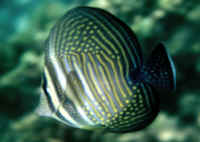

63478

Couretesy of WetWebMedia.com

Catpicklesdog
10-02-2008, 7:37 AM
Scientific Name: Acanthurus triostegus

Common Names: Convict Surgeonfish (Convict Tang)

Care Level: Easy

Adult Size: 10.2in

pH Range: 8.1 – 8.3

Temperature Range: (F/C) 77-79F/25-26C

Specific Gravity/Hardness Range: 1.023-1.026

Origin/Habitat: Indo-Pacific

Temperament/Behaviour: Peaceful

Compatible Tank mates: Clowns, Blennies, Gobies, Angels, other Acanthurids such as Naso and Zebrasoma.

Diet: Varied diet, mostly vegetable matter. Feed dried and frozen herbivore foods that contain marine algae and the blue green alga Spirulina. Supplement with pieces of zucchini, broccoli, leaf lettuce and sushi nori (dried seaweed).

Tank Size For Adult: 75gal (284l)

Narrative: generally reef safe. Browses on filamentous microalgae and small fleshy macroalgae. If underfed, an occasional individual may nip at large-polyped stony corals. This is the pacifist of the surgeonfish clan. Endowed with a small caudal spine, it is one of the least aggressive Acanthurus spp. Rarely bothers heterospecifics. Juveniles, especially, may squabble with each other. To keep more than one subadult or adult, add them simultaneously. Groups make very pleasing displays in public aquariums and very large home systems. They are more likely to be bullied by other acanthurids, and it is best to keep them with acanthurids from other genera.
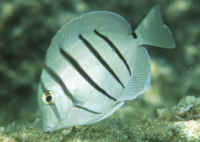

63479

Courtesy of WetWebMedia.com

Catpicklesdog
10-02-2008, 7:39 AM
Scientific Name: Ctenochaetus strigosus

Common Names: Goldring Bristletooth (Yelloweye Bristletooth, Yelloweye Surgeonfish, Kole’s Tang)

Care Level: Relatively Easy

Adult Size: 7.1in

pH Range: 8.1 – 8.3

Temperature Range: (F/C) 77-79F/25-26C

Specific Gravity/Hardness Range: 1.023-1.026

Origin/Habitat: Indo- Pacific

Temperament/Behaviour: This is not an overly aggressive fish and will usually not bother fish tankmates, with the possible exception of close relatives. Conspecifics will battle each other, and it is best to keep only one specimen per tank.

Compatible Tank mates: Clowns, Blennies, Gobies, Angels.

Diet: Varied diet, mostly vegetable matter. Feed dried and frozen herbivore foods that contain marine algae and the blue green alga Spirulina. Supplement with pieces of zucchini, broccoli, leaf lettuce and sushi nori (dried seaweed).

Tank Size For Adult: 75gal (284l)

Narrative: generally reef safe. Subtly handsome with a gold ring around the eye, adults of this species collected in the Indian Ocean bear spots, while Pacific specimens show distinct stripes. Juveniles of both forms are a bright yellow that gradually fades to a less-flamboyant brown. It is likely to be picked on by more aggressive surgeonfishes. Does best in a tank with a healthy growth of microalgae to satisfy its constant grazing.
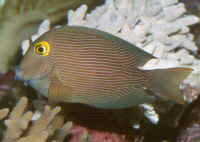

63480

Courtesy of WetWebMedia.com

Catpicklesdog
10-02-2008, 7:39 AM
Scientific Name: Acanthurus lineatus

Common Names: Lined Surgeonfish (Clown Surgeonfish, Clown Tang)

Care Level: Relatively easy

Adult Size: 15.0in

pH Range: 8.1 – 8.3

Temperature Range: (F/C) 77-79F/25-26C

Specific Gravity/Hardness Range: 1.023-1.026

Origin/Habitat: Indian Pacific

Temperament/Behaviour: Relatively Aggressive. Will attack other species with similar food habits or shape.

Compatible Tank mates: Clowns, Blennies, Gobies, Angels.

Diet: Varied diet, mostly vegetable matter. Feed dried and frozen herbivore foods that contain marine algae and the blue green alga Spirulina. Supplement with pieces of zucchini, broccoli, leaf lettuce and sushi nori (dried seaweed).

Tank Size For Adult: 180gal (681l))

Narrative: Generally reef safe. Browses on filamentous microalgae and small fleshy macroalgae. If underfed, an occasional individual may nip at large-polyped stony corals. This species is at the top of the aggressive acanthurus hierarchy. It has a larger caudal peduncle spine than almost all other surgeonfishes-and a hair-trigger willingness to use it. Avoid keeping with other members of the family, except in a huge aquarium. Very active; needs lots of unobstructed swimming room and clean, highly oxygenated seawater.
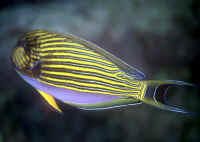

63481

Courtesy of WetWebMedia.com

Catpicklesdog
10-02-2008, 7:40 AM
Scientific Name: Acanthurus olivaceus

Common Names: Orangeshoulder Surgeonfish (Orangeband Surgeonfish, Orangeshoulder Tang)

Care Level: Relatively easy

Adult Size: 13.8in

pH Range: 8.1 – 8.3

Temperature Range: (F/C) 77-79F/25-26C

Specific Gravity/Hardness Range: 1.023-1.026

Origin/Habitat: Western Pacific

Temperament/Behaviour: Will usually ignore tankmates, including other acanthurids.

Compatible Tank mates: Clowns, Blennies, Gobies, Angels.

Diet: Varied diet, mostly vegetable matter. Feed dried and frozen herbivore foods that contain marine algae and the blue green alga Spirulina. Supplement with pieces of zucchini, broccoli, leaf lettuce and sushi nori (dried seaweed).

Tank Size For Adult: 135gal(511l)

Narrative: Rarely bothers corals. Feeds by sucking filamentous algae, diatoms and detritus of the sand surface. This is a large eye catching fish with a more-peaceful disposition than some others in the genus. Best housed in a large tank with plenty of swimming room and an open sand bottom for grazing. House only one per tank, unless keeping an adult and a juvenile in a large system. If placing with other surgeonfishes (except A. nigricans and A. triostegus, which are less aggressive) add this species first. Juveniles are yellow overall and lack the characteristic orange shoulder patch, which develops as it grows.


63482

Courtesy of WetWebMedia.com

Catpicklesdog
10-02-2008, 7:41 AM
Scientific Name: Paracanthurus hepatus

Common Names: Palette Surgeonfish (Yellow Belly Blue Tang, Hippo Tang, Regal Tang, Regal Blue Tang, Hepatus Tang, Palette Tang, Yellow Tail Blue Tang, Blue Tang)

Care Level: Intermediate

Adult Size: 12.2in

pH Range: 8.1 – 8.3

Temperature Range: (F/C) 77-79F/25-26C

Specific Gravity/Hardness Range: 1.023-1.026

Origin/Habitat: Indo- Pacific

Temperament/Behaviour: It is not an overly aggressive fish and will usually not bother fish tankmates, with the possible exception of close relatives.

Compatible Tank mates: Clowns, Blennies, Gobies, Angels.

Diet: Meaty foods to satisfy its zooplankton diet, including finely chopped fresh or frozen shrimp, mysis shrimp, and vitamin-enriched brine shrimp. It will also eat frozen preparations for herbivores.

Tank Size For Adult: 100gal (379l)

Narrative: generally reef safe. This fish can be a challenge to keep. It is prone to contracting ich and other skin parasites and is very susceptible to lateral line and fin erosion (like many other surgewonfishes). It is shy at first and should be provided with branching corals or other suitable shelter sites. Juveniles can be kept in groups, but adults will quarrel unless given sufficient space. It may be picked on by more aggressive acanthurids and other pugnacious species.


63483

Courtesy of WetWebMedia.com

Catpicklesdog
10-02-2008, 7:42 AM
Scientific Name: Acanthurus leucosternon

Common Names: Powder Blue Surgeonfish (Powder Blue Tang)

Care Level: Medium

Adult Size: 9.1in

pH Range: 8.1 – 8.3

Temperature Range: (F/C) 77-79F/25-26C

Specific Gravity/Hardness Range: 1.023-1.026

Origin/Habitat: Indian Ocean

Temperament/Behaviour: Extremely hostile toward other surgeonfishes, especially those similar in form and colour.

Compatible Tank mates: Clowns, Blennies, Gobies, Angels.

Diet: Varied diet, mostly vegetable matter. Feed dried and frozen herbivore foods that contain marine algae and the blue green alga Spirulina. Supplement with pieces of zucchini, broccoli, leaf lettuce and sushi nori (dried seaweed).

Tank Size For Adult: 100 gak (379l)

Narrative: Generally reef safe. Browses on filamentous microalgae and small fleshy macroalgae. If underfed, an occasional individual may nip at large-polyped stony corals. A beautiful fish available to the marine aquarist, but it requires special care. It is very susceptible to ich, a weakness common to this family but exaggerated in this species.This species is sexually dimorphic: males are considerably smaller than females.


63484

Courtesy of WetWebMedia.com

Catpicklesdog
10-02-2008, 7:43 AM
Scientific Name: Acanthurus japonicus

Common Names: Powder Brown Surgeonfish (Powder Brown Tang, Goldrim Surgeonfish, Japanese Surgeonfish, White-faced Surgeonfish)

Care Level: Medium

Adult Size: 8.3in

pH Range: 8.1 – 8.3

Temperature Range: (F/C) 77-79F/25-26C

Specific Gravity/Hardness Range: 1.023-1.026

Origin/Habitat: Western pacific

Temperament/Behaviour: Relatively shy when first introduced and require suitable hiding places to take refuge in if threatened.

Compatible Tank mates: Clowns, Blennies, Gobies, Angels.

Diet: Varied diet, mostly vegetable matter. Feed dried and frozen herbivore foods that contain marine algae and the blue green alga Spirulina. Supplement with pieces of zucchini, broccoli, leaf lettuce and sushi nori (dried seaweed).

Tank Size For Adult: 75 gal (284l)

Narrative: Generally reef safe. Browses on filamentous microalgae and small fleshy macroalgae. If underfed, an occasional individual may nip at large-polyped stony corals. Faring poorly during collection and shipping, this species has a reputation for being delicate and hard to acclimate. The Poweder Brow can be a finicky eater; a tank with flourishing algaer will ensure it gets enough to eat during acclimation. Keep only one per tank, and do not mix with more-aggressive acanthurids.


63485

Courtesy of WetWebMedia.com

Catpicklesdog
10-02-2008, 7:44 AM
Scientific Name: Zebrasoma xanthurum

Common Names: Purple Tang (Red Sea Purple Tang, Yellowtail Tang)

Care Level: Relatively easy

Adult Size: 9.8in

pH Range: 8.1 – 8.3

Temperature Range: (F/C) 77-79F/25-26C

Specific Gravity/Hardness Range: 1.023-1.026

Origin/Habitat: Red Sea

Temperament/Behaviour: The most belligerent of the genus, it will fight fiercly with members of its own species and other tangs.

Compatible Tank mates: Clowns, Blennies, Gobies, Angels.

Diet: Varied diet, mostly vegetable matter. Feed dried and frozen herbivore foods that contain marine algae and the blue-green alga Spirulina. Supplement with pieces of zucchini, broccoli, leaf lettuce, and sushi nori (dried seaweed).

Tank Size For Adult: 100gal (379l)

Narrative: generally reef safe and desirable. Browses on filamentous microalgae and small fleshy macroalgae. If underfed an occasional individual may nip at large-polyped stony corals and even soft corals. Once a rare and extravagantly priced fish, it is now readily available. Should be the last fish introduced into the community tank, unless housed with large, equally belligerant species. Best kept as the sole surgeonfish in a home aquarium, unless in an extra-large tank.


63486

Courtesy of WetWebMedia.com

Catpicklesdog
10-02-2008, 7:46 AM
Scientific Name: Zebrasoma veliferum

Common Names: Sailfin Tang (Sailfin Surgeonfish)

Care Level: Relatively easy

Adult Size: 15.7in

pH Range: 8.1 – 8.3

Temperature Range: (F/C) 77-79F/25-26C

Specific Gravity/Hardness Range: 1.023-1.026

Origin/Habitat: Central and South Pacific

Temperament/Behaviour: This is the least aggressive member of the genus and family, although it may behave aggressively toward members of its own kind.

Compatible Tank mates: Clowns, Blennies, Gobies, Angels.

Diet: Varied diet, mostly vegetable matter. Feed dried and frozen herbivore foods that contain marine algae and the blue-green alga Spirulina. Supplement with pieces of zucchini, broccoli, leaf lettuce, and sushi nori (dried seaweed).

Tank Size For Adult: 135gal (511l)

Narrative: generally reef safe and desirable. Browses on filamentous microalgae and small fleshy macroalgae. If underfed an occasional individual may nip at large-polyped stony corals and even soft corals. One of the largest members of the genus but a hardy and commendable species for aquarists with spacious tanks. To keep more than one, especially a male and female, an extra-large tank is essential. Must receive a diet rich in vegetable matter, or it will tend to fade and develop head and lateral line erosion.


63487

Courtesy of WetWebMedia.com

Catpicklesdog
10-02-2008, 7:47 AM
Scientific Name: Zebrasoma scopas

Common Names: Brown Tang (Scopas Tang)

Care Level: Relatively easy

Adult Size: 7.9in

pH Range: 8.1 – 8.3

Temperature Range: (F/C) 77-79F/25-26C

Specific Gravity/Hardness Range: 1.023-1.026

Origin/Habitat: Central and South Pacific

Temperament/Behaviour: One of the most aggressive Zebrasomids and very territorial, especially towards other members of this genus.

Compatible Tank mates: Clowns, Blennies, Gobies, Angels.

Diet: Varied diet, mostly vegetable matter. Feed dried and frozen herbivore foods that contain marine algae and the blue-green alga Spirulina. Supplement with pieces of zucchini, broccoli, leaf lettuce, and sushi nori (dried seaweed).

Tank Size For Adult: 75gal (284l)

Narrative: generally reef safe and desirable. Browses on filamentous microalgae and small fleshy macroalgae. If underfed an occasional individual may nip at large-polyped stony corals and even soft corals. Less gaudy than the related Z. flavescens, it’s more subdued colouration and cinstant grazing activities make it appealing to some aquarists. A proper herbivorous diet will help retain healthy colours and prevent head and lateral line erosion.


63488

Courtesy of WetWebMedia.com

Catpicklesdog
10-02-2008, 7:48 AM
Scientific Name: Acanthurus sohal

Common Names: Sohal Surgeonfish (Red Sea Sohal Tang, Soho Tang)

Care Level: Easy

Adult Size: 15.7in

pH Range: 8.1 – 8.3

Temperature Range: (F/C) 77-79F/25-26C

Specific Gravity/Hardness Range: 1.023-1.026

Origin/Habitat: Red Sea and the Arabic Gulf

Temperament/Behaviour: Highly territorial – it will dash fron one side of the tank to the other and chastise other fishes, especially other surgeonfishes and food competitors. (In the wild it will attack parrotfishes and triggerfishes).

Compatible Tank mates:

Diet: Varied diet, mostly vegetable matter. Feed dried and frozen herbivore foods that contain marine algae and the blue green alga Spirulina. Supplement with pieces of zucchini, broccoli, leaf lettuce and sushi nori (dried seaweed).

Tank Size For Adult: 200gal (757l)

Narrative: generally reef safe. One of the most notorious acanthurids in captivity. The caudal spines are very large, possibly venomous, and highly effective weapons. It is not uncommon for this terror to kill its rivals in captivity. Adults must be kept in larger aquariums that afford plenty of open swimming space.


63489

Courtesy of WetWebMedia.com

Catpicklesdog
10-02-2008, 7:49 AM
Scientific Name: Acanthurus nigricans

Common Names: Whitecheek Surgeonfish (Gold Rim Tang, Powder Gray Surgeonfish,)

Care Level: Relatively easy

Adult Size: 8.3in

pH Range: 8.1 – 8.3

Temperature Range: (F/C) 77-79F/25-26C

Specific Gravity/Hardness Range: 1.023-1.026

Origin/Habitat: Tropical-pan-pacific

Temperament/Behaviour: Once acclimated, some individuals will behave aggressively toward other acanthurids or food competitors introduced later.

Compatible Tank mates: Clowns, Blennies, Gobies, Angels.

Diet: Varied diet, mostly vegetable matter. Feed dried and frozen herbivore foods that contain marine algae and the blue green alga Spirulina. Supplement with pieces of zucchini, broccoli, leaf lettuce and sushi nori (dried seaweed).

Tank Size For Adult: 75gal (284l)

Narrative: Generally reef safe. Browses on filamentous microalgae and small fleshy macroalgae. If underfed, an occasional individual may nip at large-polyped stony corals. This species is at the top of the aggressive acanthurus hierarchy. This is a lovely speices-similar to but more durable than its close relative, A. japonicus. It can be relatively shy when first acquired and should be provided with suitable hiding places to take refuge in if threatened. Keep only one per tank, except in very large systems. Do not keep with more-aggressive acanthurids.


63490

Courtesy of WetWebMedia.com

Catpicklesdog
10-02-2008, 7:50 AM
Scientific Name: Zebrasoma flavescens

Common Names: Yellow Tang

Care Level: Relatively easy

Adult Size: 7.9in

pH Range: 8.1 – 8.3

Temperature Range: (F/C) 77-79F/25-26C

Specific Gravity/Hardness Range: 1.023-1.026

Origin/Habitat: Central and South Pacific

Temperament/Behaviour: Can be very aggressive once established, especially in a smaller tank.

Compatible Tank mates: Clowns, Blennies, Gobies, Angels.

Diet: Varied diet, mostly vegetable matter. Feed dried and frozen herbivore foods that contain marine algae and the blue-green alga Spirulina. Supplement with pieces of zucchini, broccoli, leaf lettuce, and sushi nori (dried seaweed).

Tank Size For Adult: 75gal (284l)

Narrative: generally reef safe and desirable. Browses on filamentous microalgae and small fleshy macroalgae. If underfed an occasional individual may nip at large-polyped stony corals. This species brings a splash of bright colour to any aquarium. However, it must be fed a diet appropriate for active herbivores, or its yellow colour will fade and it may develop head and lateral line erosion. It may refuse to tolerate the presence of other tangs or surgeonfishes. Keep only one, except in large tanks (135gal.{511l}), where groups should be introduced simultaneously.


63491

Courtesy of WetWebMedia.com

Catpicklesdog
10-02-2008, 11:16 AM
Scientific Name: Amphiprion clarkii

Common Names: Clark’s Anemonefish

Care Level: Relatively Easy

Adult Size: 5.5in

pH Range: 8.1 – 8.3

Temperature Range: (F/C) 77-79F/25-26C

Specific Gravity/Hardness Range: 1.023-1.026

Origin/Habitat: Indo-Pacific

Temperament/Behaviour: Adults will fight each other unless they are a mated pair.

Compatible Tank mates: Blennies, Gobies, Angels, Surgeonfish

Diet: Varied diet including meaty food items such as frozen mysis shrimp, vitamin-enriched brine shrimp, and finely chopped table shrimp, as well as frozen preparations for herbivores.

Tank Size For Adult: 55gal (208l)

Narrative: Ideal for reef aquariums. An occasional specimen may wallow in the polyps of large-polyped stony corals, which could irritate the polyps and cause them to close. May eat small, ornamental shrimps. One of the most common and durable anemonefishes in the aquarium trade, where it is often misidentified as the Sebae Clownfish (A sebae). Hardy even for beginning aquarists, feeds on almost anything, and is fairly disease-resistant. Best acquired as juveniles and kept in pairs or singly. Adopts almost all common sea anemones as a host.


63492

Courtesy of WetWebMedia.com

Catpicklesdog
10-02-2008, 11:20 AM
Scientific Name: Amphiprion melanopus

Common Names: Red and Black Anemonefish (Cinnamon Clownfish,Dusky Clownfish, Dusky Anemonefish)

Care Level: Relatively Easy

Adult Size: 4.7in

pH Range: 8.1 – 8.3

Temperature Range: (F/C) 77-79F/25-26C

Specific Gravity/Hardness Range: 1.023-1.026

Origin/Habitat: Western and South Pacific

Temperament/Behaviour: Can be belligerent, often fighting with other anemonefishes and picking on more-passive tankmates.

Compatible Tank mates: Blennies, Gobies, Angels, Surgeonfish

Diet: Varied diet including meaty food items such as frozen mysis shrimp, vitamin-enriched brine shrimp, and finely chopped table shrimp, as well as frozen preparations for herbivores.

Tank Size For Adult: 30gal (114l)

Narrative: Ideal for the reef aquarium. An occasional specimen may wallow in the polyps of a large-stony Polyped coral , which can irritate them and cause them to close. A robust species that fares well in the home aquarium, particularly captive-bread specimens. As with most anemonefishes, two juveniles will typically grow into a pair: keep adults singly or in mated pairs. Associates with the Bubbletip (Entacmaea quadricolour) and Leathery (Heteractis crispa) Sea Anemones, but does not require one. Whilst they can be a durable aquarium inhabitant, these fish do not ship well and are very susceptible to Clownfish Disease (Brooklynella hostilis).


63493

Courtesy of WetWebMedia.com

Catpicklesdog
10-02-2008, 11:22 AM
Scientific Name: Amphiprion ephippium

Common Names: Red Saddleback Anemonefish (Red Saddleback Clownfish, Fire Clownfish, Fire Anemonefish, )

Care Level: Relatively Easy

Adult Size: 4.7in

pH Range: 8.1 – 8.3

Temperature Range: (F/C) 77-79F/25-26C

Specific Gravity/Hardness Range: 1.023-1.026

Origin/Habitat: Eastern Indian Ocean

Temperament/Behaviour: An aggressive fish that will punish other anemonefishes and smaller, more-passive tankmates.

Compatible Tank mates: Blennies, Gobies, Angels, Surgeonfish

Diet: Varied diet including meaty food items such as frozen mysis shrimp, vitamin-enriched brine shrimp, and finely chopped table shrimp, as well as frozen preparations for herbivores.

Tank Size For Adult: 30ga (114l)

Narrative: Ideal for reef aquariums. If a host anemone is not present, an occasional specimen may wallow in the polyps of large-polyped stony corals, which could irritate the polyps and cause them to close. A colourful and durable aquarium inhabitant, best kept singly or in mated pairs and only with larger or more-pugnacious species. Associates with the Bubbletip (Entacmaea quadricolour) and Leathery (Heteractis crispa) Sea Anemone. Whilst they can be a durable aquarium inhabitant, these fish do not ship well and are very susceptible to Clownfish Disease (Brooklynella hostilis).


63494


Courtesy of WetWebMedia.com

Catpicklesdog
10-02-2008, 11:25 AM
Scientific Name: Abudefduf saxatillis

Common Names: Sergeant Major

Care Level: Easy

Adult Size: 5.9in

pH Range: 8.1 – 8.3

Temperature Range: (F/C) 77-79F/25-26C

Specific Gravity/Hardness Range: 1.023-1.026

Origin/Habitat: Tropical Atlantic

Temperament/Behaviour: Adults are often very aggressive toward conspecifics and other fishes and should not be kept with peaceful species.

Compatible Tank mates: Blennies, Gobies, Angels, Surgeonfish

Diet: Varied diet including meaty food items such as frozen mysis shrimp, vitamin-enriched brine shrimp, and finely chopped table shrimp, as well as frozen preparations for herbivores.

Tank Size For Adult: 55gal (208l)

Narrative: Generally reef safe, although some may eat zoanthids. Will graze on some algae. This is one species of a circumtropical genus of damselfishes commonly known as sergeants and not particularly prized by aquarists. They are so hardy as to be highly recommended for breaking in new aquariums (although there are more favourable methods available), but tend to become large, pugnacious, and less colourful as they mature.


63501

Courtesy of WetWebMedia.com

Catpicklesdog
10-02-2008, 11:28 AM
Scientific Name: Amphiprion frenatus

Common Names: Tomato Anemonefish (Tomato Clownfish, Cinnamon Clownfish, Cinnamon clown)

Care Level: Relatively Easy

Adult Size: 5.5in

pH Range: 8.1 – 8.3

Temperature Range: (F/C) 77-79F/25-26C

Specific Gravity/Hardness Range: 1.023-1.026

Origin/Habitat: Western pacific

Temperament/Behaviour: Can be belligerent when it begins to mature, striking out at peaceful tankmates, especially other anemonefishes.

Compatible Tank mates: Blennies, Gobies, Angels, Surgeonfish

Diet: Varied diet including meaty food items such as frozen mysis shrimp, vitamin-enriched brine shrimp, and finely chopped table shrimp, as well as frozen preparations for herbivores.

Tank Size For Adult: 30gal (114l)

Narrative: Ideal for reef aquariums. If a host anemone is not present, an occasional specimen may wallow in the polyps of large-polyped stony corals, which could irritate the polyps and cause them to close. Will occasionally pull feather dusters from their tubes.Bold and colourful, this species is extremely hardy, and captivbred individuals are almost invincible.Associates with the Bubbletip (Entacmaea quadricolour) and Leathery (Heteractis crispa) Sea Anemone. Whilst they can be a durable aquarium inhabitant, these fish do not ship well and are very susceptible to Clownfish Disease (Brooklynella hostilis).


63502

Courtesy of WetWebMedia.com

Dangerdoll
10-02-2008, 11:30 AM
Pickles, you are our true Saltie :)

Catpicklesdog
10-02-2008, 11:46 AM
Just a lot of time on my hands and a craving to keep my brain active! And it means I'm not on the shopping channels!!! :)

Catpicklesdog
10-07-2008, 7:27 AM
Scientific Name: Amphiprion nigripes

Common Names: Maldives Anemonefish (Blackfinned Anemonefish)

Care Level: Intermediate

Adult Size: 4.3in

pH Range: 8.1 – 8.3

Temperature Range: (F/C) 77-79F/25-26C

Specific Gravity/Hardness Range: 1.023-1.026

Origin/Habitat: Indian Ocean

Temperament/Behaviour: Can be very aggressive toward conspecifics.

Compatible Tank mates: Blennies, Gobies, Angels, Surgeonfish

Diet: Varied diet including smaller, meaty food items such as frozen mysis shrimp, vitamin-enriched brine shrimp, and finely chopped table shrimp, as well as frozen preparations for herbivores.

Tank Size For Adult: 20gal (76l)

Narrative: A relative rarity among the anemonefishes, this species typically does well in captivity if healthy specimens can be obtained. Unfortunately, it often ships poorly from its native waters, and captive-bred stock is a much safer acquisition. In nature it lives among the tentacles of the Magnificent Sea Anemone (Heteractis magnifica), typically in small groups. When keeping in groups, provide plenty of room or be sure there is “enough anemone” (you may need more than one). Rarely aggressive toward other anemonefishes, with the possible exception of similar species; may be picked on by others in this genus.

64099

Courtesy of WetWebMedia.com

Catpicklesdog
10-07-2008, 7:36 AM
Scientific Name: Amphiprion ocellaris

Common Names: ocellaris Anemonefish (False Clown Anemonefish, False Percula Clownfish)

Care Level: Easy

Adult Size: 3.5in

pH Range: 8.1 – 8.3

Temperature Range: (F/C) 77-79F/25-26C

Specific Gravity/Hardness Range: 1.023-1.026

Origin/Habitat: Eastern Indian Ocean and Western Pacific

Temperament/Behaviour: Rarely aggressive toward other Anemonefish.

Compatible Tank mates: Blennies, Gobies, Angels, Surgeonfish, Anemonefish

Diet: Varied diet including meaty food items such as frozen mysis shrimp, vitamin-enriched brine shrimp, and finely chopped table shrimp, as well as frozen preparations for herbivores.

Tank Size For Adult: 20gal (76l)

Narrative: Vivid colouration and an endearing personality make this an all-time favourite among reef fishes. Wild-caught specimens have a dubious reputation for hardiness, but captive-raised individuals almost always fare well in the aquarium. Can be kept in groups, but one individual will eventually dominate and may pick on the others, especially if space and shelter are limited. Associates with Heteractis magnifica, Stichodactyla gigantica, and S.mertesii anemones in the wild, although it does fine without a host anemone in captivity.

64103

Courtesy of WetWebMedia.com

Catpicklesdog
10-07-2008, 7:43 AM
Scientific Name: Amphiprion percula

Common Names: Percula Anemonefish (Clown Anemonefish, Percula Clownfish)

Care Level: Easy

Adult Size: 3.1in

pH Range: 8.1 – 8.3

Temperature Range: (F/C) 77-79F/25-26C

Specific Gravity/Hardness Range: 1.023-1.026

Origin/Habitat: Western Pacific

Temperament/Behaviour: tends to be more aggressive toward conspecifics than A. ocellaris.

Compatible Tank mates: Blennies, Gobies, Angels, Surgeonfish,

Diet: Varied diet including meaty food items such as frozen mysis shrimp, vitamin-enriched brine shrimp, and finely chopped table shrimp, as well as frozen preparations for herbivores.

Tank Size For Adult: 20gal (76l)

Narrative: Ideal for the reef aquarium. An occasional specimen may wallow in the polyps of a large-polyped stony coral, causing them to retract in irritation. An exquisite fish that is a joy to keep. Very similar to A. ocellaris, although the white body bars in this species are often edged in jet black. Associates with Heteractis magnifica, H. crispa, or Stichodactyla mertensii anemones. House singly or in pairs; two juveniles will usually mature into a mated pair. Adult females are larger than mates.

64104

Courtesy of WetWebMedia.com

Catpicklesdog
10-07-2008, 9:02 AM
Scientific Name: Amphiprion perideraion

Common Names: Pink Skunk Anemonefish (Pink Skunk Clownfish, Pink Anemonefish)

Care Level: Easy

Adult Size: 3.9in

pH Range: 8.1 – 8.3

Temperature Range: (F/C) 77-79F/25-26C

Specific Gravity/Hardness Range: 1.023-1.026

Origin/Habitat: Indo-west Pacific

Temperament/Behaviour: Rarely aggressive toward other anemonefishes, with the possible exception of closely related species.

Compatible Tank mates: Blennies, Gobies, Angels, Surgeonfish,

Diet: Varied diet including meaty food items such as frozen mysis shrimp, vitamin-enriched brine shrimp, and finely chopped table shrimp, as well as frozen preparations for herbivores.

Tank Size For Adult: 20gal (76l)

Narrative: Ideal for the reef aquarium. A pretty and much-liked species that is more easily intimidated by boisterous tankmates than most of the anemonefishes. In groups , these fish can be aggressive amongst themselves and need plenty of room and hiding places. Lives in several anemone species in the wild (including Heteractis crispa, Macrodactyla doreensis, and Stichodactyla gigantea), but seems to prefer the Magnificent Sea Anemone (Heteractis magnifica). In captivity, will thrive and spawn without a host.

64118

Courtesy of WetWebMedia.com

Catpicklesdog
10-07-2008, 9:11 AM
Scientific Name: Amphiprion polymnus

Common Names: Saddleback Anemonefish (Saddleback Clownfish)

Care Level: Intermediate

Adult Size: 5.1in

pH Range: 8.1 – 8.3

Temperature Range: (F/C) 77-79F/25-26C

Specific Gravity/Hardness Range: 1.023-1.026

Origin/Habitat: Eastern Indian Ocean and Western Pacific

Temperament/Behaviour: Usually inoffensive and can be kept in small groups.

Compatible Tank mates: Blennies, Gobies, Angels, Surgeonfish,

Diet: Varied diet including meaty food items such as frozen mysis shrimp, vitamin-enriched brine shrimp, and finely chopped table shrimp, as well as frozen preparations for herbivores.

Tank Size For Adult: 30gal (114l)

Narrative: Ideal for the reef aquarium. Somewhat rare in the aquarium trade, this species varies greatly in its ability to acclimate when imported from the wild. Some settle quickly and eat almost anything; others sulk in the corners and refuse food. The latter usually become infected with the common Anemonefish parasites and quickly perish. Captive-bred specimens, when available, are a much more reliable choice. Most likely to adopt Haddon’s Sea Anemone (Stichodactyla haddoni) in the aquarium; may do better if an anemone is present. On the reef, a pair and juveniles of varying sizes are typically found in a single anemone.

64119

Courtesy of WetWebMedia.com

Catpicklesdog
10-07-2008, 9:20 AM
Scientific Name: Amphiprion sandaracinos

Common Names: Orange Skunk Anemonefish

Care Level: Easy

Adult Size: 5.5in

pH Range: 8.1 – 8.3

Temperature Range: (F/C) 77-79F/25-26C

Specific Gravity/Hardness Range: 1.023-1.026

Origin/Habitat: Western Pacific

Temperament/Behaviour: Larger females can be very aggressive toward conspecifics or closely related species.

Compatible Tank mates: Blennies, Gobies, Angels, Surgeonfish,

Diet: Varied diet including meaty food items such as frozen mysis shrimp, vitamin-enriched brine shrimp, and finely chopped table shrimp, as well as frozen preparations for herbivores.

Tank Size For Adult: 30gal (114l)

Narrative: Ideal for the reef aquarium. A beautiful Anemonefish that does well in smaller aquariums. Wild-caught specimens not uncommonly suffer from clownfish disease (Brookynella hostilis), most easily recognised by copious slime that sloughs off the fish’s body. Choose captive-bred specimens when possible. Best kept in pairs with a host sea anemone. Usually inhabits Merten’s Carpet Anemone (Stichodactyla mertensii) and the Leathery Sea Anemone (Heteractis crispa) in the wild, but will acclimate to others in captivity. May behave aggressively toward similar species (e.g. A. perideraion).

64120

Courtesy of WetWebMedia.com

Catpicklesdog
10-07-2008, 9:28 AM
Scientific Name: Chromis atripectoralis

Common Names: Blackaxil Chromis (Green Chromis)

Care Level: Easy

Adult Size: 4.3in

pH Range: 8.1 – 8.3

Temperature Range: (F/C) 77-79F/25-26C

Specific Gravity/Hardness Range: 1.023-1.026

Origin/Habitat: Indo-Pacific

Temperament/Behaviour: A dominant individual may occasionally bicker with subordinate members, but this is not usually a problem if a groups is large enough..

Compatible Tank mates: Blennies, Gobies, Angels, Surgeonfish,

Diet: Varied diet including meaty food items such as frozen mysis shrimp, vitamin-enriched brine shrimp, as well as herbivore flakes and frozen preparations.

Tank Size For Adult: 55gal (208l)

Narrative: Ideal for the reef aquarium. The chromises are bright, active fishes that can, and should be kept in groups in the aquarium. A shoal of six or more fish makes an interesting display. Lone individuals tend to be easily harassed by tankmates and often fail to thrive. Chromises tend to spend their time in the upper part of the water column, often inciting reclusive species to spend more time in the open. This species is very similar to, and often sold as, the Blue Green Chromis (Chromis viridis), but the Blackaxil has black at the inner bases of its pectoral fins. Offer enriched foods to prevent colour loss.

64121

Courtesy of WetWebMedia.com

Catpicklesdog
10-07-2008, 9:46 AM
Scientific Name: Chrysiptera cyanea

Common Names: Blue Damselfish (Blue devil)

Care Level: Easy

Adult Size: 3.1in

pH Range: 8.1 – 8.3

Temperature Range: (F/C) 77-79F/25-26C

Specific Gravity/Hardness Range: 1.023-1.026

Origin/Habitat: Western Pacific

Temperament/Behaviour: May pick on more-peaceful tankmates, such as cardinalfishes, gobies, firefishes, blennies etc.

Compatible Tank mates: Angels, Surgeonfish, Triggers, eels, Butterflyfishes.

Diet: Varied diet including meaty food items such as frozen mysis shrimp, vitamin-enriched brine shrimp, as well as herbivore flakes and frozen preparations.

Tank Size For Adult: 30gal (114l)

Narrative: Ideal for the reef aquarium will graze on some algae. This little electric-blue fish has probably attracted more hobbyists to marine aquariums than any other fish. It is colourful, inexpensive, and hardy, but can also become aggressive as it matures, especially larger males. A male and female can be kept in a smaller tank, while a group can be kept in a medium-sized aquarium aquascaped with plenty of nooks and crannies for hiding. Best to keep only one male per tank, unless housed in a large aquarium. Will readily spawn in captivity. Males from some Indonesian waters have a blue tail with a dark border; in other geographic areas the tail is bright orange. The female’s tail is clear.

64126

Courtesy of WetWebMedia.com

Catpicklesdog
10-07-2008, 9:53 AM
Scientific Name: Chrysiptera parasema

Common Names: Yellowtail Blue Damselfish (Yellowtail Demoiselle)

Care Level: Easy

Adult Size: 2.8in

pH Range: 8.1 – 8.3

Temperature Range: (F/C) 77-79F/25-26C

Specific Gravity/Hardness Range: 1.023-1.026

Origin/Habitat: Western Pacific

Temperament/Behaviour: Should not be kept with highly aggressive species, including more=pugnacious damselfishes.

Compatible Tank mates: Blennies, Gobies, Angels, Surgeonfish, Butterflyfishes.

Diet: Varied diet including meaty food items such as frozen mysis shrimp, vitamin-enriched brine shrimp, as well as herbivore flakes and frozen preparations.

Tank Size For Adult: 20 gal (76l)

Narrative: Ideal for the reef aquarium. This little beauty is one of the less-aggressive members of this genus and a classic choice for beginning aquarists. Can be kept in small groups in a medium-sized tank with plenty of hiding places. A male-female pair can be kept in a smaller tank and will often spawn. This damsel feeds on zooplankton and algae. Will ignore invertebrate tankmates and will pick at filamentous algal growths.


64127

Courtesy of WetWebMedia.com

Catpicklesdog
10-07-2008, 10:37 AM
Scientific Name: Chrysiptera talboti

Common Names: Talbot’s Demoiselle

Care Level: Easy

Adult Size: 2.4in

pH Range: 8.1 – 8.3

Temperature Range: (F/C) 77-79F/25-26C

Specific Gravity/Hardness Range: 1.023-1.026

Origin/Habitat: Indo-Pacific

Temperament/Behaviour: Can be kept with less-aggressive fishes in a medium to large tank.

Compatible Tank mates: Blennies, Gobies, Angels, Surgeonfish, Butterflyfishes.

Diet: Varied diet including meaty food items such as frozen mysis shrimp, vitamin-enriched brine shrimp, as well as herbivore flakes and frozen preparations.

Tank Size For Adult: 20 gal (76l)

Narrative: Ideal for the reef aquarium. This is an attractive little fish, tinged with canary yellow colours, and one of the more mild-mannered damsels. Keep one specimen per tank, unless the aquarium is large, or a pair is obtained or created by raising juveniles together. Provide it with plenty of shelter sites, especially if housed with more-aggressive fishes.

64128

Courtesy of WetWebMedia.com

Catpicklesdog
10-07-2008, 10:45 AM
Scientific Name: Chrysiptera taupou

Common Names: South Seas Devil Damselfish (Fiji Blue Devil)

Care Level: Easy

Adult Size: 2.4in

pH Range: 8.1 – 8.3

Temperature Range: (F/C) 77-79F/25-26C

Specific Gravity/Hardness Range: 1.023-1.026

Origin/Habitat: South Pacific

Temperament/Behaviour: Keep only one per tank, unless a known pair is obtained, and do not place with docile species.

Compatible Tank mates: Larger Dottybacks, angelfishes, triggerfishes, puffers.

Diet: Varied diet including meaty food items such as frozen mysis shrimp, vitamin-enriched brine shrimp, as well as herbivore flakes and frozen preparations.

Tank Size For Adult: 20 gal (76l)

Narrative: Ideal for the reef aquarium. The jewel-like colours of this species are matched only by its intense aggressiveness. It will pick on other damselfishes unless they match it in belligerence. The best setting for this fish is in a moderately aggressive community tank. Mature males have a blue spinous dorsal fin; in mature females, it is yellow.

64129

Courtesy of WetWebMedia.com

Catpicklesdog
10-07-2008, 10:59 AM
Scientific Name: Dascyllus aruanus

Common Names: Humbug Dascyllus (Humbug Damsel, Striped Damslefish)

Care Level: Easy

Adult Size: 3.1

pH Range: 8.1 – 8.3

Temperature Range: (F/C) 77-79F/25-26C

Specific Gravity/Hardness Range: 1.023-1.026

Origin/Habitat: Indo-Pacific

Temperament/Behaviour: As adults they will fight, unless they are a male-female pair. Will also fight other damselfishes and will pick on docile tankmates.

Compatible Tank mates: Larger Dottybacks, angelfishes, triggerfishes, puffers, Eels.

Diet: Varied diet including meaty food items such as frozen mysis shrimp, vitamin-enriched brine shrimp, as well as herbivore flakes and frozen preparations.

Tank Size For Adult: 20 gal (76l)

Narrative: Will not harm sessile invertebrate tankmates and will eat some algae. Larger specimens may eat small crustaceans just after molting. Little humbugs are cute as juveniles and hardy enough to be used in starting new aquariums (although more favourable methods are available), but they grow into real terrors in the community tank. Young specimens can be kept in groups. Best kept in a moderately aggressive community tank. Provide suitable hiding places, especially for juveniles.


64130

Courtesy of WetWebMedia.com

Catpicklesdog
10-07-2008, 11:07 AM
Scientific Name: Dascyllus trimaculatus

Common Names: Threespot Dascyllus (Domino Damselfish)

Care Level: Easy

Adult Size: 5.5in

pH Range: 8.1 – 8.3

Temperature Range: (F/C) 77-79F/25-26C

Specific Gravity/Hardness Range: 1.023-1.026

Origin/Habitat: Indo-Pacific

Temperament/Behaviour: Adults can be kept in male-female pairs or singly. House in a moderately aggressive community tank.

Compatible Tank mates: Larger Dottybacks, angelfishes, triggerfishes, puffers.

Diet: Varied diet including meaty food items such as frozen mysis shrimp, vitamin-enriched brine shrimp, as well as herbivore flakes and frozen preparations.

Tank Size For Adult: 55gal (208l)

Narrative: Ideal for the reef aquarium; will not harm any invertebrate tankmates and will eat some algae. A popular fish for conditioning new aquariums; it is able to tolerate water conditions that will kill other species, (although other more favourable cycling procedures are preferred). Juveniles are striking in colour, and a group makes an interesting display. Unfortunately they grow to become a threat to each other and to tankmates that are less aggressive or similar in size. In the wild, juveniles will shelter in sea anemones.

64132

Courtesy of WetWebMedia.com

Catpicklesdog
10-07-2008, 11:17 AM
Scientific Name: Microspathodon chrysurus

Common Names: yellowtail Damselfish (Jewel Damselfish)

Care Level: Easy

Adult Size: 8.3

pH Range: 8.1 – 8.3

Temperature Range: (F/C) 77-79F/25-26C

Specific Gravity/Hardness Range: 1.023-1.026

Origin/Habitat: Tropical Western Atlantic

Temperament/Behaviour: Juveniles can be combative with smaller, more-peaceful tankmates, but adults are even more aggressive and can inflict damage on a wider range of tankmates.

Compatible Tank mates: Larger Dottybacks, angelfishes, triggerfishes, puffers.

Diet: Varied diet including meaty food items such as frozen mysis shrimp, vitamin-enriched brine shrimp, as well as herbivore flakes and frozen preparations.

Tank Size For Adult: 55gal (208l)

Narrative: Ideal for the reef aquarium; will not harm any invertebrate tankmates and will eat some algae. Larger specimens may eat smaller crustaceans. Bejewelled with sparkling blue dots in a rich black body, juveniles of this common Western Atlantic species are difficult to resist. Typical of others in this genus, they become less spectacular as they grow, in this case changing to brown, with smaller blue spots and a yellow tail. Only one specimen should be kept per tank, whether juvenile or adult. House with larger, aggressive fishes.

64140

Courtesy of WetWebMedia.com

Catpicklesdog
10-07-2008, 11:27 AM
Scientific Name: Neopomacentrus azysron

Common Names: Yellowtail Demoiselle

Care Level: Easy

Adult Size: 3.1

pH Range: 8.1 – 8.3

Temperature Range: (F/C) 77-79F/25-26C

Specific Gravity/Hardness Range: 1.023-1.026

Origin/Habitat: Indo-west Pacific

Temperament/Behaviour: It is less likely to harass its tankmates, although diminutive, peaceful species may be in some danger of being picked on in smaller tanks.

Compatible Tank mates: Blennies, Gobies, Angels, Butterflyfishes, Surgeonfishes.

Diet: Varied diet including meaty food items such as frozen mysis shrimp, vitamin-enriched brine shrimp, as well as herbivore flakes and frozen preparations.

Tank Size For Adult: 20gal (76l)

Narrative: Ideal for the reef aquarium; will not harm any invertebrate tankmates and will eat some algae. Sleeker and much less blue than the similarly named Yellowtail Damselfish (Chrysiptera parasema), this is a durable damsel that is not as aggressive as many of its relatives. More than one adult can be kept in a medium-sized aquarium, although all specimens should be introduced simultaneously.

64141

Courtesy of Fishbase.org

Catpicklesdog
10-07-2008, 11:35 AM
Scientific Name: Plectroglyphidodon lacrymatus

Common Names: Jewel Damselfish

Care Level: Easy

Adult Size: 3.9

pH Range: 8.1 – 8.3

Temperature Range: (F/C) 77-79F/25-26C

Specific Gravity/Hardness Range: 1.023-1.026

Origin/Habitat: Indo- Pacific

Temperament/Behaviour: Do not attempt to keep with peaceful tankmates- or even with other damselfishes, unless in a larger tank with equally belligerent species.

Compatible Tank mates: Triggers, larger Dottybacks, angelfishes, puffers, Eels.

Diet: Varied diet including meaty food items such as frozen mysis shrimp, vitamin-enriched brine shrimp, as well as herbivore flakes and frozen preparations.

Tank Size For Adult: 55gal (208l)

Narrative: Harmless to corals and most sessile invertebrates. Larger specimens may eat smaller crustaceans. Typical of many rather plain damselfishes that appear in the aquarium trade from time to time. Juveniles will usually survive even difficult aquarium conditions, and they can be counted upon to be extremely durable. Unfortunately they also become very aggressive as they gain size. Only one should be kept per tank, except in male-female pairs. Provide with plenty of hiding places.

64144

Courtesy of WetWebMedia.com

Catpicklesdog
10-09-2008, 9:25 AM
Scientific Name: Dascyllus melanurus

Common Names: Blacktail Dascyllus (Striped Damselfish)

Care Level: Easy

Adult Size: 3.1

pH Range: 8.1 – 8.3

Temperature Range: (F/C) 77-79F/25-26C

Specific Gravity/Hardness Range: 1.023-1.026

Origin/Habitat: Western Pacific

Temperament/Behaviour: Best housed in a moderately aggressive community.

Compatible Tank mates: Larger Dottybacks, angelfishes, triggerfishes, puffers, Eels.

Diet: Varied diet including meaty food items such as frozen mysis shrimp, vitamin-enriched brine shrimp, as well as herbivore flakes and frozen preparations.

Tank Size For Adult: 20 gal (76l)

Narrative: Will not harm sessile invertebrate tankmates and will eat some algae. Larger specimens may eat small crustaceans just after molting. A group of juveniles of this boldly marked species makes an interesting display, but unfortunately they mature into hellions, especially in smaller aquariums with placid tankmates. Very similar to D. aruanus, but with an added black patch on the tail. Adults will quarrel among themselves and also pester tankmates, unless they are larger and/or equally feisty.

64343

Courtesy of WetWebMedia.com

Catpicklesdog
10-09-2008, 9:33 AM
Scientific Name: Dascyllus reticulatus

Common Names: Reticulate Dascyllus

Care Level: Easy

Adult Size: 3.1

pH Range: 8.1 – 8.3

Temperature Range: (F/C) 77-79F/25-26C

Specific Gravity/Hardness Range: 1.023-1.026

Origin/Habitat: Indo-Pacific

Temperament/Behaviour: Young specimens may be kept in groups, but adults will fight, unless they are a male-female pair. Will also battle with other damselfishes and pick on docile tankmates.

Compatible Tank mates: Larger Dottybacks, angelfishes, triggerfishes, puffers, Eels.

Diet: Varied diet including meaty food items such as frozen mysis shrimp, vitamin-enriched brine shrimp, as well as herbivore flakes and frozen preparations.

Tank Size For Adult: 20 gal (76l)

Narrative: Ideal for reef aquariums without small, timid fishes; will eat filamentous algae and won’t harm invertebrates. Not beautiful, but an extremely hardy reef fish. Like other members of the genus, it changes from a likeable, sociable juvenile into a belligerent adult that can disrupt an entire community tank.

64344

Courtesy of WetWebMedia.com

Catpicklesdog
10-09-2008, 9:45 AM
Scientific Name: Pomacentrus alleni

Common Names: Allen’s Damselfish

Care Level: Easy

Adult Size: 2.4in

pH Range: 8.1 – 8.3

Temperature Range: (F/C) 77-79F/25-26C

Specific Gravity/Hardness Range: 1.023-1.026

Origin/Habitat: Indian Ocean

Temperament/Behaviour: Can be kept in groups and housed with relatively docile tankmates.

Compatible Tank mates: Blennies, Gobies, Surgeonfishes

Diet: Varied diet including meaty food items such as frozen mysis shrimp, vitamin-enriched brine shrimp, as well as herbivore flakes and frozen preparations.

Tank Size For Adult: 55gal

Narrative: Ideal for reef aquariums. Regarded by some as the most beautiful of the damselfishes, this species is named in honour of Dr. Geral R. Allen, the ichthyologist recognized as the world authority on the Family Pomacentridae. It is also on of the more-peaceful species and a wonderful aquarium fish. It will often perish in a tank with more-aggressive fishes. Provide with plenty of shelter sites. Other species in this genus have similar personalities and care requirements.

64345

Courtesy of WetWebMedia.com

Catpicklesdog
10-09-2008, 9:59 AM
Scientific Name: Premnas biaculeatus

Common Names: Maroon Anemonefish (Maroon Clownfish, Spinecheek Clownfish)

Care Level: Easy

Adult Size: 6.3in

pH Range: 8.1 – 8.3

Temperature Range: (F/C) 77-79F/25-26C

Specific Gravity/Hardness Range: 1.023-1.026

Origin/Habitat: Eastern Indian Ocean to Western Pacific

Temperament/Behaviour: One of the largest and most aggressive of the anemonefishes, it should never be housed with other anemonefishes or small, peaceful fish species.

Compatible Tank mates: Blennies, Gobies, Surgeonfishes, Angels

Diet: Varied diet including meaty food items such as frozen mysis shrimp, vitamin-enriched brine shrimp, as well as herbivore flakes and frozen preparations.

Tank Size For Adult: 55gal (208l)

Narrative: |This boldly beautiful Anemonefish is alone in its genus, with cheek spines unlike those of it Amphiprion spp. relatives. Keep singly or mated pairs. Highly sexually dimorphic, with females sometimes over three times the length of males. Readily acclimates and accepts a wide array of aquarium fare. Its cheek spines are easily entangles in aquarium nets; use a specimen container if capture is necessary. In nature, a male-female pair will inhabit one Bubbletip Sea Anemone (Entacmaea quadricolour).

64346
64347

Courtesy of WetWeb Media.com

Catpicklesdog
10-09-2008, 10:26 AM
Scientific Name: Anampses caeruleopunctatus

Common Names: Bluespotted Wrasse (Tamarin Wrasse)

Care Level: Difficult

Adult Size: 16.5in

pH Range: 8.1 – 8.3

Temperature Range: (F/C) 77-79F/25-26C

Specific Gravity/Hardness Range: 1.023-1.026

Origin/Habitat: Indo-Pacific

Temperament/Behaviour: Peaceful

Compatible Tank mates: Blennies, Gobies, Surgeonfishes, Angels

Diet: Difficult to feed. Offer live foods such as black worms and adult brine shrimp to induce a feeding response. Live rock, or a tank with a healthy amphipod population, can help maintain weight while it adjusts to frozen aquarium foods. In time, some specimens will accept frozen Mysis shrimp, brine shrimp, or finely chopped fresh or frozen table shrimp.

Tank Size For Adult: 180gal (681l)

Narrative: Anampses spp. have a poor survival record in captivity. They tend to ship poorly and usually refuse food when first acquired. Keep with nonaggressive fishes and provide at least 1in of fine sand. Several females can be kept in the same tank, or one or more females can be housed with a single male. Males are rarely available, but a female may transform into a male. Will jump from uncovered tanks.

64348

Courtesy of WetWebMedia.com

Catpicklesdog
10-09-2008, 10:40 AM
Scientific Name: Bodianus anthioides

Common Names: Lyretail Hogfish

Care Level: Relatively Easy

Adult Size: 8.2in

pH Range: 8.1 – 8.3

Temperature Range: (F/C) 77-79F/25-26C

Specific Gravity/Hardness Range: 1.023-1.026

Origin/Habitat: Indo-Pacific

Temperament/Behaviour: This species is one of the least aggressive hogfishes, but is best kept with moderately aggressive tankmates.

Compatible Tank mates: Blennies, Gobies, Surgeonfishes, Angels

Diet: Meaty foods, including fresh or frozen seafoods, frozen or live brine shrimp, mysis shrimp, live black worms, flake food, live grass shrimp.

Tank Size For Adult: 75 gal (284l)

Narrative: Not recommended for the reef aquarium. Juveniles can be kept in the reef tank, but as they grow they will become a threat to crustaceans, worms, snails and small clams. The hogfishes are commendable, generally robust wrasses that readily adapt to aquarium life. Adults are quite active and need plenty of swimming space. Small juveniles may not survive in a competitive community tank; to increase their chances of survival, house with docile fish species and provide ample hiding places. Juveniles will often clean other fishes in captivity. Larger Lyretail Hogfish often blow jets of water at the sand surface from their mouths to uncover buried prey.

64362

Courtesy of WetWebMedia.com

Catpicklesdog
10-09-2008, 11:08 AM
Scientific Name: Bodianus bimaculatus

Common Names: Twinspot Hogfish (Twospot Slender Hogfish, Yellow Hogfish)

Care Level: Relatively Easy

Adult Size: 3.9in

pH Range: 8.1 – 8.3

Temperature Range: (F/C) 77-79F/25-26C

Specific Gravity/Hardness Range: 1.023-1.026

Origin/Habitat: Indo-West-Pacific

Temperament/Behaviour: Peaceful as a juvenile but as it matures it will become more boisterous.

Compatible Tank mates: Blennies, Gobies, Surgeonfishes, Angels

Diet: Meaty foods, including fresh or frozen seafoods, frozen or live brine shrimp, mysis shrimp, live black worms, flake food, live grass shrimp.

Tank Size For Adult: 20gal (76l)

Narrative: One of the best Hogfishes for the reef aquarium. Although it can be acclimated to the brighter conditions of the shallow reef tank, it does best in deep-water reef tanks. This is a great aquarium fish that readily adjusts to life in captivity. Its diminutive size makes it an ideal hogfish for the aquarist with a smaller tank. Juveniles do best if housed with nonaggressive tankmates, but as this species grows, it will become more boisterous and may bully smaller, more docile fish species, such as seahorses, pipefishes, flasher wrasses, leopard wrasses, and dartfishes. House singly unless the tank is large (100gal. [379l] or larger), in which case, introduce all individuals at the same time.


64365

Courtesy of WetWebMedia.com

Catpicklesdog
10-09-2008, 11:15 AM
Scientific Name: Bodianus diana

Common Names: Diana’s Hogfish (Spotted Hogfish)

Care Level: Relatively Easy

Adult Size: 9.8 in

pH Range: 8.1 – 8.3

Temperature Range: (F/C) 77-79F/25-26C

Specific Gravity/Hardness Range: 1.023-1.026

Origin/Habitat: Indo-West-Pacific

Temperament/Behaviour: Aggressive

Compatible Tank mates: Blennies, Gobies, Surgeonfishes, Angels

Diet: Meaty foods, including fresh or frozen seafoods, frozen or live brine shrimp, mysis shrimp, live black worms, flake food, live grass shrimp.

Tank Size For Adult: 55gal (208l)

Narrative: Not recommended for Reef Aquariums. Will not bother corals but will eat a wide range of motile invertebrates. A hardy and greedy feeder, this is a solitary fish in nature and is one of the least sociable members of the genus, often behaving aggressively toward newly introduced fishes or more-docile tankmates. Adults may even nip persistently at juvenile morays. Will eat any smaller fish that can be ingested whole. Juveniles can be housed in a shallow- or deep-water reef aquarium, but they will begin to prey upon small bivalves, clams, worms and crustaceans as they grow.

64366

Courtesy of WetWebMedia.com

Catpicklesdog
10-09-2008, 11:23 AM
Scientific Name: Bodianus rufus

Common Names: Spanish hogfish

Care Level: Relatively Easy

Adult Size: 15.7in

pH Range: 8.1 – 8.3

Temperature Range: (F/C) 77-79F/25-26C

Specific Gravity/Hardness Range: 1.023-1.026

Origin/Habitat: Tropical Western Atlantic

Temperament/Behaviour: Moderately aggressive

Compatible Tank mates: Blennies, Gobies, Surgeonfishes, Angels

Diet: Meaty foods, including fresh or frozen seafoods, frozen or live brine shrimp, mysis shrimp, live black worms, flake food, live grass shrimp.

Tank Size For Adult: 180gal (681l)

Narrative: Not recommended for the reef aquarium. Juveniles can be kept in the reef tank, but as they mature they will become a threat to crustaceans, worms, snails and clams. An attractive and rugged fish, this Caribbean Hogfish can be shy and retiring when first introduced to the aquarium, but within a day or two it will become bold and boisterous. Adolescent and adult individuals should not be kept with docile fish species, as they are likely to bully them. This is an active species that fits well with moderately aggressive tankmates; larger specimens require plenty of swimming room. Juveniles will often clean other fishes in captivity, although they are not as dependent as some of the obligatory cleaners on parasites or fish slime for survival.

64368

Courtesy of WetWebMedia.com

Catpicklesdog
10-14-2008, 10:10 AM
Scientific Name: Choerodon fasciatus

Common Names: Harlequin Tuskfish

Care Level: Relatively Easy

Adult Size: 9.8in

pH Range: 8.1 – 8.3

Temperature Range: (F/C) 77-79F/25-26C

Specific Gravity/Hardness Range: 1.023-1.026

Origin/Habitat: Indo-west-Pacific

Temperament/Behaviour: Moderately aggressive

Compatible Tank mates: Sociable Triggers, Surgeonfishes, boisterous wrasses, larger angelfishes, puffers.

Diet: Meaty foods, including fresh or frozen seafoods, frozen or live brine shrimp, mysis shrimp, live black worms, small feeder fish.

Tank Size For Adult: 55gal (208l)

Narrative: Not recommended for the reef aquarium. Will not bother corals but will eat a wide range of motile invertebrates (e.g. snails, crabs, shrimps). This magnificent fish makes a wonderful addition to the aggressive community tank. Juveniles are less bold than more mature specimens and will spend time hiding until they gain size and competitive confidence. Adults, especially, may behave aggressively toward newly introduced fishes and docile tankmates. Specimens from the Great Barrier Reef tend to be more colourful.

65091

Courtesy of WetWebMedia.com

Catpicklesdog
10-14-2008, 10:22 AM
Scientific Name: Cirrhilabrus cyanopleura

Common Names: Bluehead Fairy Wrasse (Yelloflanked Fairy Wrasse, Purplehead “Parrotfish” Bluesided Fairy Wrasse, Rubyhead Fairy Wrasse, Red Parrot)

Care Level: Relatively Easy

Adult Size: 5.1in

pH Range: 8.1 – 8.3

Temperature Range: (F/C) 77-79F/25-26C

Specific Gravity/Hardness Range: 1.023-1.026

Origin/Habitat: Eastern Indian Ocean and Western Pacific

Temperament/Behaviour: Can be aggressive, especially towards other fairy wrasses and zooplankton feeders.

Compatible Tank mates: Blennies, gobies, cardinalfish, clownfish.

Diet: Meaty foods, including vitamin-enriched mysis shrimp, vitamin-enriched brine shrimp, and high quality frozen preparations.

Tank Size For Adult: 55gal (208l)

Narrative: Not recommended for the reef aquarium. Will not bother corals but will eat a wide range of motile invertebrates (e.g. snails, crabs, shrimps). This magnificent fish makes a wonderful addition to the aggressive community tank. Juveniles are less bold than more mature specimens and will spend time hiding until they gain size and competitive confidence. Adults, especially, may behave aggressively toward newly introduced fishes and docile tankmates. Specimens from the Great Barrier Reef tend to be more colourful.

65094

Courtesy of WetWebMedia.com

Catpicklesdog
10-14-2008, 10:45 AM
Scientific Name: Cirrhilabrus luteovittatus

Common Names: Yellowstreaked Fairy Wrasse (Yellowband Wrasse, Purple Velvet Wrasse, Purple Fairy Wrasse, Marshall Island Fairy Wrasse)

Care Level: Relatively Easy

Adult Size: 4.7in

pH Range: 8.1 – 8.3

Temperature Range: (F/C) 77-79F/25-26C

Specific Gravity/Hardness Range: 1.023-1.026

Origin/Habitat: Western Pacific

Temperament/Behaviour: Peaceful.

Compatible Tank mates: Blennies, gobies, cardinalfish, clownfish.

Diet: Meaty foods, including vitamin-enriched mysis shrimp or brine shrimp, and frozen preparations.

Tank Size For Adult: 55gal (208l)

Narrative: excellent for the reef aquarium but prefers dim lighting. Large males of this species are very eye-catching, but often prove much more difficult to acclimate than the less-colourful females. Once adjusted, however, they are equally hardy. Provide with plenty of swimming space and do not place two males in the same tank, unless the tank is very large. This fish prefers a dimly lit aquarium, making it difficult to acclimate to a shallow-water reef tank. Females are olive and purplish overall, with two rows of red spots from the pectoral fin base to the caudal fin. Males are maroon overall, with a dark bar at the base of the pectoral fin, a bright yellow streak on the flank, and blue stripes on the dorsal and anal fins, which intensify during courtship.

65096

Courtesy of WetWebMedia.com

Catpicklesdog
10-14-2008, 10:58 AM
Scientific Name: Cirrhilabrus rubriventralis

Common Names: Longfin Fairy Wrasse (Social Wrasse)

Care Level: Relatively Easy

Adult Size: 2.9in

pH Range: 8.1 – 8.3

Temperature Range: (F/C) 77-79F/25-26C

Specific Gravity/Hardness Range: 1.023-1.026

Origin/Habitat: Indian Ocean and Red Sea

Temperament/Behaviour: Can be aggressive

Compatible Tank mates: Blennies, gobies, cardinalfish, clownfish.

Diet: Meaty foods, including vitamin-enriched mysis shrimp or brine shrimp, and high quality frozen preparations.

Tank Size For Adult: 30gal (114l)

Narrative: Excellent for the reef aquarium. Known by its scarlet ventral and anal fins, this is a popular species among marine aquarists, and for good reason – it’s beautiful and reasonably hardy. It is a great reef fish that is not a threat to ornamental invertebrates. Specimens may become quite aggressive after living in a tank for a while, chasing and nipping other small wrasses, nonaggressive anthias and even tobies. To keep more than one specimen, choose one male and several females. However, it is possible to place two males in the same aquarium if the tank is spacious with ample hiding places. Will jump from open aquariums.

65098

Courtesy of WetWebMedia.com

Catpicklesdog
10-14-2008, 11:16 AM
Scientific Name: Cirrhilabrus scottorum

Common Names: Scott’s Fairy Wrasse (Scotts Fairy, Scotts Velvet Wrasse, Australian Scotts Wrasse)

Care Level: Relatively Easy

Adult Size: 5.1in

pH Range: 8.1 – 8.3

Temperature Range: (F/C) 77-79F/25-26C

Specific Gravity/Hardness Range: 1.023-1.026

Origin/Habitat: Western, South and Central Pacific

Temperament/Behaviour: Boisterous

Compatible Tank mates: Blennies, gobies, cardinalfish, clownfish.

Diet: Meaty foods, including vitamin-enriched mysis shrimp or brine shrimp, and high quality frozen preparations.

Tank Size For Adult: 50gal (208l)

Narrative: Excellent for the reef aquarium. Extraordinary colouration and hardiness make this a favourite among reef aquarists. Large males are most frequently available because they ship well and are in demand, but smaller specimens tend to acclimate more readily. Once acclimated, it will become less reclusive and can be quite boisterous, feeding greedily. Do not attempt to house two males together unless the tank is extremely large. Females should be introduced before, or at least at the same time as the male. Large males will behave aggressively toward other fairy wrasses introduced after them. Notorious for jumping from open aquariums.

65099

Courtesy of WetWebMedia.com

Catpicklesdog
10-14-2008, 11:50 AM
Scientific Name: Coris aygula

Common Names: Twinspot Coris (Clown Coris, Twinspot Wrasse)

Care Level: Moderate

Adult Size: 21.7in

pH Range: 8.1 – 8.3

Temperature Range: (F/C) 77-79F/25-26C

Specific Gravity/Hardness Range: 1.023-1.026

Origin/Habitat: Indo-Pacific

Temperament/Behaviour: Aggressive

Compatible Tank mates: Triggers, puffers, eels.

Diet: Meaty foods, including fresh or frozen seafoods, frozen or live brine shrimp, mysis shrimp, live black worms, flake food, live grass shrimp.

Tank Size For Adult: 180gal (681l)

Narrative: Not recommended for the reef aquarium. An opportunistic predator that will eat snails, molluscs, hermit crabs, crabs, shrimps, and sea urchins. Larger individuals are adept at flipping over a wide range of corals and live rock. From cute, bright green little juveniles, this species transforms into formidable dark green, bulbous-headed adults that require plenty of swimming space and large tankmates that cannot be bullied or eaten. Tiny juveniles are difficult to keep because of their high caloric requirements, and individuals greater that 2in. are preferable. Coris spp. wrasses require a layer of fine sand 2-4 in deep in which to bury themselves at night.

A maximum length of 47.2inches has been reported, although few exceed 21.7in.

65104

ourtesy of WetWebMedia.com

Catpicklesdog
10-14-2008, 12:12 PM
Scientific Name: Coris frerei

Common Names: Formosa Coris (Queen Coris, Indian Sand Wrasse)

Care Level: Moderate

Adult Size: 23.6 in

pH Range: 8.1 – 8.3

Temperature Range: (F/C) 77-79F/25-26C

Specific Gravity/Hardness Range: 1.023-1.026

Origin/Habitat: Indian Ocean

Temperament/Behaviour: Moderately aggressive

Compatible Tank mates: Triggers, puffers, eels.

Diet: Meaty foods, including fresh or frozen seafoods, frozen or live brine shrimp, mysis shrimp, live black worms, flake food, live grass shrimp.

Tank Size For Adult: 180 gal (681l)

Narrative: Not recommended for the reef aquarium. An opportunistic predator that will eat snails, molluscs, hermit crabs, crabs, shrimps, and sea urchins. Larger individuals are adept at flipping over a wide range of corals and live rock. This is an interesting fish that will thrive in the home aquarium, with spectacular transformations of colouration as it grows. Typically not aggressive toward other fishes, although larger individuals may harass smaller tankmates. Juveniles can be housed together, but may fight as they become larger. Large wild adults do not ship well, and tiny juveniles are difficult to feed; sub adult individuals greater than 2.0in are preferable. Provide a layer of fine sand 2-4 inches deep where they can bury at night.

3 inch Juvenile
65108

initial/female phase
65109

adult/terminal phase male
65110

courtesy of WetWebMedia.com

Catpicklesdog
10-14-2008, 12:25 PM
Scientific Name: Coris gaimard

Common Names: Yellowtail Coris (Red Coris, Gaimard’s Wrasse)

Care Level: Moderate

Adult Size: 13.7in

pH Range: 8.1 – 8.3

Temperature Range: (F/C) 77-79F/25-26C

Specific Gravity/Hardness Range: 1.023-1.026

Origin/Habitat: Indo-Pacific

Temperament/Behaviour: Moderately aggressive

Compatible Tank mates: Triggers, puffers, eels.

Diet: Meaty foods, including fresh or frozen seafoods, frozen or live brine shrimp, mysis shrimp, live black worms, flake food, live grass shrimp.

Tank Size For Adult: 100gal (379l)

Narrative: Not recommended for the reef aquarium. An opportunistic predator that will eat snails, molluscs, hermit crabs, crabs, shrimps, and sea urchins. Larger individuals may rearrange aquascaping. May eat pyramidellid snails (which are parasites of tridacnid clams). Flashy juveniles morph into eye-catching adults in this aquarium-hardy species. They are typically not aggressive toward other fishes, although larger individuals may harass smaller tankmates. Tiny juveniles are difficult to keep because of their hig caloric requirements, and sub adult individuals greater than 2.0 inches are preferable. Coris spp. wrasses require a layer of fine sand 2-4 inches deep in which to bury themselves at night. Large adults should be provided plenty of swimming space.

Juvenile
65111

Female
65112

Male
65113

Courtesy of WetWebMedia.com

Catpicklesdog
10-15-2008, 7:51 AM
Scientific Name: Gomphosus varius

Common Names: Bird Wrasse (Green Bird Wrasse, Brown Bird Wrasse

Care Level: Easy

Adult Size: 11.0in

pH Range: 8.1 – 8.3

Temperature Range: (F/C) 77-79F/25-26C

Specific Gravity/Hardness Range: 1.023-1.026

Origin/Habitat: Indo-Pacific

Temperament/Behaviour: Moderately aggressive

Compatible Tank mates: Triggers, puffers, Angels.

Diet: Meaty foods, including vitamin0enriched mysis shrimp and brine shrimp and frozen preparations.

Tank Size For Adult: 100gal (379l)

Narrative: Not recommended for the reef aquarium. Will eat worms, including troublesome fireworms, as well as ornamental crustaceans and small clams. This unusual beaked wrasse is very hardy and wonderfully active in the aquarium. It needs plenty of unobstructed swimming room as well as suitable rocky hiding places. (It does not bury in the substrate after dark.) Keep only one male per tank; a male and a female should be introduced simultaneously or add the female first. Males are green; females are brown. Can become aggressive toward its tankmates, especially smaller fishes. It will grasp an elongate prey fish in its jaws and bash it against the substrate until it breaks into bite-sized pieces. The Bird Wrasse is a proficient jumper and will leap out of an open tank.

Female
65207

Male
65208

Courtesy of WetWebMedia.com

Catpicklesdog
10-15-2008, 8:31 AM
Scientific Name: Halichoeres chloropterus

Common Names: Green Wrasse (Pastel Green Wrasse, Green Coris)

Care Level: Easy

Adult Size: 7.4in

pH Range: 8.1 – 8.3

Temperature Range: (F/C) 77-79F/25-26C

Specific Gravity/Hardness Range: 1.023-1.026

Origin/Habitat: Western Pacific

Temperament/Behaviour: Moderately aggressive

Compatible Tank mates: Clowns, Blennies, Angels, Damsels, Butterly fishes.

Diet: Meaty foods, including fresh or frozen seafoods, frozen or live brine shrimp, mysis shrimp, live black worms, flake food, live grass shrimp.

Tank Size For Adult: 55gal (208l)

Narrative: Safe with corals, but a potential threat to fanworms, small snails, and ornamental shrimps. Will feed on fireworms, pyramidellid snails (which are parasites of tridacnid clams), and flatworms. This is a lovely green aquarium fish that generally proves to be durable if it survives the shipping process. Although smaller specimens usually cause little trouble in the community tank, larger individuals have been known to pick on small, more-passive wrasses, like flasher wrasses and some of the more-diminutive fairy wrasses. May be kept in groups. Provide with a 2in. layer of fine sand in which it will sleep and escape when chased. Like others in this genus, it is very prone to jumping from open aquariums.

65209

Courtesy of WetWebMedia.com

Catpicklesdog
10-15-2008, 8:39 AM
Scientific Name: Halichoeres chrysus

Common Names: Golden Wrasse (Canary Wrasse, Yellow Coris)

Care Level: Moderate

Adult Size: 4.7in

pH Range: 8.1 – 8.3

Temperature Range: (F/C) 77-79F/25-26C

Specific Gravity/Hardness Range: 1.023-1.026

Origin/Habitat: Eastern Indian Ocean to Central Pacific

Temperament/Behaviour: Peaceful

Compatible Tank mates: Clowns, Blennies, Angels, Damsels, Butterly fishes, Leopard wrasses, Flasher Wrasses, Firefishes.

Diet: Meaty foods, including fresh or frozen seafoods, frozen or live brine shrimp, mysis shrimp, live black worms, flake food, live grass shrimp.

Tank Size For Adult: 30gal (114l)

Narrative: Safe with corals, but a potential threat to fanworms, small snails, and ornamental shrimps. Will feed on fireworms, pyramidellid snails (which are parasites of tridacnid clams). A great beginner’s fish for smaller aquariums, as well as an especially attractive addition to a larger reef tank when kept in aggregation of 4-5 individuals. It is nonaggressive and can be housed with docile species. This species may clean other fishes in captivity and this should not be confused with aggressive behaviour. Provide with a 2in layer of fine sand on the aquarium bottom where it will bury at night or when frightened. Will jump from open tanks.

65210

Courtesy of WetWebMedia.com

Catpicklesdog
10-15-2008, 9:12 AM
Scientific Name: Hemigymnus melapterus

Common Names: Blackedge Thicklip Wrasse (Half-and-Half Wrasse)

Care Level: Difficult

Adult Size: 19.7in

pH Range: 8.1 – 8.3

Temperature Range: (F/C) 77-79F/25-26C

Specific Gravity/Hardness Range: 1.023-1.026

Origin/Habitat: Indo-Pacific

Temperament/Behaviour: Moderately peaceful

Compatible Tank mates: Clowns, Angels, Damsels, Butterfly fishes,

Diet: Can be difficult to feed; even when it does eat it tends to waste away. Does best in a tank with live rock. Offer vitamin-enriched live brine shrimp and frozen mysis shrimp.

Tank Size For Adult: 180gal (681l)

Narrative: Will eat ornamental crustaceans, fanworms, and small clams. Dramatically coloured juveniles are commonly available in the aquarium trade. This is unfortunate, because most do not survive captivity. It will often refuse to eat anything but its natural prey and even if it does survive, adults are too large and active for most home aquariums. Keep one per tank and do not house with more-aggressive species unless in a very large tank. Needs plenty of swimming room. Will take mouthfuls of substrate, sift out the edibles, and spit the remainder out. Helping to keep a sand bed well stirred. Not suitable for the beginner.

Juvenile
65211

Adult
65212

Courtesy of WetWebMedia.com

Catpicklesdog
10-15-2008, 9:24 AM
Scientific Name: Hologymnosus doliatus

Common Names: Candycane Wrasse (Longface Wrasse, Pastel Ringwrasse)

Care Level: Moderate

Adult Size: 15.0

pH Range: 8.1 – 8.3

Temperature Range: (F/C) 77-79F/25-26C

Specific Gravity/Hardness Range: 1.023-1.026

Origin/Habitat: Indo-Pacific

Temperament/Behaviour: Moderately peaceful

Compatible Tank mates: Clowns, Angels, Damsels, Butterfly fishes,

Diet: Meaty foods, including fresh or frozen seafoods, frozen preperatins, frozen or live brine shrimp, mysis shrimp, live feeder fish.

Tank Size For Adult: 135gal (511l)

Narrative: Ignores corals, but will feed on small fishes and ornamental crustaceans, including shrimps, crabs, brittlestars, and polychaete worms. Will also eat mantis shrimps. Juveniles, regularly seen in the aquarium trade are durable, attractively marked, and interesting to watch. Can be kept in small groups, up to 5 individuals, in bigger aquariums (135gals [511l] or larger), but all specimens should be introduced simultaneously. Grows too large for many home systems. It buries at night, so fine coral sand or live sand should be used as substrate (create a layer about 4in,) deep). This species may jump out of the aquarium if frightened; a cover is required.

Juvenile
65213

Adult
65214

Courtesy of WetWebMedia.com

Catpicklesdog
10-15-2008, 10:21 AM
Scientific Name: Labroides dimidiatus

Common Names: Bluestreak Cleaner Wrasse (Cleaner Wrasse)

Care Level: Difficult

Adult Size: 3.9in

pH Range: 8.1 – 8.3

Temperature Range: (F/C) 77-79F/25-26C

Specific Gravity/Hardness Range: 1.023-1.026

Origin/Habitat: Indo-Pacific

Temperament/Behaviour: Peaceful

Compatible Tank mates: Clowns, Angels, Damsels, Butterfly fishes, Cardinalfishes, Blennies, Dragonets, Surgeonfishes.

Diet: Difficult to feed. May accept meaty foods, including chopped fresh or frozen seafoods, frozen preparations for carnivores, frozen or live brine shrimp, mysis shrimp and live black worms.

Tank Size For Adult: 30gal (114l)

Narrative: Excellent for the reef aquarium (An occasional specimen will nip at and irritate the mantles of Tridacnid clams). One of a group of small cleaner wrasses tat exist by grooming other fishes, this is the most common and durable of the genus. However, even this species will fare poorly unless kept with a large community of fishes from which it can browse mucus and parasites. This species is more likely to accept substitute foods, although not with gusto. In general, most aquarists are well advised to avoid cleaner wrasses, both because they have low survival rates in captivity and because their removal from the reef may deprive wild populations of valuable parasite-cleaning services.

65218

Courtesy of WetWebMedia

Catpicklesdog
10-15-2008, 10:29 AM
Scientific Name: Labroides quadrilineatus

Common Names: Red Sea Cleaner Wrasse

Care Level: Difficult

Adult Size: 4.5in

pH Range: 8.1 – 8.3

Temperature Range: (F/C) 77-79F/25-26C

Specific Gravity/Hardness Range: 1.023-1.026

Origin/Habitat: Red Sea

Temperament/Behaviour: Peaceful

Compatible Tank mates: Clowns, Angels, Damsels, Butterfly fishes, Cardinalfishes, Blennies, Dragonets, Surgeonfishes.

Diet: Adults are difficult to feed, as their natural diet consists of stony coral polyps. Offer finely chopped seafoods and vitamin-enriched, live brine shrimp. They will also pick at live rock.

Tank Size For Adult: 55gal (208l)

Narrative: A brilliantly coloured Red Sea rarity that typically defies the best husbandry efforts of aquarists. Juveniles exhibit the typical feeding behaviour of cleaner wrasses, but their diet changes as they grow and adults feed almost exclusively on the polyps of stony corals. Keep just one per aquarium and only with placid tankmates.

65219

Courtesy of WetWebMedia.com

Catpicklesdog
10-15-2008, 10:39 AM
Scientific Name: Macropharyngodon geoffroyi

Common Names: Potter’s Leopard Wrasse

Care Level: Difficult

Adult Size: 6.2 in

pH Range: 8.1 – 8.3

Temperature Range: (F/C) 77-79F/25-26C

Specific Gravity/Hardness Range: 1.023-1.026

Origin/Habitat: Hawaiian Islands

Temperament/Behaviour: Rarely aggressive

Compatible Tank mates: Clowns, Angels, Damsels, Butterfly fishes, Cardinalfishes, Blennies, Dragonets, Surgeonfishes.

Diet: Must be kept in a tank with live rock, which will enable it to forage continually on the associated micro-invertebrate fauna (e.g. foraminiferans). Feed supplemental foods daily, unless the system provides ample supllies of live food. Offer frozen preperation for carnivores, frozen or live brine shrimp, mysis shrimp and live balck worms.

Tank Size For Adult: 55gal (208l)

Narrative: Excellent for the reef aquarium. Although beautiful, this Hawaiian endemic requires some special care and will starve if not kept in an established reef type system with productive live rock. Competes poorly for food, and must not be housed with aggressive tankmates. Provide a 2-inch layer of fine sand where it can bury at night. Rarely aggressive toward other species, or member of its own species (males may squabble). To keep more than one individual, add them simultaneously and include only one male per tank.

65220

Courtesy of WetWebMedia

Catpicklesdog
10-15-2008, 10:47 AM
Scientific Name: Macropharyngodon meleagris

Common Names: Leopard Wrasse

Care Level: Difficult

Adult Size: 5.9in

pH Range: 8.1 – 8.3

Temperature Range: (F/C) 77-79F/25-26C

Specific Gravity/Hardness Range: 1.023-1.026

Origin/Habitat: Eastern Indian Ocean to Western Pacific

Temperament/Behaviour: Rarely aggressive

Compatible Tank mates: Clowns, Angels, Damsels, Butterfly fishes, Cardinalfishes, Blennies, Dragonets, Surgeonfishes.

Diet: Difficult to feed. House in a well-established tank aquascaped with live rock and sand. Supplement with meaty foods: fresh or frozen seafoods, frozen preparations for carnivores, frozen or live brine shrimp, mysis shrimp and live black worms.

Tank Size For Adult: 55gal (208l)

Narrative: Excellent for the reef aquarium. This species’ brilliant colours and modest size are typical of a desirable genus made challenging to keep by its feeding habits. Without live rock and its associated population of micro-invertebrate fauna (e.g. foraminiferans and amphipods), a Macropharyngogdon spp. wrasse will usually starve to death. Sporting large teeth in a tiny mouth, it is rarely aggressive and should be placed with other accommodating species. Two males will fight, but females may be kept in groups. One may transform into a male.

65221

Courtesy of WetWebMeida.com

Catpicklesdog
10-15-2008, 11:01 AM
Scientific Name: Novaculichthys taeniourus

Common Names: Rockmover Wrasse (Dragon Wrasse)

Care Level: Relatively easy

Adult Size: 11.8in

pH Range: 8.1 – 8.3

Temperature Range: (F/C) 77-79F/25-26C

Specific Gravity/Hardness Range: 1.023-1.026

Origin/Habitat: Indo-Pacific

Temperament/Behaviour: Aggressive

Compatible Tank mates: Clowns, Angels, Damsels, Butterfly fishes, Cardinalfishes, Blennies, Surgeonfishes.

Diet: Meaty foods, including chopped, fresh or frozen seafoods, krill, frozen or live brine shrimp, mysis shrimp, live black worms, cleaned earthworms, flake food, live grass shrimp, and even small feeder fish.

Tank Size For Adult: 75 gal (284l)

Narrative: Will eat small fishes, ornamental crustaceansm and many other motile invertebrates (including snails,, serpent stars, bristleworms and mantis shrimps). Notorious for flipping over large pieces of rock and rubble and will also turn over live corals. A handsome, fascinating-to-watch wrasse for larger aquariums. Juveniles are suitable for the community tank, but as they grow they become very aggressive. Keep with more-belligerent or larger fishes. Limit one specimen per tank. This species buries and will require 2-4 in of fine sand substrate on the aquarium bottom. Even large individuals will jump from uncovered tanks.

Juvenile
65222

Adult
65223

Catpicklesdog
10-16-2008, 6:57 AM
Scientific Name: Oxycheilinus bimaculatus

Common Names: Twinspot Maori Wrasse (Red Longjaw Wrasse)

Care Level: Easy

Adult Size: 5.9in

pH Range: 8.1 – 8.3

Temperature Range: (F/C) 77-79F/25-26C

Specific Gravity/Hardness Range: 1.023-1.026

Origin/Habitat: Indo-Pacific

Temperament/Behaviour: Moderately aggressive

Compatible Tank mates: Angels, Surgeonfishes, Butterflyfishes.

Diet: Meaty foods, including fresh or frozen seafoods, frozen preparations for carnivores, frozen or live brine shrimp, mysis shrimp, live black worms, flake food, live grass shrimp, and even small feeder fish.

Tank Size For Adult: 30gal (114l)

Narrative: Not recommended for the reef aquarium. Will eat small fishes, ornamental crustaceans, and many other motile invertebrates (including snails and serpent stars). Will also eat bristleworms and small mantis shrimp. Usually sold as the Red Longjaw Wrasse, this species is the smallest member of its genus and is attractively marked. It is a fairly durable fish that will quickly acclimate to captive life. Although it becomes quite aggressive once it has fully adjusted to its new home, if introduced to a tank that already contains pugnacious species, it may have difficulty acclimating. Males display an elongated pint on the upper lobe of the tail fin.

65411

Courtesy of WetWebMedia.com

Catpicklesdog
10-16-2008, 7:08 AM
Scientific Name: Paracheilinus carpenteri

Common Names: Carpenter’s Flasher Wrasse (Redfin Flasher Wrasse)

Care Level: Relatively easy

Adult Size: 3.1in

pH Range: 8.1 – 8.3

Temperature Range: (F/C) 77-79F/25-26C

Specific Gravity/Hardness Range: 1.023-1.026

Origin/Habitat: Indonesia and Philippines

Temperament/Behaviour: peaceful

Compatible Tank mates: Blennies, Gobies, Cardinalfishes, Flasher Wrasses.

Diet: Varied diet of meaty foods, including finely chopped seafoods, mysis shrimp, and enriched preparations with added vitamins, amino acids, and colour enhancing pigments.

Tank Size For Adult: 20gal (76l)

Narrative: Excellent for the reef aquarium. With males that strike dramatic fin-flaring poses, this is a gret reef aquarium species that will adapt readily to captivity, especially if housed with other peaceful fishes. Best kept in small groups to encourage “flashing”, but add all individuals at the same time or put the females in before the male. Rarely aggressive toward other fishes and easily bullied itself. If persistently harasses when introduced to a tank, it will hide and never come out to feed. To keep it with potentially quarrelsome fishes, the wrasse should be the first fish in the tank. A good diet of enriched foods is requires to maintain health and colour intensity.

65412

Courtesy of WetWebMedia.com

Catpicklesdog
10-16-2008, 7:45 AM
Scientific Name: Paracheilinus filamentosus

Common Names: Filamented Flasher Wrasse

Care Level: Relatively easy

Adult Size: 3.9in

pH Range: 8.1 – 8.3

Temperature Range: (F/C) 77-79F/25-26C

Specific Gravity/Hardness Range: 1.023-1.026

Origin/Habitat: Western Pacific

Temperament/Behaviour: Peaceful

Compatible Tank mates: Blennies, Cardinalfishes, Surgeonfishes, Flasher Wrasses.

Diet: Varied diet required to maintain vibrant colouration. Include finely chopped seafoods, mysis shrimp, and frozen preparations with added amino acids and colour enhancing pigments.

Tank Size For Adult: 20gal (76l)

Narrative: Excellent for the reef aquarium, especially when kept in groups, which will provoke male flasher wrasses to perform colourful displays, important in courtship and in defending females from neighbouring rivals. Solitary males occasionally “flash” at their reflections in the aquarium glass. Adapt readily to captivity, especially if housed with other peaceful fishes. Best kept in small groups, but add all individuals at the same time or put the females in before the male. Except for close relatives (e.g. fairy wrasses) and other small planktivores (e.g. fire gobies), it is rarely aggressive. Groups serve as “dither” fish, encouraging other shy fishes to move into the open.

65414

Courtesy of WetWebMedia.com

Catpicklesdog
10-16-2008, 8:10 AM
Scientific Name: Paracheilinus octotaenia

Common Names: Eightline Flasher Wrasse (Red Sea Flasher Wrasse)

Care Level: Relatively easy

Adult Size: 3.5in

pH Range: 8.1 – 8.3

Temperature Range: (F/C) 77-79F/25-26C

Specific Gravity/Hardness Range: 1.023-1.026

Origin/Habitat: Red Sea

Temperament/Behaviour: Moderately aggressive

Compatible Tank mates: Blennies, Cardinalfishes, Surgeonfishes.

Diet: Varied diet, including finely chopped seafoods, mysis shrimp, and frozen preparations with added amino acids and pigments to ensure maintenance of vibrant colouration.

Tank Size For Adult: 20gal (76l)

Narrative: This brilliantly coloured species is a welcome addition to the reef aquarium or peaceful fish tank. It is the most aggressive member of the genus; males will usually dominate other flasher wrasses if kept in mixed aggregations. Males should be kept singly, unless the tank is very large (135gal [511l] or larger). When creating groups, house one male with several females so that aggression is dispersed. Best kept with less-aggressive fish species. Very likely to jump out of an open aquarium.

65416

Courtesy of WetWebMedia.com

Catpicklesdog
10-16-2008, 8:20 AM
Scientific Name: Pseudocheilinus evanidus

Common Names: Secretive Wrasse (striated Wrasse, Disappearing Wrasse, Vanishing Wrasse)

Care Level: Moderately difficult

Adult Size: 3.1in

pH Range: 8.1 – 8.3

Temperature Range: (F/C) 77-79F/25-26C

Specific Gravity/Hardness Range: 1.023-1.026

Origin/Habitat: Indo-Pacific

Temperament/Behaviour: Moderately aggressive

Compatible Tank mates: Butterflyfishes, triggers, Surgeonfishes.

Diet: Prefers live grass shrimp but will at frozen brine shrimp and chopped seafoods.

Tank Size For Adult: 20gal (76l)

Narrative: Not harmful to sessile invertebrates; adult specimens will eat ornamental shrimps. Will eat small fireworms. This is a cryptic species that requires suitable caves and crevices where it can hide and seem to vanish for considerable periods of time. It often ships poorly and can be a challenge to acclimate successfully. Does best in an aquarium with live rock aquascaping. It has a territorial, scrappy disposition, and will battle fiercely with its own kind, as well as other members of the genus. It should be kept with larger, moderately boisterous fishes, and even in an aggressive community tank, it should be one to the first fishes introduced. Will jump from open aquariums.

65417

Courtesy of WetWebMedia.com

Catpicklesdog
10-16-2008, 8:28 AM
Scientific Name: Pseudocheilinus hexataenia

Common Names: Sixline Wrasse (Pyjama Wrasse)

Care Level: Easy

Adult Size: 3.0in

pH Range: 8.1 – 8.3

Temperature Range: (F/C) 77-79F/25-26C

Specific Gravity/Hardness Range: 1.023-1.026

Origin/Habitat: Indo-Pacific

Temperament/Behaviour: Moderately aggressive

Compatible Tank mates: Butterflyfishes, triggers, Surgeonfishes.

Diet: Meaty foods, including finely chopped seafoods, mysis shrimp, and enriched frozen preparations.

Tank Size For Adult: 20gal (76l)

Narrative: Excellent for the reef aquarium. Will aid in controlling pyramidellid snails and commensal flatworms. Larger specimens may eat ornamental shrimps. An active, attractive species that will constantly forage on live rocks for small crustaceans, this wrasse often ships poorly, but once acclimated, it is a good aquarium fish. It is a smaller, less-aggressive species than P.octotaenia, and better suited for the community tank. However, it will often behave aggressively toward peaceful wrasses and shy inoffensive species. Several specimens can be housed in the same tank, but fighting may occur if population densities are too high. Because this is a secretive species, it needs numerous hiding places.

65418

Courtesy of WetWebMedia.com

Catpicklesdog
10-16-2008, 8:43 AM
Scientific Name: Pseudocheilinus octotaenia

Common Names: Eightline Wrasse

Care Level: Relatively easy

Adult Size: 5.3in

pH Range: 8.1 – 8.3

Temperature Range: (F/C) 77-79F/25-26C

Specific Gravity/Hardness Range: 1.023-1.026

Origin/Habitat: Indo-Pacific

Temperament/Behaviour: Aggressive

Compatible Tank mates: Butterflyfishes, triggers, Surgeonfishes.

Diet: Meaty foods, including finely chopped seafoods, mysis shrimp, and enriched frozen preparations.

Tank Size For Adult: 30gal (114l)

Narrative: Harmless with corals and clams, but a predator on small crabs and other crustaceans (including ornamental shrimps), and small snails. Also preys on bristleworms, small urchins, pyramidellid snails, and commensal flatworms. Larger than the similar looking P, hexataenia, this species is also much more aggressively inclined; it frequently assaults smaller tankmates, shredding fins and removing scales effectively with its large canine teeth. Will grasp small sea urchins in its mouth and bash them against hard substrate until they are broken into smaller, edible pieces. Best kept singly and with larger or more-belligerent fishes. If kept in an aggressive community tank, this species should be added first.

65419

Courtesy of WetWebMedia.com

Catpicklesdog
10-16-2008, 8:49 AM
Scientific Name: Pseudocheilinus tetrataenia

Common Names: Fourline Wrasse

Care Level: Easy

Adult Size: 2.9in

pH Range: 8.1 – 8.3

Temperature Range: (F/C) 77-79F/25-26C

Specific Gravity/Hardness Range: 1.023-1.026

Origin/Habitat: Western and Central Pacific

Temperament/Behaviour: Moderately aggressive

Compatible Tank mates: Butterflyfishes, triggers, Surgeonfishes.

Diet: Meaty foods, including finely chopped seafoods, mysis shrimp, and enriched frozen preparations.

Tank Size For Adult: 20gal (76l)

Narrative: Excellent for the reef aquarium. Will aid in controlling pyramidellid snails and commensal flatworms; may attack ornamental shrimps. A small species usually imported from the Hawaiian Islands, this fish often ships poorly but will prove to be a good aquarium fish once it settles in. It is best suited to less-belligerent community tanks and smaller reef aquariums, but may behave aggressive toward peaceful wrasses (e.g. flasher, fairy and leopard wrasses) and shy inoffensive species (e.g. gobies, dart gobies).Somewhat secretive, it does best in an aquarium with live rock where it can hide and forage.

65421

Courtesy of WetWebMedia.com

Catpicklesdog
10-16-2008, 8:59 AM
Scientific Name: Pseudojuloides cerasinus

Common Names: Smalltail Wrasse (Pencil Wrasse)

Care Level: Difficult

Adult Size: 4.7in

pH Range: 8.1 – 8.3

Temperature Range: (F/C) 77-79F/25-26C

Specific Gravity/Hardness Range: 1.023-1.026

Origin/Habitat: Indo-Pacific

Temperament/Behaviour: Peaceful

Compatible Tank mates: Blennies, Gobies, Cardinalfishes.

Diet: Difficult to feed; even when it does eat it tends to pine away. Keep in a tank with live rock and feed vitamin-enriched live brine shrimp and frozen mysis shrimp.

Tank Size For Adult: 30gal (114l)

Narrative: not harmful to sessile invertebrates, but adult specimens may attack more-delicate ornamental shrimps. Will eat small fireworms. Should be avoided by the vast majority of aquarists. Some reef aquarists have had success keeping it in tanks full of healthy live rock with a productive refugium attached. Provide it with plenty of hiding places, including a layer of sand in which it can bury when threatened or at night. Do not house with aggressive tank mates. Keep only one male per tank. Two or more females can be kept together or with a male. Females are light red or orange.

65422

Courtesy of WetWebMedia.com

Catpicklesdog
10-16-2008, 9:28 AM
Scientific Name: Pseudodax moluccanus

Common Names: Chiseltooth Wrasse

Care Level: Moderately difficult

Adult Size: 9.8in

pH Range: 8.1 – 8.3

Temperature Range: (F/C) 77-79F/25-26C

Specific Gravity/Hardness Range: 1.023-1.026

Origin/Habitat: Indo-Pacific

Temperament/Behaviour: Moderately aggressive

Compatible Tank mates: Angels, Butterflyfishes, Triggers.

Diet: Meaty foods, including finely chopped shrimp, squid, or marine fish flesh, and frozen mysis shrimp. Finicky specimens may require vitamin-enriched live brine shrimp or small grass shrimp.

Tank Size For Adult: 75gal (284l)

Narrative: Not harmful to sessile invertebrates; adult specimens may attack more-delicate ornamental shrimps. Will eat small fireworms and fanworms. Not as flashy as some of the other wrasses, this is a handsome species nonetheless. Juveniles are black with blue lines and act as part-time cleaners. This species tends to ship poorly, but juveniles will acclimate better than larger specimens. Provide good hiding places, including a layer of fine sand in which they can bury when threatened and at night. Adults can hold their own with more aggressive fishes once they have acclimated. Keep only one male per tank; two or more females can be housed together or with a male.

65432

Courtesy of WetWebMedia.com

Catpicklesdog
10-16-2008, 9:36 AM
Scientific Name: Stethojulis balteata

Common Names: Belted Wrasse

Care Level: Difficult

Adult Size: 5.9in

pH Range: 8.1 – 8.3

Temperature Range: (F/C) 77-79F/25-26C

Specific Gravity/Hardness Range: 1.023-1.026

Origin/Habitat: Hawaiin Islands and Johnstone Atoll

Temperament/Behaviour: Peaceful

Compatible Tank mates: Blennies, Gobies, Cardinalfishes.

Diet: Difficult to feed. Even when eating, it tends to pine away. Does best if kept in a tank with live rock and fed meaty foods, including vitamin-enriched live brine shrimp and frozen mysis shrimp.

Tank Size For Adult: 55gal (208l)

Narrative: Not harmful to sessile invertebrates; adult specimens may attack more-delicate ornamental shrimps. This beautiful wrasse usually does not fare well in captivity. In the wild, it feeds by taking mouthfuls of sand and spitting out the in edibles and lives on relatively small prey items. Chances of success increase slightly in a tank full of healthy live rock, live sand, and a productive refugium attached. Provide with plenty of hiding places, including a layer of sand in which it can bury when threatened and at night. Avoid placing it with aggressive tankmates. Males should be kept singly, but a male and one or more females can share the same tank.

65433

Courtesy of WetWebMedia.com

Catpicklesdog
10-16-2008, 9:46 AM
Scientific Name: Thalassoma lunare

Common Names: Moon Wrasse (Lunare Wrasse

Care Level: Moderately easy

Adult Size: 9.8in

pH Range: 8.1 – 8.3

Temperature Range: (F/C) 77-79F/25-26C

Specific Gravity/Hardness Range: 1.023-1.026

Origin/Habitat: Indo-Pacific

Temperament/Behaviour: Predatory

Compatible Tank mates: Angels, Butterflyfishes, Surgeonfishes, Triggers.

Diet: Meaty foods, including chopped, fresh or frozen seafoods, frozen preparations for carnivores, frozen or live brine shrimp, mysis shrimp, flake foods..

Tank Size For Adult: 75gal (284l)

Narrative: harmless with corals, but will eat small fishes, ornamental crustaceans, and many other motile invertebrates, including snails, serpent stars, bristleworms, and mantis shrimps. This and other members of the genus Thalassoma start as drab juveniles but grow into exceptionally beautiful and hardy adults that make great display specimens. They need plenty of swimming room and will harass new introductions to the aquarium if they are smaller or similar in shape. This species is highly predatory and will make short work of smaller fishes; keep with some more-belligerent or larger fishes. A male and female can occupy the same tank if it is at least 125gal(473l). Thalassoma spp. wrasses do not bury in the sand, but hide among rockwork at night or when frightened.

65437

Courtesy of WetWebMedia.com

Catpicklesdog
10-16-2008, 10:00 AM
Scientific Name: Xyrichtys pavo

Common Names: Blue Razorfish (Indian Fish, Pavo Razorfish)

Care Level: Moderately difficult

Adult Size: 16.1in

pH Range: 8.1 – 8.3

Temperature Range: (F/C) 77-79F/25-26C

Specific Gravity/Hardness Range: 1.023-1.026

Origin/Habitat: Indo-Pacific

Temperament/Behaviour: Predatory

Compatible Tank mates: Angels, Butterflyfishes, Surgeonfishes, Triggers.

Diet: Meaty foods, including chopped, fresh or frozen seafoods, frozen preparations for carnivores, frozen or live brine shrimp, mysis shrimp, live black worms, cleaned earthworms, flake food, live grass shrimp and even small feeder fish.

Tank Size For Adult: 300gal (1,136l)

Narrative: Will eat small fishes, ornamental crustaceans, and many other motile invertebrates (including snails and serpent stars). Will also eat bristleworms and mantis shrimps. The razorfishes have the astonishing ability to dive headfirst into the substrate when threatened and actually swim under the sand. Require a large tank, with plenty of open sand bottom at least 3-4 inches deep for adults. Large specimens often ship poorly; smaller individuals tend to acclimate more readily. Do not keep with members of its own kind, or with other razorfishes.

65438

Courtesy of WetWebMedia.com

Catpicklesdog
10-16-2008, 10:28 AM
Scientific Name: Cetoscarus bicolor

Common Names: Bicolor Parrotfish

Care Level: Difficult

Adult Size: 31.5in

pH Range: 8.1 – 8.3

Temperature Range: (F/C) 77-79F/25-26C

Specific Gravity/Hardness Range: 1.023-1.026

Origin/Habitat: Indo- Pacific

Temperament/Behaviour: Relatively peaceful

Compatible Tank mates: Triggers, Angels, Damsels, Butterflyfishes.

Diet: Varied diet, including chopped fresh or frozen seafoods, frozen preparations for herbivores, frozen or live brine shrimp, mysis shrimp, and flake food. Also provide pieces of live rock and/or calcareous coral skeletons for it to graze on.

Tank Size For Adult: 300gal (1,136l)

Narrative: Will bite chunks from live stony corals. Can be kept with soft corals, and is safe with motile invertebrates. This and other parrotfishes make very poor aquarium subjects. They naturally feed on algae that encrust the reef, crunching up substantial amounts of coral with their beaklike dental plates. They are difficult to feed and get too large for the vast majority of home tanks. In the wild, they sweep freely across the reef and often act painfully confined in an aquarium. This species is not aggressive toward other species, with the possible exception of other parrotfishes. It might fight with members of it own species.

65439

Courtesy of WetWebMedia.com

Catpicklesdog
10-16-2008, 10:50 AM
Scientific Name: Scarus taeniopterus

Common Names: Princess Parrotfish

Care Level: Difficult

Adult Size: 13.8in

pH Range: 8.1 – 8.3

Temperature Range: (F/C) 77-79F/25-26C

Specific Gravity/Hardness Range: 1.023-1.026

Origin/Habitat: Tropical Western Atlantic

Temperament/Behaviour: Relatively peaceful

Compatible Tank mates: Triggers, Angels, Damsels, Butterflyfishes.

Diet: Difficult to feed. Offer a varied diet including chopped fresh or frozen seafoods, frozen preparations for herbivores, frozen or live brine shrimp, mysis shrimp, and flake food. Provide pieces of live rock and/or calcareous coral skeletons for it to graze on. Plaster of Paris feeding blocks, impregnated with food, can also be used.

Tank Size For Adult: 180gal (681l)

Narrative: Should not be kept with stony corals as it will rasp on them. Can be kept with soft corals. A favourite of Caribbean divers and snorkelers, this in one of a number of parrotfishes that is best appreciated in the wild. It ranges widely, grazing on algae throughout the day and does poorly in a confined space. Will typically starve to death if kept in an aquarium without microalgae. Peaceful with other species, but may fight with members of its own kind. Although smaller than others in the genus, it requires a large aquarium and efficient filtration.

65440

Courtesy of WetWebMedia.com

Catpicklesdog
10-16-2008, 11:31 AM
Scientific Name: Balistapus undulatus

Common Names: Undulate Triggerfish (Orangelined Triggerfish, Orangetailed Triggerfish

Care Level: Easy

Adult Size: 11.8in

pH Range: 8.1 – 8.3

Temperature Range: (F/C) 77-79F/25-26C

Specific Gravity/Hardness Range: 1.023-1.026

Origin/Habitat: Indo- Pacific

Temperament/Behaviour: Aggressive

Compatible Tank mates: Best kept on its own.

Diet: Mixed diet of meaty foods, including chopped shrimp, squid, clams, and fish. Also frozen rations with marine algae and vitamin-enriched foods.

Tank Size For Adult: 55 gal (208l))

Narrative: Not suitable for the reef aquarium. Feeds on a wide range of invertebrates. An exceptionally beautiful species often called the most belligerent marine aquarium fish available. Because it is so attractive, hardy, and has a great repertoire of behaviours, it is a favourite with some aquarists. Best kept singly in an aquarium of its own; even if housed with aggressive species; it is likely to attack tankmates sooner or later. Often shy at first, but in time many specimens learn to associate their caretaker with food and swim near the surface for a tasty morsel. Use care when working in a tank housing this fish: it will bite the hand that feeds it.

65447

Courtesy of WetWebMedia.com

Catpicklesdog
10-16-2008, 11:41 AM
Scientific Name: Balistes vetula

Common Names: Queen Triggerfish

Care Level: Easy

Adult Size: 23.6in

pH Range: 8.1 – 8.3

Temperature Range: (F/C) 77-79F/25-26C

Specific Gravity/Hardness Range: 1.023-1.026

Origin/Habitat: Tropical Atlantic

Temperament/Behaviour: Aggressive

Compatible Tank mates: Best kept on its own or with basses, puffers and other animals too unpalatable to bite or mean and smart enough to bite back

Diet: Mixed diet of meaty foods, including chopped shrimp, squid, clams, and fish. Also frozen rations with marine algae and vitamin-enriched foods.

Tank Size For Adult: 200gal (757l)

Narrative: Not suitable for the reef aquarium. Feeds on a wide range of invertebrates. Truly the most regal triggerfish of the tropical Atlantic and Caribbean. Unfortunately, it gets larger and more aggressive than most aquarists can handle. Juveniles and adolescence’s can be kept with larger fish species, but they will begin to wreak havoc on their tankmates as they mature. Such large, menacing individuals can decimate the population of an aquarium and are note easily passed along to other aquarists. As with other aggressive triggerfishes, it is notorious for rearranging aquarium décor and may even bit and break heater tubes, air-line tubing, and plastic siphons.

65448

Courtesy of WetWebMedia.com

Catpicklesdog
10-16-2008, 11:58 AM
Scientific Name: Balistoides conspicillum

Common Names: Clown Triggerfish

Care Level: Can be difficult depending on age of specimen.

Adult Size: 19.9in

pH Range: 8.1 – 8.3

Temperature Range: (F/C) 77-79F/25-26C

Specific Gravity/Hardness Range: 1.023-1.026

Origin/Habitat: Indo-Pacific

Temperament/Behaviour: Aggressive

Compatible Tank mates: Best kept on its own or with basses, puffers and other animals too unpalatable to bite or mean and smart enough to bite back

Diet: Mixed diet of meaty foods, including chopped shrimp, squid, clams, and fish. Also frozen rations with marine algae and vitamin-enriched foods.

Tank Size For Adult: 135gal (511l)

Narrative: Not suitable for the reef aquarium. Dramatic, almost bizarre, colouration makes this species a prize among aquarists, despite a number of drawbacks. The mortality rates of very small juveniles (often available in large numbers and sold as “tiny” Clown Triggerfish) are often high. Larger juveniles, adolescents, and adults, are typically very hardy. Sadly, some manifest a Jekyll and Hyde personality: amiable for many months, then suddenly turning nasty – nipping and even killing their tankmates. Keep only one per tank. Grows quickly if well fed. Has been known to attack its owners.

65449

Courtesy of WetWebMedia.com

Catpicklesdog
10-16-2008, 12:08 PM
Scientific Name: Melichthys vidua

Common Names: Pinktail Triggerfish

Care Level: Relatively Easy

Adult Size: 13.8in

pH Range: 8.1 – 8.3

Temperature Range: (F/C) 77-79F/25-26C

Specific Gravity/Hardness Range: 1.023-1.026

Origin/Habitat: Indo-Pacific

Temperament/Behaviour: Relatively peaceful

Compatible Tank mates: Surgeonfishes, Cardinalfishes, Blennies, Gobies, Maroon Clownfish, Angelfish.

Diet: Mixed diet of meaty foods, including chopped shrimp, squid, clams, and fish. Also frozen rations with marine algae and vitamin-enriched foods.

Tank Size For Adult: 100gal (379l)

Narrative: One of the few triggers that can be kept in a reef aquarium. Will usually ignore sessile invertebrates, but larger specimens may eat ornamental shrimps. This is an attractive species with subtle beauty that does not fit the usual aggressive profile of the triggerfishes. Can be retiring when first introduced, but will become quite tam over time, and is even more sociable than the O. niger triggerfish. Because of its hardiness and more-passive disposition, it is a great choice for the beginning aquarist. Can be kept with peaceful fishes of equal size or larger, or with more-aggressive fishes that are smaller. Unlike some of its cousins, this fish is less likely to rearrange the aquarium décor or dig holes in the substrate although it has been heard that it can do both.

65451

Courtesy of WetWebMedia.com

Catpicklesdog
10-16-2008, 12:16 PM
Scientific Name: Odonus niger

Common Names: Niger Triggerfish (Redtooth Triggerfish)

Care Level: Relatively Easy

Adult Size: 19.7in

pH Range: 8.1 – 8.3

Temperature Range: (F/C) 77-79F/25-26C

Specific Gravity/Hardness Range: 1.023-1.026

Origin/Habitat: Indo-Pacific

Temperament/Behaviour: Relatively peaceful

Compatible Tank mates: Surgeonfishes, Cardinalfishes, Blennies, Gobies, Maroon Clownfish, Angelfish.

Diet: Mixed diet of meaty foods, including chopped shrimp, squid, clams, and fish. Also frozen rations with marine algae and vitamin-enriched foods.

Tank Size For Adult: 100gal (379l)

Narrative: Can be housed in a reef aquarium, but may nip at sponges, tunicates, ornamental crustaceans, and snails. Harmless to corals. To keep with a cleaner shrimp, add the crustacean first. An excellent aquarium fish, relatively peaceful and quite handsome when well-fed and properly illuminates. Usually not hostile to tankmates, it tends to be shy at first, becoming bolder with time. More than one can be kept per tank if they are added simultaneously as juveniles to a large tank. Should be provided with a piece of live rock with a hole where it can retreat if threatened. It may bite: before handling aquarium decorations to clean or relocate them, make sure you know where your triggerfish is.

65452

Courtesy of WetWebMedia

Catpicklesdog
10-16-2008, 1:46 PM
Scientific Name: Pseudobalistes fuscus

Common Names: Bluelined Triggerfish (Blue Triggerfish, Rippled Triggerfish, Yellowspotted Triggerfish)

Care Level: Relatively Easy

Adult Size: 21.7in

pH Range: 8.1 – 8.3

Temperature Range: (F/C) 77-79F/25-26C

Specific Gravity/Hardness Range: 1.023-1.026

Origin/Habitat: Indo-Pacific

Temperament/Behaviour: Relatively aggressive

Compatible Tank mates: Basses, puffers, eels

Diet: Mixed diet of meaty foods, including chopped shrimp, squid, clams, and fish. Also frozen rations with marine algae and vitamin-enriched foods.

Tank Size For Adult: 200gal (757l)

Narrative: Not suitable for the reef aquarium as it eats many invertebrates. A flamboyant menace of a fish that can attain large proportions. Juveniles are brightly coloured and may fit into a community tank, but subadult and adult specimens are belligerent and tend to become more subdued in colour. Best kept with large and aggressive fish species in a very large aquarium. This is one of the worst of the triggerfishes when it comes to rearranging its aquarium aquascapes, including pieces of rock. It will blow jets of water at the substrate in search of infaunal invertebrates, and will sometimes chase, and attempt to nip, any fish that comes too close during this behaviour. Larger specimens can inflict a painful bite.

65457

Courtesy of WetWebMedia.com

Catpicklesdog
10-16-2008, 1:57 PM
Scientific Name: Rhinecanthus aculeatus

Common Names: Picasso Triggerfish (Humuhumu Triggerfish, Lagoon Triggerfish)

Care Level: Relatively Easy

Adult Size: 9.8in

pH Range: 8.1 – 8.3

Temperature Range: (F/C) 77-79F/25-26C

Specific Gravity/Hardness Range: 1.023-1.026

Origin/Habitat: Indo-Pacific

Temperament/Behaviour: Relatively aggressive

Compatible Tank mates: Should be kept with fish equal in size or larger.

Diet: Mixed diet of meaty foods, including chopped shrimp, squid, clams, and fish. Also frozen rations with marine algae and vitamin-enriched foods.

Tank Size For Adult: 75gal (284l)

Narrative: Will attack many invertebrates, with the exception of large, stinging cnidarians, such as the carpet anemones (Stichodactyla spp.) A species for modern art lovers or anyone who desires a fish that thinks it’s a dog. Juveniles are relatively mild-mannered and will learn to eat from their owners’ fingers. Belligerence will increase with age. If introduced simultaneously into a larger tank, they can be housed with members of the same genus. Juveniles are compatible with members of their own species, but fights are likely to become more frequent as they mature. Will occasionally bite heater tubes and air-line tubing and may rearrange aquarium décor.

65461

Courtesy of WetWebMedia.com

Catpicklesdog
10-17-2008, 8:39 AM
Scientific Name: Sufflamen bursa

Common Names: Scimitar Triggerfish (Scythe Triggerfish, Bursa Triggerfish, Boomerang Triggerfish)

Care Level: Easy

Adult Size: 9.4in

pH Range: 8.1 – 8.3

Temperature Range: (F/C) 77-79F/25-26C

Specific Gravity/Hardness Range: 1.023-1.026

Origin/Habitat: Indo- Pacific

Temperament/Behaviour: Moderately aggressive

Compatible Tank mates: Basses, puffers, eels.

Diet: Mixed diet of meaty foods, including chopped shrimp, squid, clams, and fish. Also frozen rations with marine algae and vitamin-enriched foods.

Tank Size For Adult: 55 gal (208l))

Narrative: Will attack many invertebrates, with the exception of large stinging cnidarians, such as the carpet anemones (Strichodactyla app.). Although know as the “pallid Triggerfish” in Australia, this species is handsome in a nongarish way and much less aggressive than many of its relatives. Juveniles are mild mannered, while adults can be more antagonistic, especially to newly introduced tankmates. To keep a larger specimen with other fishes, be sure it is the last fish introduced. It may be shy at first, but in time it will recognize the aquarist as a source of food and will become more brazen.

65613

Courtesy of WetWebMedia.com

Catpicklesdog
10-17-2008, 8:47 AM
Scientific Name: Xanthichthys auromarginatus

Common Names: Bluechin Triggerfish (Blue Throat Triggerfish, Gilded Triggerfish)

Care Level: Easy

Adult Size: 9.4in

pH Range: 8.1 – 8.3

Temperature Range: (F/C) 77-79F/25-26C

Specific Gravity/Hardness Range: 1.023-1.026

Origin/Habitat: Indo- Pacific

Temperament/Behaviour: Moderately aggressive

Compatible Tank mates: Puffers, eels, Angels.

Diet: Mixed diet of meaty foods, including chopped shrimp, squid, clams, and fish. Also frozen rations with marine algae and vitamin-enriched foods.

Tank Size For Adult: 75 (284l)

Narrative: One of the few triggers that can be kept in the reef aquarium. Less destructive and will usually ignore sessile invertebrates, but larger specimens may eat ornamental shrimps. One of the more-congenial triggerfishes and well suited to the moderately aggressive community tank. Can even be kept in small groups (one male and two females) in a large aquarium. It is sexually dichromatic: males sport a blue patch on the throat and yellow fin margins. Will typically spend much of its time hiding when first introduced, but will become bolder with time. Provide with plenty of open swimming space. Some specimens will spit water out of openings in the tank top; be sure there are no electrical outlets nearby.

65614

Courtesy of WetWebMedia.com

Catpicklesdog
10-17-2008, 8:54 AM
Scientific Name: Xanthichthys mento

Common Names: Crosshatch Triggerfish (Redtail Triggerfish)

Care Level: Easy

Adult Size: 11.4

pH Range: 8.1 – 8.3

Temperature Range: (F/C) 77-79F/25-26C

Specific Gravity/Hardness Range: 1.023-1.026

Origin/Habitat: Indo- Pacific

Temperament/Behaviour: Moderately peaceful

Compatible Tank mates: Angels, Surgeonfishes, Damselfishes.

Diet: Mixed diet of meaty foods, including chopped shrimp, squid, clams, and fish. Also frozen rations with marine algae and vitamin-enriched foods.

Tank Size For Adult: 75 (284l)

Narrative: One of the few triggers that can be kept in the reef aquarium. Less destructive and will usually ignore sessile invertebrates, but larger specimens may eat ornamental shrimps. A hardy, desirable species that will fit into a number of different aquarium settings. It is rarely aggressive toward its tankmates unless they are much smaller and/or introduced to the aquarium after it is. To keep more than one per tank, the tank should be at least 100gal [379l]; add one male and several females simultaneously. Males and females are sexually dichromatic: males have a red tail and females do not. Can be shy when first introduced, but will become quite tame in time. Appreciates swift water movement and plenty of swimming space.

65616

Courtesy of WetWebMedia.com

Catpicklesdog
10-17-2008, 5:44 PM
Scientific Name: Xanthichthys ringens

Common Names: Sargassum Triggerfish

Care Level: Moderately difficult

Adult Size: 13.8in

pH Range: 8.1 – 8.3

Temperature Range: (F/C) 77-79F/25-26C

Specific Gravity/Hardness Range: 1.023-1.026

Origin/Habitat: Indo- Pacific

Temperament/Behaviour: Relatively peaceful

Compatible Tank mates: Surgeonfishes, Damselfish, Butterflyfish, Angels.

Diet: Mixed diet of meaty foods, including chopped shrimp, squid, clams, and fish. Also frozen rations with marine algae and vitamin-enriched foods.

Tank Size For Adult: 75 gal (284l)

Narrative: One of the few Triggers that can be kept in a reef aquarium. Will usually ignore sessile invertebrates, but larger specimens may eat ornamental shrimps. A very gregarious fish and the best of the triggers for the community aquarium. However, the Sargassum adapts more poorly to captivity than other Triggerfishes. Can be kept in small groups in medium-sized aquariums. Some individuals may pick on smaller fishes especially those introduced after they have acclimated. Aggression is more likely in a smaller aquarium, where space and shelter sites are limited. Appreciates strong water movement and plenty of swimming space. Rarely rearranges aquarium décor and is not a great threat to equipment in its tank.


65701

Courtesy of WetWebMedia.com

Catpicklesdog
10-17-2008, 6:14 PM
Scientific Name: Chaetodermis peniciligera

Common Names: Tassels Filefish (Leafy Filefish, The prickly Leatherjacket)

Care Level: Relatively difficult

Adult Size: 12.2

pH Range: 8.1 – 8.3

Temperature Range: (F/C) 77-79F/25-26C

Specific Gravity/Hardness Range: 1.023-1.026

Origin/Habitat: Indo-Pacific

Temperament/Behaviour: Peaceful

Compatible Tank mates: Clowns, Blennies, Gobies, Angels.

Diet: Mixed diet of meaty foods, including chopped shrimp, squid, clams, and fish. Also frozen rations with marine algae and vitamin-enriched foods.

Tank Size For Adult: 100 gal (379l)

Narrative: Should not be housed with invertebrates with the exceptin of large, stinging cnidarians, like the carpet anemones (Stichodactyla app.). Feeds on a wide range of invertebrates. This curiosity usually lives in weedy areas on rocky reefs, hence the unusual camouflage. It tends to be shy when first added to the tank and will have a difficult time adjusting if kept with more belligerent tankmates. Must have at least one suitable shelter site. Will usually not bother fish tankmates, with the possible exception of members of its own or related kinds. Do not keep with fishes that may nip off its skin flaps (e.g., pufferfishes, certain triggerfishes).

65703

Courtesy of WetWebMedia.com

Catpicklesdog
10-17-2008, 6:22 PM
Scientific Name: Oxymonacanthus longirostris

Common Names: Longnose Filefish (Orangespotted Filesfish, Harlequin Filesfish)

Care Level: Very Difficult

Adult Size: 4.7in

pH Range: 8.1 – 8.3

Temperature Range: (F/C) 77-79F/25-26C

Specific Gravity/Hardness Range: 1.023-1.026

Origin/Habitat: Indo-Pacific

Temperament/Behaviour: Peaceful

Compatible Tank mates: Clowns, Blennies, Gobies, Angels.

Diet: Difficult to feed. An obligatory coral feeder, it specializes on the polyps of Acropora. Will occasionally be coaxed into eating live brine shrimp, but this rarely meets its nutritional needs.

Tank Size For Adult: 30gal (114l)

Narrative: Can be kept in the reef aquarium, although it may nip the polyps of small-polyped stony corals. This little beauty should be avoided by the vast majority of aquarists because it rarely accepts aquarium fare. It should only be kept with more docile species and rarely behaves aggressively toward its tankmates. Certain specimens (possibly males) may quarrel with each other, but can be kept in small groups in medium-sized aquariums. Contrary to some reports, keeping a group will not necessarily increase the chances of survival. Provide branching corals (either live, dead skeletons, or faux) for it to refuge in when threatened or at night.

65704

Courtesy of WetWebMedia.com

Catpicklesdog
10-17-2008, 6:32 PM
Scientific Name: Paraluteres prionurus

Common Names: Saddled Filefish (Mimic Filefish, Blacksaddled Filefish)

Care Level: Moderately Easy

Adult Size: 3.9in

pH Range: 8.1 – 8.3

Temperature Range: (F/C) 77-79F/25-26C

Specific Gravity/Hardness Range: 1.023-1.026

Origin/Habitat: Indo-Pacific

Temperament/Behaviour: Relatively Peaceful

Compatible Tank mates: Clowns, Blennies, Gobies, Angels.

Diet: Mixed diet of meaty foods, including chopped shrimp, squid, clams, and fish. Also frozen rations with marine algae and vitamin-enriched foods.

Tank Size For Adult: 30gal (114l)

Narrative: Difficult to feed. Although less destructive than some of the larger filefishes, it is risky to add this fish to a tank with sessile invertebrates, with the exception of potent sea anemones, like the members of the genus Stichodactyla. This is a boldly coloured species and one of the hardiest of the filefish clan in captive conditions. It mimics the poisonous Saddled Toby (Canthigaster valentini). Because of their close resemblance, predators learn to avoid this filefish, as well as the noxious toby. Does best when kept with more-docile fishes. May be kept in pairs (male-female), but males may fight. This mimic filefish may be picked on by its model toby if they are housed together.


65711

Courtesy of WetWebMedia.com

Catpicklesdog
10-17-2008, 7:07 PM
Scientific Name: Pervagor melanocephalus

Common Names: Blackheaded Filefish (Red-Tailed Filefish)

Care Level: Moderately Difficult

Adult Size: 3.9in

pH Range: 8.1 – 8.3

Temperature Range: (F/C) 77-79F/25-26C

Specific Gravity/Hardness Range: 1.023-1.026

Origin/Habitat: Indo-Pacific

Temperament/Behaviour: Peaceful

Compatible Tank mates: Clowns, Blennies, Gobies, Angels.

Diet: Difficult to feed. Can usually be coaxed into eating live brine shrimp, which should be soaked in a marine vitamin supplement. To entice it to feed, try smashing shrimp or squid flesh in the interstices of a coral skeleton or a piece of live rock. Once It is feeding, try switching it to a mixed diet, including a wide range of marine animal flesh, as well as frozen preparations for herbivores, mysis shrimp, and freeze-dried krill soaked in a vitamin supplement. Will also eat algae, and vegetable matter should be offered.

Tank Size For Adult: 30gal (114l)

Narrative: Not recommended for the reef aquarium. This can be a demanding species-a challenge to feed initially and quite shy when first added to the aquarium. Usually fares much better with peaceful, non-competitive tankmates. Keep singly or in male-female pairs. May quarrel with closely related species. Provide with suitable shelter sites.

65714

Courtesy of WetWebMedia.com

Catpicklesdog
10-19-2008, 6:59 AM
Scientific Name: Pervagor spilosoma

Common Names: Fantail Filefish (Hawaiian Filefish)

Care Level: Moderately Easy

Adult Size: 7.1in

pH Range: 8.1 – 8.3

Temperature Range: (F/C) 77-79F/25-26C

Specific Gravity/Hardness Range: 1.023-1.026

Origin/Habitat: Indo-Pacific

Temperament/Behaviour: Relatively Peaceful

Compatible Tank mates: Clowns, Blennies, Gobies, Angels.

Diet: Varied diet, including shaved shrimp, squid, and scallop, mysis shrimp, and freeze-dried krill soaked in a vitamin supplement. Also frozen preparations containing marine algae.

Tank Size For Adult: 55gal (208l)

Narrative: Should not be housed with invertebrates with the exception of large, stinging cnidarians, like the carpet anemones (Stichodactyla spp.). One of the most desirable filefishes for the home aquarium: hardy, brightly colourful, and relatively small. This species is best kept singly, unless a male-female pair is acquired. May fight with other members of its genus. Rarely bothers other fish species, except possibly those with elaborate finnage (long fin filaments are an irresistible target).

65964

Courtesy of WetWebMedia.com

Catpicklesdog
10-19-2008, 7:16 AM
Scientific Name: Acanthostracion quadrucornis

Common Names: Scrawled Cowfish.

Care Level: Intermediate

Adult Size: 18.9in

pH Range: 8.1 – 8.3

Temperature Range: (F/C) 77-79F/25-26C

Specific Gravity/Hardness Range: 1.023-1.026

Origin/Habitat: Indo-Pacific

Temperament/Behaviour: Relatively Peaceful

Compatible Tank mates: Clowns, Blennies, Gobies.

Diet: Varied diet of meaty foods, including chopped shrimp, squid, clams, fish, mysis shrimp, and enriched freeze-dried krill. Also herbivore preparations containing marine algae. Do not offer floating food: this species may ingest air at the water’s surface, causing buoyancy problems.

Tank Size For Adult: 180gal (681l)

Narrative: Not recommended for the reef aquarium. This odd creature is an interesting addition to the larger community tank. It does best when housed with other placid species and is usually indifferent toward its tankmates. Provide plenty of swimming room and avoid sudden movements – adults are easily startled and may collide with the glass (resulting in broken “horns”) or even leap out of an open tank. Can be kept in groups or pairs, although adult specimens (possibly males) may chase and nip at each other. Reportedly can release toxins when stressed (like other boxfishes); remove a dying specimen or prevent it from being harassed.

65965

Courtesy of WetWebMedia.com

Catpicklesdog
10-19-2008, 7:20 AM
Scientific Name: Lactoria cornuta

Common Names: Longhorn Cowfish (Longhorn Boxfish)

Care Level: Intermediate

Adult Size: 18.1in

pH Range: 8.1 – 8.3

Temperature Range: (F/C) 77-79F/25-26C

Specific Gravity/Hardness Range: 1.023-1.026

Origin/Habitat: Indo-Pacific

Temperament/Behaviour: Relatively Peaceful

Compatible Tank mates: Clowns, Blennies, Gobies.

Diet: Varied diet of meaty foods, including chopped shrimp, squid, clams, fish, mysis shrimp, and enriched freeze-dried krill. Also herbivore preparations containing marine algae. Do not offer floating food: this species may ingest air at the water’s surface, causing buoyancy problems.

Tank Size For Adult: 180gal (681l)

Narrative: Not recommended for the reef aquarium. An interesting fish, although cute yellow juveniles grow large, become less colourful, and the long horns get progressively shorter. Fares best if not kept with aggressive food competitors. It will sometimes swim at the surface and spit water at feeding time. Adults are easily startled by sudden movement or by turning on the room lights when the tank is dark- they may collide with the glass or become wedged in the décor. When stressed, it can exude a toxin that may wipe out an entire tank; remove the source of the stress or the boxfish immediately if it is observed being harried or dying.

65966

Courtesy of WetWebMedia.com

Catpicklesdog
10-19-2008, 7:29 AM
Scientific Name: Lactoria fornasini

Common Names: Thornback Cowfish (Blue lined Cowfish, Thornback Boxfish)

Care Level: Intermediate

Adult Size: 18.1in

pH Range: 8.1 – 8.3

Temperature Range: (F/C) 77-79F/25-26C

Specific Gravity/Hardness Range: 1.023-1.026

Origin/Habitat: Indo-Pacific

Temperament/Behaviour: Relatively Peaceful

Compatible Tank mates: Clowns, Blennies, Gobies.

Diet: Varied diet of meaty foods, including chopped shrimp, squid, clams, fish, mysis shrimp, and enriched freeze-dried krill. Also herbivore preparations containing marine algae. Do not offer floating food: this species may ingest air at the water’s surface, causing buoyancy problems.

Tank Size For Adult: 55gal (208l)

Narrative: Not recommended for the reef aquarium. Its eclectic diet includes many invertebrates, and it may itself fall prey to large stinging anemones. This smaller cowfish will readily adapt to aquarium life if kept with other passive fish species. More than one can be kept, although two adult males may quarrel. Typically indifferent toward other fish tankmates. Will fare better if not kept with aggressive food competitors. Although reported to exude the same toxic slime as other boxfishes, it is apparently less apt to do so or the toxin is not as lethal, as poisonings are very rarely reported.

65967

Courtesy of WetWebMedia.com

Catpicklesdog
10-19-2008, 7:56 AM
Scientific Name: Ostracion cubicus

Common Names: Cube Boxfish (Yellow Boxfish)

Care Level: Relatively Difficult

Adult Size: 17.7in

pH Range: 8.1 – 8.3

Temperature Range: (F/C) 77-79F/25-26C

Specific Gravity/Hardness Range: 1.023-1.026

Origin/Habitat: Indo-Pacific

Temperament/Behaviour: Relatively Peaceful

Compatible Tank mates: Clowns, Blennies, Gobies.

Diet: Varied diet of meaty foods, including chopped shrimp, squid, clams, fish, mysis shrimp, and enriched freeze-dried krill. Also herbivore preparations containing marine algae. Do not offer floating food: this species may ingest air at the water’s surface, causing buoyancy problems.

Tank Size For Adult: 180gal (681l)

Narrative: Not recommended for the reef aquarium. This is a personable fish that requires a certain amount of care. It tends to be very shy at first and may refuse to accept food for several days or even weeks. Provide caves or crevices in which it can hide, plenty of swimming room, and docile tankmates. Can jump out of an open aquarium. When stressed, it can exude a toxin that may wipe out an entire tank (including the boxfish itself); if the fish is being irritated by its tankmates or near death, remove the source of the stress or the boxfish immediately. The effects of this toxin are nonreversible.

65968

Courtesy of WetWebMedia.com

Catpicklesdog
10-19-2008, 8:05 AM
Scientific Name: Ostracion meleagris

Common Names: Spotted Boxfish (Blue Boxfish, Whitespotted Boxfish)

Care Level: Difficult

Adult Size: 6.3in

pH Range: 8.1 – 8.3

Temperature Range: (F/C) 77-79F/25-26C

Specific Gravity/Hardness Range: 1.023-1.026

Origin/Habitat: Indo-Pacific

Temperament/Behaviour: Can be aggressive

Compatible Tank mates: Clowns, Blennies, Gobies.

Diet: Difficult to feed. Live, vitamin-enriched brine shrimp may be needed to initiate a feeding response. Once eating, offer a varied diet, including a wide range of meaty marine foods, as well as frozen preparations for herbivores. Do not offer floating food: it may ingest air at the water’s surface, causing buoyancy problems.

Tank Size For Adult: 55gal (208l)

Narrative: Not recommended for the reef aquarium. Keeping this beautiful fish is akin to playing Russian roulette with its tankmates: it is the most notorious boxfish for exuding ostracitoxin when stressed, which can fatally poison an entire tank. If the fish is being harried by its tankmates or dying, remove the source of the stress or the boxfish immediately. Keep singly or in pairs-but not two males. The male is dark with blue mottling; the female is brown with white spots.

65969

Courtesy of WetWebMedia.com

Catpicklesdog
10-19-2008, 8:19 AM
Scientific Name: Arothon mappa

Common Names: Map Puffer

Care Level: Difficult

Adult Size: 25.6in

pH Range: 8.1 – 8.3

Temperature Range: (F/C) 77-79F/25-26C

Specific Gravity/Hardness Range: 1.023-1.026

Origin/Habitat: Indo-Pacific

Temperament/Behaviour: Moderately peaceful

Compatible Tank mates: Best kept singly.

Diet: Varied diet of meaty foods, including chopped shrimp, squid, clams, enriched krill, and fish – as well as preparations designed for herbivores.

Tank Size For Adult: 240gal (908l))

Narrative: Not recommended for the reef aquarium. Eats sessile invertebrates and coralline algae. This is a prized fish among advanced aquarists, with highly variable and sometimes magnificent colour patterns. It is also a species that demands an enormous aquarium and some dedicated husbandry. It will probably need to be dewormed and the teeth may have to be filed down to prevent overgrowth, which can impede feeding. Best kept singly, although it is not aggressive toward other fishes, even other puffer species. Tends to be shy at first, and the tank should have a large cave or overhang where the puffer can take shelter. Will chew up hard coral skeletons, faux corals, and aquarium equipment.

65970

Courtesy of WetWebMedia.com

Catpicklesdog
10-19-2008, 8:27 AM
Scientific Name: Arothon nigropunctatus

Common Names: Blackspotted Puffer (Blackspotted Dogface Puffer)

Care Level: Relatively easy

Adult Size: 13.0in

pH Range: 8.1 – 8.3

Temperature Range: (F/C) 77-79F/25-26C

Specific Gravity/Hardness Range: 1.023-1.026

Origin/Habitat: Indo-Pacific

Temperament/Behaviour: Moderately peaceful

Compatible Tank mates: Other puffers, Triggers, eels.

Diet: Varied diet of meaty foods, including chopped shrimp, squid, clams, enriched krill, and fish – as well as preparations designed for herbivores.

Tank Size For Adult: 75gal (284l)

Narrative: Not recommended for the reef aquarium. This is the most commonly seen member of its genus, which offers large, showpiece specimens that are too destructive for reef aquariums but tend to become family pets in larger community “fish-only” tanks. Their colour is highly variable: individuals range from brown to blue-grey, with varying amounts of tallow and black spots. Rare individuals may be completely black, all gold, or even orange overall. May be shy and refuse food at first, after which it will become bold if not kept with overly competitive tankmates. Rarely aggressive; more than one can be kept in the same tank. Can also be kept with other Arothron spp., except more-aggressive forms.


65971

Courtesy of WetWebMedia.com

Catpicklesdog
10-19-2008, 4:42 PM
Scientific Name: Canthigaster jactator

Common Names: Whitespotted Toby (Hawaiian Whitespotted Toby, Hawaiian Sharpnose Puffer)

Care Level: Intermediate

Adult Size: 3.5in

pH Range: 8.1 – 8.3

Temperature Range: (F/C) 77-79F/25-26C

Specific Gravity/Hardness Range: 1.023-1.026

Origin/Habitat: Hawaiian Islands

Temperament/Behaviour: Aggressive

Compatible Tank mates: Triggers, Eels.

Diet: Varied diet of meaty foods, including chopped shrimp, squid, clams, enriched krill, and fish – as well as preparations designed for herbivores.

Tank Size For Adult: 30gal (114l)

Narrative: Not recommended for the reef aquarium. Feeds on a wide range of invertebrates. Members of this genus are known as tobies or sharpnose puffers and offer the aquarist some of the same behaviours as the larger puffers without the need for a very large aquarium. This species, unfortunately, is a notorious nipper, often biting the fins of its tan mates and leaving telltale signs: perfect circular holes. It is particularly prone to this destructive behaviour when kept in smaller tanks. Best kept singly, unless in a male-female pair or in a spacious tank. Deworming may be necessary and the ever-growing teeth may have to be clipped to enable the Toby to feed. Offering hard-shelled invertebrates can help wear the teeth down.

66054

Courtesy of WetWebMedia.com

Catpicklesdog
10-19-2008, 5:31 PM
Scientific Name: Chilomycterus antillarum

Common Names: Web Burrfish

Care Level: Difficult

Adult Size: 9.8in

pH Range: 8.1 – 8.3

Temperature Range: (F/C) 77-79F/25-26C

Specific Gravity/Hardness Range: 1.023-1.026

Origin/Habitat: Tropical Western Pacific

Temperament/Behaviour: Relatively Peaceful

Compatible Tank mates: Triggers, Angels, Surgeonfish.

Diet: Difficult to feed. Varied diet of meaty foods, including chopped shrimp, squid, clams, enriched krill, and fish – as well as preparations designed for herbivores.

Tank Size For Adult: 75 gal (284l)

Narrative: Not recommended for the reef aquarium. This unusual Western Atlantic species, with its short, fixed spines, is not as easy to keep as its relative the Spiny Puffer (Diodon holocanthus). It is often reluctant to feed and many specimens simply waste away. Smaller individuals are usually easier to acclimate and feed, especially if tankmates that compete actively for food are not present. Deworming is a good practise to ensure that internal parasites do not lead to its demise. Will nip at bottom-dwelling fishes, slow-moving fishes, and long-finned fishes, but rarely behaves aggressively toward conspecifics or other members of the family. Usually lives in sea grass meadows and should be provided with plenty of swimming space.


66059

Courtesy of WetWebMedia.com

Catpicklesdog
10-19-2008, 5:45 PM
Scientific Name: Diodon holocanthus

Common Names: Spiny Puffer (Porcupinefish, Balloon Porcupinefish, Long-Spined Porcupinefish).

Care Level: Relatively Easy

Adult Size: 11.8in

pH Range: 8.1 – 8.3

Temperature Range: (F/C) 77-79F/25-26C

Specific Gravity/Hardness Range: 1.023-1.026

Origin/Habitat: Circumtropical

Temperament/Behaviour: Relatively Aggressive

Compatible Tank mates: Triggers, Angels, Surgeonfish.

Diet: Varied diet of meaty foods, including chopped shrimp, squid, clams, enriched krill, and fish – as well as preparations designed for herbivores.

Tank Size For Adult: 75 gal (284l)

Narrative: Not recommended for the reef aquarium. This popular species makes a comical and personable pet. It quickly learns to associate its keeper with food and will come out and “beg” whenever the aquarist is near. Can be hand-fed, but beware: its jaws can deliver a painful bite. May nip fishes in its tank and may attempt to consume smaller, active fishes. May be kept in pairs or groups. This species is nocturnal and may spend most of the day hiding under a ledge or in a crevice. Like other puffers in general, it is prone to ich; be prepared to treat these outbreaks. May need deworming. Refrain from provoking its well-known ability to inflate, as air can become trapped in the alimentary tract. Do not try to catch it with a net: the puffer may inflate and be difficult to extract.

66061

Courtesy of WetWebMedia.com

Catpicklesdog
10-20-2008, 7:24 AM
Scientific Name: Apolemichthys trimaculatus

Common Names: Flagfin Angelfish (Threespot Angelfish)

Care Level: Difficult

Adult Size: 9.8in

pH Range: 8.1 – 8.3

Temperature Range: (F/C) 77-79F/25-26C

Specific Gravity/Hardness Range: 1.023-1.026

Origin/Habitat: Indo-Pacific

Temperament/Behaviour: Moderately peaceful

Compatible Tank mates: Damsels, Gobies, Blennies, Triggerfishes.

Diet: Difficult to feed. This is a sponge-eater that often fails to adapt to aquarium fare. Try feeding it sponge-containing frozen angelfish rations, vitamin-enriched brine shrimp, and mysis shrimp as well as plentiful plant material, including marine algae and frozen preparations for herbivores.

Tank Size For Adult: 100gal (379l)

Narrative: Not recommended for the reef aquarium. May nip at sessile invertebrates, including stony and soft corals, and clam mantles. This beautiful fish usually fares poorly in the home aquarium. Chances of keeping it successfully are increase in a reef-type system with plenty of invertebrate-encrusted live rock. Younger specimens tend to acclimate better, and individuals from areas other than the Philippines tend to have greater rates of survival. It is usually not overly aggressive toward unrelated species, but may fight with close relatives. Only one should be housed per tank. Can be quite shy at first and should have a choice of hiding places.


66113

Courtesy of WetWebMedia.com

Catpicklesdog
10-20-2008, 7:33 AM
Scientific Name: Apolemichthys xanthurus

Common Names: Indian Yellowtail Angelfish

Care Level: Easy

Adult Size: 7.9in

pH Range: 8.1 – 8.3

Temperature Range: (F/C) 77-79F/25-26C

Specific Gravity/Hardness Range: 1.023-1.026

Origin/Habitat: Indian Ocean

Temperament/Behaviour: Moderately aggressive

Compatible Tank mates: Damsels, Gobies, Blennies, Triggerfishes.

Diet: Varie diet, including meaty foods, marine algae, and occasional meals of frozen, sponge-containing preparations for angelfishes.

Tank Size For Adult: 75gal (284l)

Narrative: Not recommended for the reef aquarium. May nip at sessile invertebrates, including stony and soft corals, and clam mantles. Although its colour is somewhat subdued, this is a great aquarium species that readily acclimates to captive conditions. Sponges form a large part of its natural diet, but it can be switched rather easily to another aquarium fare. This species can be aggressive toward closely related forms or fishes introduced after it is established, and will prove too boisterous for a peaceful community tank. Keep only one specimen per aquarium.


66114

Courtesy of WetWebMedia.com

Catpicklesdog
10-20-2008, 7:53 AM
Scientific Name: Centropyge argi

Common Names: Cherub Angelfish (Atlantic Pygmy Angelfish)

Care Level: Easy

Adult Size: 3.1in

pH Range: 8.1 – 8.3

Temperature Range: (F/C) 77-79F/25-26C

Specific Gravity/Hardness Range: 1.023-1.026

Origin/Habitat: Tropical Western Atlantic

Temperament/Behaviour: Aggressive

Compatible Tank mates: Damsels, Gobies, Blennies, Triggerfishes.

Diet: Varied diet, including frozen preparations that contain marine or Spirulina algae, as well as mysis shrimp and/or finely shave fresh or frozen shrimp.

Tank Size For Adult: 30gal (114l)

Narrative: Not recommended for the reef aquarium. Will occasionally nip at large-polyped stony corals, some soft corals, and clam mantles. Tiny, but feisty. This vividly coloured Angelfish is hardy, interesting, and will spawn into the home aquarium. Beware, though – once settled into an aquarium, it can become tyrant that will harass more-docile fishes and even kill other pygmy angelfishes, especially in a smaller tank. A male and female, or two or more females, can be kept together as long as the tank is large enough (at least 50gal) and they are introduced simultaneously. Males, on the other hand, will fight, often to the death, if kept in the same aquarium.


66119

Courtesy of WetWebMedia.com

Catpicklesdog
10-20-2008, 8:03 AM
Scientific Name: Centropyge aurantia

Common Names: Golden Angelfish (Golden Pygmy Angel)

Care Level: Intermediate

Adult Size: 3.9

pH Range: 8.1 – 8.3

Temperature Range: (F/C) 77-79F/25-26C

Specific Gravity/Hardness Range: 1.023-1.026

Origin/Habitat: Western and South pacific

Temperament/Behaviour: Peaceful

Compatible Tank mates: Gobies, Blennies, Clownfishes, Cardinalfishes.

Diet: Varied diet, including vitamin-enriched brine shrimp, finely chopped crustacean flesh, mysis shrimp, and frozen preparations for herbivores. Keep in a well-established tank with microalgae growth.

Tank Size For Adult: 55gal (208l)

Narrative: Not recommended for the reef aquarium. May nip at both large-polyped and small-polyped stony corals. Will not bother most soft corals, with the possible exception of Xenia. This is a lovely fish with a cryptic nature, making it difficult to catch and somewhat of a prize in the aquarium trade. Unfortunately, some specimens are captured with drugs, and the quality of individuals available to hobbyist’s varies greatly. Some readily acclimate and thrive, but many die within 2-4 months possible due to the damage resulting from cyanide exposure. Place in a well-establishes tank with ample live rock for grazing and shelter. Keep with less-aggressive tankmates and other Centropyge species.

66120

Courtesy of WetWebMedia.com

Catpicklesdog
10-20-2008, 8:47 AM
Scientific Name: Centropyge bicolor

Common Names: Bicolor Angelfish (Oriole Angelfish, Blue-and-Gold Angel, Pacific Rock Beauty Angel)

Care Level: Intermediate

Adult Size: 5.9

pH Range: 8.1 – 8.3

Temperature Range: (F/C) 77-79F/25-26C

Specific Gravity/Hardness Range: 1.023-1.026

Origin/Habitat: Indo-West-Pacific

Temperament/Behaviour: Relatively Peaceful

Compatible Tank mates: Gobies, Blennies, Clownfishes, Cardinalfishes.

Diet: Varied diet, including frozen preparations that contain Spirulina algae, as well as mysis shrimp and/or finely shaved fresh or frozen shrimp.

Tank Size For Adult: 55gal (208l)

Narrative: Add with caution to a reef aquarium; will often nip large-polyped stony corals, soft corals, zoanthids, and tridacnid clams. Once thought to be difficult to keep alive in captivity, this beautiful species can do very well if it was net-collected (cyanide-affected specimens are, fortunately, becoming less common) and if kept in a system furnished with live rock, which affords constant grazing opportunities. It is not overly aggressive toward other fishes, and more than one individual can be kept in a medium-sized tank if all are added simultaneously.


66123

Courtesy of WetWebMedia.com

Catpicklesdog
10-20-2008, 8:56 AM
Scientific Name: Centropype bispinosa

Common Names: Coral Beauty (Twospined Angelfish, Dusky Angelfish

Care Level: Relatively easy

Adult Size: 3.9in

pH Range: 8.1 – 8.3

Temperature Range: (F/C) 77-79F/25-26C

Specific Gravity/Hardness Range: 1.023-1.026

Origin/Habitat: Indo- Pacific

Temperament/Behaviour: Moderately Peaceful

Compatible Tank mates: Gobies, Blennies, Clownfishes, Cardinalfishes.

Diet: Varied diet, containing Spirulina and marine algae, as well as mysis shrimp and other high-quality meaty fare.

Tank Size For Adult: 30gal (114l)

Narrative: Add with caution to a reef aquarium, will occasionally nip at large-polyped stony corals and clam mantles. This is a popular member of the genus Centropyge, and for good reasons: it is hardy, brilliantly coloured, readily available, and inexpensive. It is typically not as aggressive as many of the other members of the genus, but individuals may assert their dominance in smaller aquariums, especially after they have become established. The larger the reef tank, the less likely the fish is to keep picking at a particular sessile invertebrate until it is irreparably damaged.


66125

Courtesy of WetWebMedia.com

Catpicklesdog
10-20-2008, 9:02 AM
Scientific Name: Centropype eibli

Common Names: Eibl’s Angelfish (Orangelined Angelfish)

Care Level: Relatively easy

Adult Size: 3.9in

pH Range: 8.1 – 8.3

Temperature Range: (F/C) 77-79F/25-26C

Specific Gravity/Hardness Range: 1.023-1.026

Origin/Habitat: Indo- West-Pacific

Temperament/Behaviour: Moderately Peaceful

Compatible Tank mates: Gobies, Blennies, Clownfishes, Cardinalfishes.

Diet: Varied diet, containing Spirulina and marine algae, as well as mysis shrimp and other high-quality meaty fare.

Tank Size For Adult: 30gal (114l)

Narrative: Add with caution to a reef aquarium; will occasionally nip at large-polyped stony corals and tridacnid clam mantles. May also eat some soft coral polyps and nip at zoanthids. A lovely fish that typically adapts quickly to aquarium living, if provided with ample hiding places and relatively peaceful tankmates. Will do best in a tank with live rock and abundant microalgae growth. It is one of the larger dwarf angelfishes, and although not terribly pugnacious, it may display aggression toward smaller fishes, especially in more-confined quarters. Sometimes cross-breeds with C Vroliki; the resulting progeny occasionally appear in aquarium stores..


66126

Courtesy of WetWebMedia.com

Catpicklesdog
10-20-2008, 9:09 AM
Scientific Name: Centropype fisheri

Common Names: Fisher’s Angelfish

Care Level: Relatively easy

Adult Size: 2.4in

pH Range: 8.1 – 8.3

Temperature Range: (F/C) 77-79F/25-26C

Specific Gravity/Hardness Range: 1.023-1.026

Origin/Habitat: Hawaiian Islands and Johnston Atoll

Temperament/Behaviour: Moderately Peaceful

Compatible Tank mates: Gobies, Blennies, Clownfishes, Cardinalfishes.

Diet: Varied diet, containing Spirulina and marine algae, as well as mysis shrimp and other high-quality meaty fare.

Tank Size For Adult: 30gal (114l)

Narrative: Add with caution to a reef aquarium. May nip at large-polyped stony corals and tridacnid clam mantles. May also eat some soft coral polyps and nip at zoanthids. This smaller angelfish is a good choice for the community aquarium. It frequents areas with coral rubble in its natural environment, and will spend much of its time peering from a hiding place or dashing from one reef crevice to another. Feeds heavily on diatoms growing on the aquarium glass, rock, or other décor. Can be aggressive toward docile tankmates in a smaller aquarium, but is less pugnacious than many of its relatives.


66127

Courtesy of WetWebMedia.com

Catpicklesdog
10-20-2008, 9:18 AM
Scientific Name: Centropype flavissima

Common Names: Lemonpeel Angelfish

Care Level: Relatively difficult

Adult Size: 5.5in

pH Range: 8.1 – 8.3

Temperature Range: (F/C) 77-79F/25-26C

Specific Gravity/Hardness Range: 1.023-1.026

Origin/Habitat: Indo-Pacific

Temperament/Behaviour: Moderately Aggressive

Compatible Tank mates: Gobies, Blennies, Clownfishes, Cardinalfishes.

Diet: Varied diet, containing Spirulina and marine algae, as well as mysis shrimp and other high-quality meaty fare.

Tank Size For Adult: 55gal (208l)

Narrative: Not suitable for the reef aquarium. Notorious for nipping large-polyped stony corals and tridacnid clam mantles. May also eat some soft coral polyps and nip at zoanthids. With its brilliant yellow colouration and blue-fringed eyes, this is a fish many aquarists would like to keep, but it is not on e of the most durable members of the genus. Will usually do best in an aquarium aquascaped with live rock or that has profuse microalgae growth. It can become aggressive once it has become established, especially toward other members of its genus. It is possible to keep a pair (male-female) or even a trio (one male-two females) in a larger tank with plenty of hiding places. Hybrids of this fish and C. vroliki are sometimes available.

66130

Courtesy of WetWebMedia.com

Catpicklesdog
10-20-2008, 10:17 AM
Scientific Name: Centropype heraldi

Common Names: Herald’s Angelfish (False Lemonpeel Angelfish)

Care Level: Relatively difficult

Adult Size: 3.9in

pH Range: 8.1 – 8.3

Temperature Range: (F/C) 77-79F/25-26C

Specific Gravity/Hardness Range: 1.023-1.026

Origin/Habitat: Western and South Pacific

Temperament/Behaviour: Moderately Peaceful

Compatible Tank mates: Gobies, Blennies, Clownfishes, Cardinalfishes.

Diet: Varied diet, containing Spirulina and marine algae, as well as mysis shrimp and other high-quality meaty fare.

Tank Size For Adult: 30gal (114l)

Narrative: Not suitable for the reef aquarium. May nip at large-polyped stony corals, zoanthids, and tridacnid clam mantles. May also eat some soft coral polyps. Like C flavissima, this species can be difficult to feed and will slowly waste away in aquariums that fail to provide ample opportunities for its constant picking and grazing. It will do best if house in a tank with live rock and/or profuse microalgae growth. Usually not aggressive toward fish tankmates, with the possible exception of related dwarf angelfish species. A male-female pair can be housed together in a medium-sized aquarium (75gal[284l]).


66132

Courtesy of WetWebMedia.com

Catpicklesdog
10-20-2008, 10:23 AM
Scientific Name: Centropype loricula

Common Names: Flame Angelfish

Care Level: Relatively easy

Adult Size: 3.9in

pH Range: 8.1 – 8.3

Temperature Range: (F/C) 77-79F/25-26C

Specific Gravity/Hardness Range: 1.023-1.026

Origin/Habitat: Western, South and Central Pacific

Temperament/Behaviour: Moderately aggressive

Compatible Tank mates: Gobies, Blennies, Clownfishes, Cardinalfishes.

Diet: Varied diet, containing Spirulina and marine algae, as well as mysis shrimp and other high-quality meaty fare.

Tank Size For Adult: 30gal (114l)

Narrative: Not suitable for the reef aquarium. May nip at large-polyped stony corals, zoanthids, and tridacnid clam mantles. May also eat some soft coral polyps. A flashy and justifiably popular species, this dwarf angelfish has long been considered a durable aquarium choice. (Sadly in recent years some individuals have failed to survive more than a month; the reason for these mortalities is not known, although collection, or shipping problems are suspected by some observers). Can be aggressive toward members of its own genus, as well as toward fishes with similar shape or behaviour if they are introduced after it has become established. To fit into a relatively peaceful community setting, it should be the last fish introduced.


66133

Courtesy of WetWebMedia.com

Catpicklesdog
10-20-2008, 10:31 AM
Scientific Name: Centropype potteri

Common Names: Potter’s Angelfish

Care Level: Relatively difficult

Adult Size: 5.1in

pH Range: 8.1 – 8.3

Temperature Range: (F/C) 77-79F/25-26C

Specific Gravity/Hardness Range: 1.023-1.026

Origin/Habitat: Hawaiian Islands and Johnston atoll

Temperament/Behaviour: Moderately aggressive

Compatible Tank mates: Gobies, Blennies, Clownfishes, Cardinalfishes.

Diet: Varied diet, containing Spirulina and marine algae, as well as mysis shrimp and other high-quality meaty fare.

Tank Size For Adult: 55gal (208l)

Narrative: Not suitable for the reef aquarium. May nip at large-polyped stony corals, zoanthids, and tridacnid clam mantles. A distinctive Hawaiian endemic species, this is a popular fish that is reasonably hardy if placed in an appropriate aquarium setting. It should be provided with plenty of hiding places, preferably in live rock, which will also afford a natural substrate where it can forage for algae and tiny invertebrate life forms. It may behave aggressively toward congeners and fishes introduced after it has become established, especially in smaller tanks. It can be reluctant to feed initially, and may starve in new or barren tanks, but will usually accept frozen preparations after a few days and will pick at diatoms on the glass and décor.


66134

Courtesy of WetWebMedia.com

Catpicklesdog
10-20-2008, 10:44 AM
Scientific Name: Centropype tibicen

Common Names: Keyhole Angelfish

Care Level: Relatively difficult

Adult Size: 7.5in

pH Range: 8.1 – 8.3

Temperature Range: (F/C) 77-79F/25-26C

Specific Gravity/Hardness Range: 1.023-1.026

Origin/Habitat: Eastern Indian Ocean and Western pacific

Temperament/Behaviour: Moderately aggressive

Compatible Tank mates: Gobies, Blennies, Clownfishes, Cardinalfishes.

Diet: Varied diet, containing Spirulina and marine algae, as well as mysis shrimp and other high-quality meaty fare.

Tank Size For Adult: 55gal (208l)

Narrative: Not suitable for the reef aquarium. May attack some soft corals and nip at large-polyped stony corals, zoanthids, and tridacnid clam mantles. Bold and growing larger than other Centropyge angelfishes, this is a durable aquarium fish that will accept a wide range of aquarium foods. It may behave aggressively toward other pygmy angelfishes and fishes added to the tank after it has become established. Will browse on filamentous algae and diatoms growing on the aquarium décor. Large males often have a pleasing bluish hue.


66135

Courtesy of WetWebMedia.com

Catpicklesdog
10-20-2008, 10:51 AM
Scientific Name: Chaetodontoplus caeruleopunctatus

Common Names: Bluespotted Angelfish

Care Level: Intermediate

Adult Size: 5.5in

pH Range: 8.1 – 8.3

Temperature Range: (F/C) 77-79F/25-26C

Specific Gravity/Hardness Range: 1.023-1.026

Origin/Habitat: Eastern Indian Ocean and Western pacific

Temperament/Behaviour: Moderately peaceful

Compatible Tank mates: Gobies, Blennies, Clownfishes, Cardinalfishes.

Diet: Varied diet, containing Spirulina and marine algae, as well as mysis shrimp and other high-quality meaty fare.

Tank Size For Adult: 55gal (208l)

Narrative: Not suitable for the reef aquarium. May eat some soft corals and nip at large-polyped stony corals, zoanthids, and tridacnid clam mantles. Speckled with tiny blue dots, this small angelfish is unique in appearance and part of a genus highly prized by aquarists. Will usually adapt to aquarium life if kept with nonaggressive tankmates and provided with numerous hiding places into which it can retreat if threatened. It is secretive and usually not overly aggressive. Will browse on filamentous algae and diatoms growing on the aquarium décor. As with other angelfishes, it is best placed in a well-established aquarium.


66136

Courtesy of WetWebMedia.com

Catpicklesdog
10-21-2008, 6:46 AM
Scientific Name: Chaetodontoplus duboulayi

Common Names: Scribbled Angelfish

Care Level: Relatively Easy

Adult Size: 9.8in

pH Range: 8.1 – 8.3

Temperature Range: (F/C) 77-79F/25-26C

Specific Gravity/Hardness Range: 1.023-1.026

Origin/Habitat: Australia and Papua New Guinea

Temperament/Behaviour: Moderately aggressive

Compatible Tank mates: Gobies, Blennies, Clownfishes, Cardinalfishes.

Diet: Varied diet, containing Spirulina and marine algae, as well as mysis shrimp and other high-quality meaty fare.

Tank Size For Adult: 100gal (379l)

Narrative: Not suitable for the reef aquarium. May eat some soft corals and nip at large-polyped stony corals, zoanthids, and tridacnid clam mantles. Adults are a greater threat than juveniles. This is a treasured species and a good aquarium fish, acclimating readily if provided with lots of swimming room, some good hiding places, and no overly aggressive tankmates during the acclimation phase. Once it has adjusted to aquarium life, it can become quite boisterous. Will browse on filamentous algae and diatoms growing on the aquarium décor.


66369

Courtesy of WetWebMedia.com

Catpicklesdog
10-21-2008, 6:55 AM
Scientific Name: Chaetodontoplus melanosoma

Common Names: Black Velvet Angelfish (Grey Poma)

Care Level: Relatively Easy

Adult Size: 6.7in

pH Range: 8.1 – 8.3

Temperature Range: (F/C) 77-79F/25-26C

Specific Gravity/Hardness Range: 1.023-1.026

Origin/Habitat: Eastern Indian Ocean and Western Pacific

Temperament/Behaviour: Moderately peaceful

Compatible Tank mates: Gobies, Blennies, Clownfishes, Cardinalfishes.

Diet: Varied diet, containing Spirulina and marine algae, as well as mysis shrimp and other high-quality meaty fare.

Tank Size For Adult: 75gal (284l)

Narrative: Not suitable for the reef aquarium. May eat some soft corals and nip at large-polyped stony corals, zoanthids, and tridacnid clam mantles. Adults are a greater threat than juveniles. One of the more-affordable members of this genus. A handsome fish with subtle colours. Will usually adapt to aquarium life if kept with nonaggressive tankmates and provided with plenty of hiding places. It is usually not overly aggressive. Will browse on filamentous algae and diatoms growing on the aquarium décor.

66370

Courtesy of WetWebMedia.com

Catpicklesdog
10-21-2008, 9:17 AM
Scientific Name: Chaetodontoplus mesoleucus

Common Names: Vermiculated Angelfish (Singapore Angelfish)

Care Level: Relatively difficult

Adult Size: 6.7in

pH Range: 8.1 – 8.3

Temperature Range: (F/C) 77-79F/25-26C

Specific Gravity/Hardness Range: 1.023-1.026

Origin/Habitat: Western Pacific

Temperament/Behaviour: Moderately peaceful

Compatible Tank mates: Gobies, Blennies, Clownfishes, Cardinalfishes.

Diet: Feed frozen preparations that contain Spirulina algae, as well as mysis shrimp and/or finely shaved fresh or frozen shrimp. It will browse on filamentous algae and diatoms growing on the aquarium décor.

Tank Size For Adult: 75gal (284l)

Narrative: poses a moderate risk to large-polyped stony corals. May also eat some soft coral polyps and nip at zoanthids. Butteflylike in appearance, and somewhat of an enigma for aquarists, this species is a challenge to keep. Some individuals adapt quickly to aquarium life, while others hide constantly and never feed. Provide a quietly situated aquarium with lots of hiding places and nonaggressive tankmates, and the chances of success are increased. Live rock and a good crop of macro algae (such as Caulerpa) or microalgae may also facilitate acclimation.


66374

Courtesy of WetWebMedia.com

Catpicklesdog
10-21-2008, 9:28 AM
Scientific Name: Genicanthus lamarck

Common Names: Lamarck’s Angelfish

Care Level: Relatively easy

Adult Size: 9.1in

pH Range: 8.1 – 8.3

Temperature Range: (F/C) 77-79F/25-26C

Specific Gravity/Hardness Range: 1.023-1.026

Origin/Habitat: Indo-west-Pacific

Temperament/Behaviour: Moderately peaceful

Compatible Tank mates: Gobies, Blennies, Clownfishes, Cardinalfishes, Triggers.

Diet: Varied diet, including Spirulina and marine algae, finely shaved fresh or frozen shrimp, frozen brine shrimp, mysis shrimp and other meaty prepared foods.

Tank Size For Adult: 100gal (379l)

Narrative: One of the best angelfishes for the reef aquariums, because it poses no threat to stony or soft corals. Elegant and interesting, this angelfish readily adapts to life in captivity, accepting aquarium fare and acclimating to the conditions found in a well-maintained tank. These fish a re active and spend most daylight hours swimming about in mid-water; they need plenty of swimming room. They are not overly aggressive, but may chase small, docile planktivores, such as anthias, fairy wrasses, flasher wrasses, and fire gobies. Will usually ignore other members of the angelfish family. Can be kept in pairs or in small aggregations in large tanks; keep only one male per aquarium.


66379

Courtesy of Alison Pride

Catpicklesdog
10-21-2008, 11:33 AM
Scientific Name: Genicanthus melanospilos

Common Names: Blackspot Angelfish

Care Level: Relatively easy

Adult Size: 7.1in

pH Range: 8.1 – 8.3

Temperature Range: (F/C) 77-79F/25-26C

Specific Gravity/Hardness Range: 1.023-1.026

Origin/Habitat: Western Pacific

Temperament/Behaviour: Moderately peaceful

Compatible Tank mates: Gobies, Blennies, Clownfishes, Cardinalfishes, Triggers.

Diet: Feed a varied diet, including finely shaved fresh or frozen shrimp, frozen brine shrimp, Mysis shrimp, and frozen preparations containing Spirulina algae. Will browse on filamentous algae and diatoms growing in the aquarium.

Tank Size For Adult: 100gal (379l)

Narrative: One of the best angelfishes for the reef aquariums, because it poses no threat to stony or soft corals. There are dramatic differences between males and females which make an interesting display of sexual dimorphism. This species readily adapts to aquarium conditions and foods. These fish are constantly active, and they need plenty of swimming space. Not overly aggressive, but they may chase small, docile planktivores, while ignoring other fish species, including other angelfishes. Males fight with other Genicanthus spp, especially those similar in colouration. Can be kept in pairs or in small aggregations in larger tanks; keep only one male per aquarium.

Male

66381

Female

66382

Courtesy of WetWebMedia.com

Catpicklesdog
10-22-2008, 11:29 AM
Scientific Name: Genicanthus watanabei

Common Names: Watanabe’s Angelfish

Care Level: Relatively Easy

Adult Size: 5.9in

pH Range: 8.1 – 8.3

Temperature Range: (F/C) 77-79F/25-26C

Specific Gravity/Hardness Range: 1.023-1.026

Origin/Habitat: Western and South Pacific

Temperament/Behaviour: Peaceful

Compatible Tank mates: Gobies, Blennies, Clownfishes, Cardinalfishes.

Diet: varied diet, including meaty foods, such as vitamin-enriched brine shrimp, finely chopped crustacean flesh, and mysid shrimp, as well as frozen preparations for herbivores.

Tank Size For Adult: 100gal (379l)

Narrative: Ideally suited for the reef aquarium. Unfortunately most specimens in the aquarium trade suffer from swim bladder damage and should be avoided. Healthy individuals will readily acclimate if housed in a peaceful community tank. Keep singly or as a male-female pair, but two males will fight. Males have a deeper blue on the back, with 8 to 13 black stripes on the body, a yellow stripe on the body and caudal peduncle, black stripes on the anal fin, and blue caudal lobes. Typically adjusts more rapidly if housed in a dimly lit tank, and therefore is better suited to a deep-water tank.


Male
66470

Female
66471

Courtesy of WetWebMedia.com

Catpicklesdog
10-22-2008, 11:44 AM
Scientific Name: Holacanthus bermudensis

Common Names: Blue Angelfish

Care Level: Relatively Easy

Adult Size: 15.0

pH Range: 8.1 – 8.3

Temperature Range: (F/C) 77-79F/25-26C

Specific Gravity/Hardness Range: 1.023-1.026

Origin/Habitat: tropical Eastern Atlantic

Temperament/Behaviour: Moderately aggressive

Compatible Tank mates: Gobies, Blennies, Clownfishes,

Diet: A sponge feeder, but one that can be switched to aquarium foods, including ample vegetable matter, meaty fare, and occasionally, special angelfish rations containing marine sponges.

Tank Size For Adult: 200gal (757l)

Narrative: Not suited to the reef aquarium, as it will nip at sessile invertebrates, including stony and soft corals and clam mantles. An attractive and durable aquarium fish that makes a good choice for newer aquarists interested in the larger angelfishes. True to the general rule for angelfishes, larger juveniles and sub adults acclimate more readily than very small or very large specimens. Needs plenty of swimming room, as well as suitable hiding places. Prone to being combative with its tankmates. Do not try to house with other large angelfishes. The juvenile form looks quite different to the adult form. This species will crossbreed with H. ciliaris.


Juvenile
66474

Adult
66475

Courtesy of WetWebMedia.com

Catpicklesdog
10-22-2008, 11:52 AM
Scientific Name: Holacanthus ciliaris

Common Names: Queen Angelfish

Care Level: Relatively Easy

Adult Size: 17.7in

pH Range: 8.1 – 8.3

Temperature Range: (F/C) 77-79F/25-26C

Specific Gravity/Hardness Range: 1.023-1.026

Origin/Habitat: Tropical Atlantic

Temperament/Behaviour: Aggressive

Compatible Tank mates: Triggers, large wrasses, eels.

Diet: A sponge feeder, but one that can be switched to aquarium foods, including ample vegetable matter, meaty fare, and occasionally, special angelfish rations containing marine sponges.

Tank Size For Adult: 240gal (908l)

Narrative: Not suited to the reef aquarium, as it will nip at most sessile invertebrates, including corals and tridacnid clams. Considered among the most attractive of all coral reef fishes, this is a rugged aquarium species. The drawbacks to keeping one of these Caribbean beauties include its size and pugnacious disposition. Large juveniles and sub adults are especially aggressive, often picking on newly introduced fishes or closely related species. It is imperative to place it in a large aquarium outfitted with numerous hiding places and to add it to a community tank last.


Juvenile
66476

Adult
66477

Couretsy of WetWebMedia.com

Catpicklesdog
10-23-2008, 7:16 AM
Scientific Name: Holacanthus passer

Common Names: Passer Angelfish (King Angelfish)

Care Level: Relatively Easy

Adult Size: 14.2

pH Range: 8.1 – 8.3

Temperature Range: (F/C) 77-79F/25-26C

Specific Gravity/Hardness Range: 1.023-1.026

Origin/Habitat: tropical Eastern Pacific

Temperament/Behaviour: Aggressive

Compatible Tank mates: Squirrelfishes, groupers, snappers, damselfishes, hawkfishes, Surgeonfishes, eels, triggerfishes.

Diet: A sponge feeder, but can be switched to aquarium foods, including ample vegetable matter, meaty fare, and occasionally, special angelfish rations containing marine sponges.

Tank Size For Adult: 180gal (681l)

Narrative: Not recommended for the reef aquarium. Will nip at sessile invertebrates, including stony and soft corals and tridacnid clams. A very hardy aquarium inhabitant, but like many other angelfishes, it can be very belligerent. May be kept with other fishes in a large tank if it is the last one introduced. Adult males have yellow pelvic fins; females have white pelvic fins.


Juvenile
66552

Adult
66553

Courtesy of WetWebMedia.com

Catpicklesdog
10-23-2008, 7:36 AM
Scientific Name: Holacanthus tricolor

Common Names: Rock Beauty Angelfish

Care Level: Difficult

Adult Size: 7.9

pH Range: 8.1 – 8.3

Temperature Range: (F/C) 77-79F/25-26C

Specific Gravity/Hardness Range: 1.023-1.026

Origin/Habitat: Tropical Western Atlantic

Temperament/Behaviour: Moderately peaceful

Compatible Tank mates: Squirrelfishes, groupers, snappers, damselfishes, hawkfishes, Surgeonfishes, eels, triggerfishes.

Diet: A sponge-feeder that often has difficulty switching to aquarium foods. Try feeding vegetable matter, meaty fare, and occasionally, special angelfish rations containing marine sponges.

Tank Size For Adult: 100gal (379l)

Narrative: Not recommended for the reef aquarium. Will nip at sessile invertebrates, including stony and soft corals and tridacnid clam mantles. Unlike other Holacanthus angelfishes, the adult Rock Beauty will usually perish without its normal sponge-dominated diet. It may eat and look good for many months, when suddenly its colour will begin to fade, it will lose weight, and a dark area may appear on top of its head. An occasional specimen will thrive, especially if it is offered a marine-sponge food formulation, but most will perish. Young Rock Beauties will do better in the aquarium than adults but present another problem: they feed, in part, on the slime of other fishes and will persistently chase their tankmates and nip at them.

Juvenile
66554

Adult
66555

Courtesy of WetWebMedia.com

Catpicklesdog
10-23-2008, 7:47 AM
Scientific Name: Paracentropyge multifasciata

Common Names: Multibarred Angelfish (Manybanded Angelfish)

Care Level: Difficult

Adult Size: 4.7

pH Range: 8.1 – 8.3

Temperature Range: (F/C) 77-79F/25-26C

Specific Gravity/Hardness Range: 1.023-1.026

Origin/Habitat: Eastern Indian, Western, and South Pacific Oceans.

Temperament/Behaviour: Moderately peaceful

Compatible Tank mates: Cardinalfishes, Surgeonfishes, Blennies, Gobies.

Diet: Difficult to feed. Varied diet, including vitamin-enriched brine shrinp, finely-chopped crustacean flesh, mysid shrimp, as well as frozen preparations for angelfishes and herbivores. It might also feed on microalgae, detritus, and live sponges growing on live rock.

Tank Size For Adult: 55gal (208l)

Narrative: Not recommended for the reef aquarium. May nip at large-polyped stony corals. Will not bother most soft corals. Typically found in deeper habitats, this is a shy species that often has difficulty acclimating to aquarium life. Most individuals are reluctant to eat in captivity. It will adapt more readily in an aquarium with reduced light levels and should be provided with numerous rocky hiding places. It should not be housed with aggressive species. Best kept singly or in a male-female pair. Juveniles have a distinct, large occellus (eyespot) on the posterior portion of the dorsal fin.

66556

Courtesy of WetWebMedia.com

Catpicklesdog
10-23-2008, 7:55 AM
Scientific Name: Paracentropyge venusta

Common Names: Venusta Angelfish (Purple Masked Angelfish, Blue Backed Angelfish)

Care Level: Difficult

Adult Size: 4.7

pH Range: 8.1 – 8.3

Temperature Range: (F/C) 77-79F/25-26C

Specific Gravity/Hardness Range: 1.023-1.026

Origin/Habitat: Western Pacific

Temperament/Behaviour: Moderately peaceful

Compatible Tank mates: Cardinalfishes, Surgeonfishes, Blennies, Gobies.

Diet: Difficult to feed. Varied diet, including vitamin-enriched brine shrimp, finely chopped crustacean flesh, mysid shrimp, as well as frozen preparations for angelfishes and herbivores. It might also feed on microalgae, detritus, and live sponges growing on live rock.

Tank Size For Adult: 55gal (208l)

Narrative: Can be kept in a reef aquarium, but may nip at large-polyped stony corals and clam mantles. This is an attractive and prized species, but often difficult to keep. Many individuals are reluctant to accept aquarium foods. A prospective purchase should be active, feeding, and have a full-looking stomach. Provide with plenty of suitable hiding places, including rocky caves and overhangs, and house with nonaggressive fishes. Best kept singly, in a male-female pair or in a harem (one male and several females). Because it is a cave dweller in the wild, it will often spend more time in the open if housed in a dimly lit tank.


66557

Courtesy of WetWebMedia.com

Catpicklesdog
10-23-2008, 8:14 AM
Scientific Name: Pomacanthus annularis

Common Names: Blue-ring Angelfish (Annularis Angelfish)

Care Level: Moderately difficult

Adult Size: 11.8

pH Range: 8.1 – 8.3

Temperature Range: (F/C) 77-79F/25-26C

Specific Gravity/Hardness Range: 1.023-1.026

Origin/Habitat: Indo-west-Pacific

Temperament/Behaviour: Moderately aggressive

Compatible Tank mates: Eels, snappers, groupers.

Diet: Difficult to feed. Varied diet, including ample vegetable matter, meaty fare, and occasionally, special angelfish rations containing marine sponges. May require live foods, such as brine shrimp, mysid shrimp, or fresh, finely chopped seafood (e.g. squid, scallop, shrimp) to induce feeding.

Tank Size For Adult: 180 (681l)

Narrative: not suitable for the reef aquarium. Will nip at sessile invertebrates, including stony and soft corals, and tridacnid clam mantles. In its full colouration, a spectacular fish. Usually quite shy when first introduced, spending much of its time hiding behind the décor or racing for cover whenever anyone approaches. It must have several suitable caves or hiding places. Once it is acclimates, it is an aggressive feeder and recognizes the aquarist as a source of food. It may even begin to bully some tankmates, such as Butterflyfishes, other angelfishes, spadefishes, and batfishes.


Juvenile
66558

Adult
66559

Courtesy of WetWebMedia.com

Catpicklesdog
10-23-2008, 8:23 AM
Scientific Name: Pomacanthus arcuatus

Common Names: Gray Angelfish

Care Level: Moderately easy

Adult Size: 19.7

pH Range: 8.1 – 8.3

Temperature Range: (F/C) 77-79F/25-26C

Specific Gravity/Hardness Range: 1.023-1.026

Origin/Habitat: Western Atlantic

Temperament/Behaviour: Slightly aggressive

Compatible Tank mates: Eels, snappers, groupers, Gobies, Blennies, Damselfishes.

Diet: Varied diet, including Spirulina and marine algae, as well as mysid shrimp or frozen shrimp and high-quality angelfish preparations.

Tank Size For Adult: 200gal (757l)

Narrative: Not recommended for the reef aquarium. Will nip at sessile invertebrates, including stony and soft corals, and clam mantles. Although its colour is less spectacular than that of many other pomacanthids, this is a handsome fish and hardy species for the larger aquarium. May be shy at first, but will quickly become a bold member of the aquarium community. Smaller specimens will pick crustacean parasites and dead tissue from tankmates and may pester slow-moving species, such as boxfishes.


Juvenile
66560

Adult
66561

Courtesy of WetWebMedia.com

Catpicklesdog
10-23-2008, 9:14 AM
Scientific Name: Pomacanthus imperator


Common Names: Emperor Angelfish (Imperator Angelfish)

Care Level: Moderately difficult

Adult Size: 15.0in

pH Range: 8.1 – 8.3

Temperature Range: (F/C) 77-79F/25-26C

Specific Gravity/Hardness Range: 1.023-1.026

Origin/Habitat: Indo-Pacific

Temperament/Behaviour: Slightly aggressive

Compatible Tank mates: Eels, snappers, groupers, Gobies, Blennies, Damselfishes.

Diet: Varied diet, including Spirulina and marine algae, as well as mysid shrimp or frozen shrimp and high-quality angelfish preparations.

Tank Size For Adult: 200gal (757l)

Narrative: Not recommended for the reef aquarium. Will nip at large-polyped stony corals, some soft corals, and tridacnid clam mantles. Can usually be kept with small-polyped stony corals and more-noxious soft corals. One of the truly dazzling members of this genus. Juveniles and small adults are good aquarium inhabitants, although larger individuals are sometimes poor feeders and are susceptible to a variety of parasites. Adults are also prone to colour loss and may develop head and lateral line erosion. Be forewarned: when juveniles transform into adult colours they may not attain the same brilliance as in the wild. The transition may not be quite complete or the final adult colour may be pale. A varied diet including vitamin-enriched and colour-enhancing foods should be offered.

Juvenile
66562

Adult
66563

Courtesy of WetwebMedia.com

Catpicklesdog
10-23-2008, 9:29 AM
Scientific Name: Pomacanthus maculosus


Common Names: Yellowbar Angelfish (Maculosus Angelfish, Map Angelfish, Yellowband Angelfish)

Care Level: Moderately easy

Adult Size: 11.8in

pH Range: 8.1 – 8.3

Temperature Range: (F/C) 77-79F/25-26C

Specific Gravity/Hardness Range: 1.023-1.026

Origin/Habitat: Red Sea and East Africa

Temperament/Behaviour: Slightly aggressive

Compatible Tank mates: Eels, snappers, groupers, Gobies, Blennies, Damselfishes.

Diet: Varied diet, including ample vegetable matter, meaty fare and, occasionally, special angelfish rations containing marine sponges.

Tank Size For Adult: 180gal (681l)

Narrative: Add with caution to the reef aquarium. Will nip at large-polyped stony corals, some soft corals, and tridacnid clam mantles. Can usually be kept with small-polyped stony corals and more-noxious soft corals. A great “first” large angelfish, being bold, beautiful-no two are patterned alike-and the easiest member of the genus to maintain in captivity. Feeds greedily on a wide variety of aquarium fare, and it cannot be trusted with most reef aquarium invertebrates. May behave aggressively toward passive tankmates, fishes introduced after it has been in a tank for some time, or other angelfishes. Only one should be housed per aquarium.

Juvenile
66564

Adult
66565

Courtesy of WetWebMedia.com

Catpicklesdog
10-23-2008, 10:01 AM
Scientific Name: Pomacanthus (Euxiphipops) navarchus


Common Names: Bluegirdled Angelfish (Majestic Angelfish, Navarchus Angelfish)

Care Level: Intermediate

Adult Size: 11.8in

pH Range: 8.1 – 8.3

Temperature Range: (F/C) 77-79F/25-26C

Specific Gravity/Hardness Range: 1.023-1.026

Origin/Habitat: Eastern Indian Ocean and Western Pacific

Temperament/Behaviour: Slightly aggressive

Compatible Tank mates: Eels, snappers, groupers, Gobies, Blennies, and Damselfishes.

Diet: Varied diet, including Spirulina and marine algae, as well as mysid shrimp or frozen shrimp and high-quality angelfish preparations.

Tank Size For Adult: 180gal (681l)

Narrative: Add with caution to the reef aquarium. Will nip at large-polyped stony corals, some soft corals, and tridacnid clam mantles. Can usually be kept with small-polyped stony corals and more-noxious soft corals. Flamboyant in looks but retiring in personality, this species is not particularly difficult to maintain, but is shy. Juveniles are very reclusive, spending most of their time hiding. Adults are also shy, but will make more forays into the open. Both are easily startled and need one or more “bolt” holes to dart into when frightened. Can become quite aggressive, especially toward related species or similarly shaped fishes introduced after it had become established. Large adults are more difficult to acclimate than juveniles or smaller adults. Has been reported to live more than 21 years in captivity.


Juvenile
66568

Adult
66567

Courtesy of WetWebMedia.com

Catpicklesdog
10-23-2008, 10:12 AM
Scientific Name: Pomacanthus paru


Common Names: French Angelfish

Care Level: Relatively easy

Adult Size: 15.0in

pH Range: 8.1 – 8.3

Temperature Range: (F/C) 77-79F/25-26C

Specific Gravity/Hardness Range: 1.023-1.026

Origin/Habitat: Tropical Atlantic

Temperament/Behaviour: Aggressive

Compatible Tank mates: Eels, snappers, groupers, Gobies, Blennies, and Damselfishes.

Diet: Varied diet, including ample vegetable matter, meaty fare and, occasionally, special angelfish rations containing marine sponges.

Tank Size For Adult: 200gal (757l)

Narrative: Not recommended for the reef aquarium. Will eat or nip at most sessile invertebrates. A favourite of the Caribbean divers and snorkelers, this species is a relatively hardy fish that makes a fine display animal in larger aquariums. Like many angelfish species, tiny juveniles typically do not acclimate to captive life or foods. Juveniles are cleaners and will sometimes pester less-mobile species (e.g. boxfishes). Adults become large and will often aggressively dominate their aquarium domain.


Juvenile
66569

Adult
66570

Courtesy of WetWebMedia.com

Catpicklesdog
10-23-2008, 10:20 AM
Scientific Name: Pomacanthus semicirculatus


Common Names: Koran Angelfish (Semicircular Angelfish, Halfcircled Angelfish

Care Level: Relatively easy

Adult Size: 15.0in

pH Range: 8.1 – 8.3

Temperature Range: (F/C) 77-79F/25-26C

Specific Gravity/Hardness Range: 1.023-1.026

Origin/Habitat: Indo-Pacific

Temperament/Behaviour: Moderately Aggressive

Compatible Tank mates: Eels, snappers, groupers, Gobies, Blennies, and Damselfishes.

Diet: Varied diet, including Spirulina and marine algae, as well as mysid shrimp or frozen shrimp and high-quality angelfish preparations.

Tank Size For Adult: 200gal (757l)

Narrative: Not recommended for the reef aquarium. Will nip at sessile invertebrates, including stony and soft corals, and clam mantles. An excellent aquarium fish that is commonly available and often thrives in a well-maintained tank. Eats a wide variety of aquarium fare, including algae-even clime algae or cyanobacteria- growing on the aquarium glass and décor. Juvenile specimens can be very pugnacious and should be the last fish introduced to a tank. Has been reported to live more than 20 years in captivity.


Small juvenile
66571

Juvenile
66572

Adult
66573

Courtesy of WetWebMedia.com

Catpicklesdog
10-23-2008, 11:44 AM
Scientific Name: Pomacanthus (Euxiphipops) sexstriatus


Common Names: Sixbanded Angelfish

Care Level: Intermediate

Adult Size: 18.1in

pH Range: 8.1 – 8.3

Temperature Range: (F/C) 77-79F/25-26C

Specific Gravity/Hardness Range: 1.023-1.026

Origin/Habitat: Eastern Indian Ocean and Western Pacific

Temperament/Behaviour: Moderately Aggressive

Compatible Tank mates: Eels, snappers, groupers, Gobies, Blennies, and Damselfishes.

Diet: Varied diet, including Spirulina and marine algae, as well as mysid shrimp or frozen shrimp and high-quality angelfish preparations.

Tank Size For Adult: 240gal (908l)

Narrative: Not recommended for the reef aquarium. Will nip at sessile invertebrates, including stony and soft corals, and clam mantles. This is a relatively hardy aquarium species, but one that grows to a substantial size and requires an extra large tank if it is to be properly maintained. Often seen in pairs in the wild, where it is well known for producing underwater grunting sounds in warning when approached by divers. Alert aquarists may notice these sounds when keeping this and other large angelfishes. Has been reported to live over 21 years in captivity. Provide this species with appropriate hiding places in which it can dart when startled.


Juvenile
66575

Adult
66574

Courtesy of WetWebMedia.com

Catpicklesdog
10-23-2008, 11:54 AM
Scientific Name: Pomacanthus (Euxiphipops) xanthometopon


Common Names: Blueface Angelfish (Yellowmask Angelfish)

Care Level: Relatively difficult

Adult Size: 15.0in

pH Range: 8.1 – 8.3

Temperature Range: (F/C) 77-79F/25-26C

Specific Gravity/Hardness Range: 1.023-1.026

Origin/Habitat: Indo-west-Pacific

Temperament/Behaviour: Moderately peaceful

Compatible Tank mates: Surgeonfishes, Gobies, Blennies, and Damselfishes.

Diet: Varied diet, including Spirulina and marine algae, as well as mysid shrimp or frozen shrimp and high-quality angelfish preparations.

Tank Size For Adult: 200gal (757l)

Narrative: Not recommended for the reef aquarium. Will nip at sessile invertebrates, including stony and soft corals, and clam mantles. This is a gorgeous fish for more experienced aquarists. This moderately hardy species should be provided with plenty of swimming space, as well as a number of suitable hiding places. Often shy initially, but if not bullied by other tankmates or in a high-traffic area, it will become bolder. Does not tend to be as aggressive as some of its relatives, but may chase close relatives. Its reputation for being a poor survivor may be a carryover from the days of heavy cyanide by certain collectors. Beware of specimens that are dazed, uninterested in food or their surroundings, or that show signs of wasting.


Juvenile
66576

Adult
66577

Courtesy of WetWebMedia.com

Catpicklesdog
10-23-2008, 12:04 PM
Scientific Name: Pomacanthus Zonipectus


Common Names: Cortez Angelfish

Care Level: Relatively difficult

Adult Size: 18.1in

pH Range: 8.1 – 8.3

Temperature Range: (F/C) 77-79F/25-26C

Specific Gravity/Hardness Range: 1.023-1.026

Origin/Habitat: tropical Eastern Pacific

Temperament/Behaviour: Moderately aggressive

Compatible Tank mates: Surgeonfishes, Gobies, Blennies, and Damselfishes.

Diet: Sponges are its natural diet, but it can be switched to aquarium foods. Offer both meaty and algae based foods, as well as occasional feedings of special angelfish rations that contain marine sponges.

Tank Size For Adult: 240gal (908l)


Narrative: Not recommended for the reef aquarium. May nip at various corals and anemones and will eat sponges and tunicates. This native of the far eastern Pacific appears only sporadically in the aquarium trade. The small juveniles are highly sought after because of their colouration, but they mature into rather drab adults. Keep only one per tank. Juveniles tend to be territorial and should not be housed with other Pomacanthus spp. juveniles, especially young P. arcuatus or P. paru angelfishes, which a re sim8ilar in colour. Juveniles may engage in cleaning behaviour.

Juvenile
66578

Adult
66579

courtesy of WetwebMedia.com

Catpicklesdog
10-23-2008, 4:57 PM
Scientific Name: Pygoplites diacanthus


Common Names: Regal Angelfish

Care Level: Difficult

Adult Size: 9.8in

pH Range: 8.1 – 8.3

Temperature Range: (F/C) 77-79F/25-26C

Specific Gravity/Hardness Range: 1.023-1.026

Origin/Habitat: Indo-Pacific

Temperament/Behaviour: Slightly aggressive

Compatible Tank mates: Eels, snappers, groupers, Gobies, Blennies, Damselfishes.

Diet: Individuals vary in their willingness to accept captive fare. Offer chopped fresh shrimp, squid, scallop, or marine fish flesh, as well as frozen, prepared foods for angelfishes and herbivores.

Tank Size For Adult: 135gal (511l)

Narrative: Add with caution to the reef aquarium. Will nip at large-polyped stony corals, some soft corals and tridacnid clam mantles. Can usually be kept with small-polyped stony corals and more-noxious soft corals. A glorious fish whose hardiness is somewhat dependent on collection site. Indian Ocean and Red Sea specimens (with an orange rather than blue “chest”) are more likely to adapt to captivity than those from the pacific-perhaps owing to better collection and handling methods. Provide with plenty of good hiding places. Make sure it is fully acclimated before mixing with aggressive tankmates. Keep singly, unless in a mated pair.

Juvenile
66615

Adult
66616

Courtesy of WetWebMedia.com

Catpicklesdog
10-24-2008, 7:05 AM
Scientific Name: Chaetodon auriga


Common Names: Threadfin Butterfly fish (Auriga Butterflyfish)

Care Level: Moderately easy

Adult Size: 9.0in

pH Range: 8.1 – 8.3

Temperature Range: (F/C) 77-79F/25-26C

Specific Gravity/Hardness Range: 1.023-1.026

Origin/Habitat: Indo-Pacific

Temperament/Behaviour: Moderately aggressive

Compatible Tank mates: Cardinalfish, Rabbitfish, Dwarf Wrasses, Anemonefish, Firefish.

Diet: Varied diet, including marine fish, crustacean flesh, mysid shrimp, and frozen preparations.

Tank Size For Adult: 100gal (379l)

Narrative: Not recommended for the reef aquarium. Will eat a wide variety of corals and desirable invertebrates. This is a bold, attractive species and one of the best Butterflyfishes for the home aquarium. It will accept a wide variety of aquarium foods, but should be provided with a varied diet. It is one of the more-aggressive members of the family, often chasing conspecifics and species with similar colour patterns. To keep more than one, add them to a larger tank simultaneously. Does very well with live rock aquascaping, but is not safe with corals. Although it can be employed to clean live rock of Aiptasia spp. or glass anemones, it will also feed on some of the more-desirable invertebrates living on the rock, such as fanworms.


66689

Courtesy of WetWebMedia.com

Catpicklesdog
10-24-2008, 7:17 AM
Scientific Name: Chaetodon burgessi


Common Names: Burgess’ Butterflyfish

Care Level: Moderately easy

Adult Size: 5.5in

pH Range: 8.1 – 8.3

Temperature Range: (F/C) 77-79F/25-26C

Specific Gravity/Hardness Range: 1.023-1.026

Origin/Habitat: Western pacific

Temperament/Behaviour: Peaceful

Compatible Tank mates: Cardinalfish, Rabbitfish, Dwarf Wrasses, Anemonefish, Firefish.

Diet: Varied diet, including marine fish, crustacean flesh, mysid shrimp, and frozen preparations.

Tank Size For Adult: 75gal (284l)

Narrative: Add to a reef aquarium with caution. Can be kept with mushroom anemones and certain soft corals (e.g. Litophyton spp., Cladiella spp.), and possibly with small-polyped stony corals. Large-polyped varieties are susceptible to being picked on, and tubeworms will be eaten. Great for ridding a tank of Aiptasia spp. anemones. A prized deep-water species, this is actually one of the more-durable Butterflyfishes, well suited to the home aquarium. It will feed on most captive fare, including flake foods, but should be provided with a varied, enriched diet to ensure good health and colour fidelity. Not aggressive toward other fishes, and more than one individual can be housed in the same aquarium. Because it is accustomed to deep-water conditions, it is best housed in a dimly lit tank.

66690

Couresy of WetWebMedia.com

Catpicklesdog
10-24-2008, 7:26 AM
Scientific Name: Chaetodon capistratus

Common Names: Foureye Butterflyfish

Care Level: Difficult

Adult Size: 5.9in

pH Range: 8.1 – 8.3

Temperature Range: (F/C) 77-79F/25-26C

Specific Gravity/Hardness Range: 1.023-1.026

Origin/Habitat: Western Tropical Atlantic

Temperament/Behaviour: Peaceful

Compatible Tank mates: Cardinalfish, Rabbitfish, Dwarf Wrasses, Anemonefish, Firefish.

Diet: Difficult to feed. Most specimens are reluctant to take food in captivity. Try vitamin-enriched live brine shrimp, clam on the half shell, or mashed squid or shrimp on a bleached stony coral skeleton. Once eating, offer crustacean flesh, mysid shrimp, and frozen preparations for carnivores. It has a small mouth, so it food must be finely chopped.

Tank Size For Adult: 75gal (284l)

Narrative: Not suitable for the reef aquarium. Will eat stony coral and gorgonian polyps. This handsome but delicate fish is best kept with peaceful species and fishes that will not compete with it for food, at least until it is eating normal aquarium fare. A male-female pair can be kept together, but members of the same sex may quarrel. Usually indifferent toward its tankmates, with the possible exception of other Butterflyfishes. Juveniles have two eyespots on the back of the body and dorsal fin until they reach 1in. in length.


Juvenile
66691

Adult
66692

Courtesy of WetWebMedia.com

Catpicklesdog
10-24-2008, 5:10 PM
Scientific Name: Chaetodon collare


Common Names: Collare Butterflyfish (Pakistan Butterflyfish, Red Tail Butterflyfish)

Care Level: Intermediate

Adult Size: 6.3in

pH Range: 8.1 – 8.3

Temperature Range: (F/C) 77-79F/25-26C

Specific Gravity/Hardness Range: 1.023-1.026

Origin/Habitat: Indian Ocean

Temperament/Behaviour: Peaceful

Compatible Tank mates: Cardinalfish, Rabbitfish, Dwarf Wrasses, Anemonefish, Firefish.

Diet: Varied diet, including marine fish, crustacean flesh, mysid shrimp, and frozen preparations.

Tank Size For Adult: 75gal (284l)

Narrative: Can be housed in the reef aquarium with caution. Can be housed with certain soft corals but should not be kept with stony corals. Will nip at many of the sessile invertebrates that grow on live rock. A richly pigmented and distinctive species, this Butterflyfish can do well in the home aquarium but may require special selection and acclimation. It eats coral polyps in the wild, and individuals vary in their willingness to accept substitute foods, with smaller specimens often proving more difficult to feed than medium-sized fish. Often shuns food for several days in a new aquarium. Is best kept singly, as conspecifics often behave aggressively toward each other. To keep two individuals together, add them to a larger tank simultaneously. Adults should be provided with plenty of swimming room.

66715

Courtesy of WetWebMedia

Catpicklesdog
10-24-2008, 5:29 PM
Scientific Name: Chaetodon ephippium


Common Names: Saddled Butterflyfish (Saddleback Butterflyfish)

Care Level: Moderately difficult

Adult Size: 9.0in

pH Range: 8.1 – 8.3

Temperature Range: (F/C) 77-79F/25-26C

Specific Gravity/Hardness Range: 1.023-1.026

Origin/Habitat: Indo-Pacific

Temperament/Behaviour: Peaceful

Compatible Tank mates: Cardinalfish, Rabbitfish, Dwarf Wrasses, Anemonefish, Firefish.

Diet: Varied diet, including marine fish, crustacean flesh, mysid shrimp, and frozen preparations.

Tank Size For Adult: 180gal (681l)

Narrative: Add to a reef aquarium with caution. Can be housed with certain soft corals but should not be kept with stony corals. Will nip at many of the sessile invertebrates that grow on live rock. Regard by some as a challenging species, the Saddleback Butterflyfish varies in its suitability to aquarium life, depending in part, on the age of the individual selected. Smaller specimens are less likely to feed in captivity than medium-sized individuals (over 4in. in total length), while large specimens require plenty of swimming space and optimal water quality to thrive in captivity. Will often acclimate more readily if kept in an aquarium with lush filamentous algae growth. Only one specimen should be housed per tank. Unless a male-female pair is acquired.


66717

Courtesy of WetWebMedia.com

Catpicklesdog
10-27-2008, 11:27 AM
Scientific Name: Chaetodon falcula


Common Names: Falcula Butterflyfish (Saddle-back Butterflyfish

Care Level: Moderately Easy

Adult Size: 7.8in

pH Range: 8.1 – 8.3

Temperature Range: (F/C) 77-79F/25-26C

Specific Gravity/Hardness Range: 1.023-1.026

Origin/Habitat: Indian Ocean

Temperament/Behaviour: Moderately peaceful

Compatible Tank mates: Cardinalfish, Rabbitfish, Dwarf Wrasses, Anemonefish, Firefish.

Diet: Varied diet, including meaty foods-marine fish, crustacean flesh, mysid shrimp, krill, and frozen preparations.

Tank Size For Adult: 100gal (379l)

Narrative: Smaller individuals (under 3 in) can be kept in a reef aquarium with soft corals, but will become more destructive as they grow larger. Will pick at stony corals, sea anemones, and mushroom anemones. The Falcula Butterflyfish is more durable than some of its relatives. Acclimated individuals will actively compete for food with other aggressive feeders, more than many of the other Butterflyfishes. However, some individuals may be reluctant to feed on normal aquarium fare. It is possible to induce finicky individuals to begin feeding by offering them inexpensive anemones to pick at.


67056

Courtesy of WetWebMedia.com

Catpicklesdog
10-27-2008, 11:55 AM
Scientific Name: Chaetodon fremblii


Common Names: Bluestripe butterflyfish

Care Level: Moderately difficult

Adult Size: 5.1in

pH Range: 8.1 – 8.3

Temperature Range: (F/C) 77-79F/25-26C

Specific Gravity/Hardness Range: 1.023-1.026

Origin/Habitat: Hawaiian Islands

Temperament/Behaviour: Peaceful

Compatible Tank mates: Cardinalfish, Rabbitfish, Dwarf Wrasses, Anemonefish, Firefish.

Diet: Varied diet, including marine fish, crustacean flesh, mysid shrimp, krill, and frozen preparations.

Tank Size For Adult: 75gal (284l)

Narrative: Add to a reef aquarium with caution. Can be kept with soft corals but is likely to pick on both small- and large-polyped stony corals. A member of the Butterflyfishes that has a 50/50 chance of survival in captivity. Unfortunately, it often adopts its fright or nocturnal colour pattern during the day when held in captivity, and takes on a dirty yellow or blotchy colour overall, with blue lines. It is a moderately hardy species, but if kept with overly aggressive tankmates, it is likely to hide and may not come out for feeding, and waste away.


67062

Courtesy of WetWebMedia.com

Catpicklesdog
10-27-2008, 12:08 PM
Scientific Name: Chaetodon kleinii


Common Names: Klein’s Butterflyfish (Brown Butterflyfish, Corallicola Butterflyfish, Blacklip Butterflyfish)

Care Level: Moderately difficult

Adult Size: 5.5in

pH Range: 8.1 – 8.3

Temperature Range: (F/C) 77-79F/25-26C

Specific Gravity/Hardness Range: 1.023-1.026

Origin/Habitat: Indo-Pacific

Temperament/Behaviour: Peaceful

Compatible Tank mates: Cardinalfish, Rabbitfish, Dwarf Wrasses, Anemonefish, Firefish.

Diet: Varied diet, including marine fish, crustacean flesh, mysid shrimp, krill, and frozen preparations.

Tank Size For Adult: 75gal (284l)

Narrative: Add to a reef aquarium with caution. Can be kept in a reef aquarium if it is well fed and coral tankmates are selected carefully. Best kept with some of the more noxious soft corals, but will eat leather coral polyps. This is perhaps the most durable member of the butterflyfish family. Will accept almost any food offered once it has been acclimated, although it should be fed a varied diet for good health and colouration. Can be kept with other butterflyfishes, including members of its own species if they are introduced simultaneously. It may also be housed with moderately aggressive fishes, as long as it is introduced before its more-belligerent tankmates.


67063

Courtesy of WetWebMedia.com

Catpicklesdog
10-27-2008, 12:27 PM
Scientific Name: Chaetodon lineolatus


Common Names: Lined Butterflyfish

Care Level: Moderately difficult

Adult Size: 11.8in

pH Range: 8.1 – 8.3

Temperature Range: (F/C) 77-79F/25-26C

Specific Gravity/Hardness Range: 1.023-1.026

Origin/Habitat: Indo-Pacific

Temperament/Behaviour: Moderately aggressive

Compatible Tank mates: Cardinalfish, Rabbitfish, Dwarf Wrasses, Anemonefish, Firefish.

Diet: Meaty foods, including vitamin-enriched live brine shrimp, clam on the half shell, crustacean flesh, mysid shrimp, and frozen preparations for carnivores.

Tank Size For Adult: 180gal (681l)

Narrative: Not suitable for the reef aquarium as it eats both stony and soft coral polyps, as well as sea anemones and mushroom anemones. The hardiness of this species caries: some specimens readily accept most foods, while others are finicky and need special attention. Most individuals begin feeding if left in a well-maintained aquarium and provided with a wide range of first foods. Smaller to medium sized fish (2 to 6 in.) tend to acclimate more quickly to captive life. Once settled, it is an aggressive feeder that can be kept with more pugnacious tankmates. Keep only one per tank and do not house with similar coloured butterflyfishes.


67064

Courtesy of WetWebMedia.com

Catpicklesdog
10-27-2008, 12:36 PM
Scientific Name: Chaetodon lunula


Common Names: Racoon Butterflyfish

Care Level: Moderately easy

Adult Size: 7.9in

pH Range: 8.1 – 8.3

Temperature Range: (F/C) 77-79F/25-26C

Specific Gravity/Hardness Range: 1.023-1.026

Origin/Habitat: Indo-Pacific

Temperament/Behaviour: Moderately peaceful.

Compatible Tank mates: Cardinalfish, Rabbitfish, Dwarf Wrasses, Anemonefish, Firefish.

Diet: Varied diet, including marine fish, crustacean flesh, mysid shrimp, and frozen preparations.

Tank Size For Adult: 100gal (379l)

Narrative: Not suitable for the reef aquarium. A robust species that will greedily attack and eat even large, stinging sea anemones. On the reef it feeds primarily at night, but is also active during “light-time” hours in the aquarium. Occasionally, very small and very large individuals may have trouble acclimating to captivity. If a specimen is reluctant to feed, place a small anemone in the tank – most individuals cannot resist nibbling on these invertebrates. More than one adult can be kept in the same large tank, but they will chase each other, and other members of their family, on occasion – usually without damage. It is peaceful with other fish species.


67065

Courtesy of WetWebMedia.com

Catpicklesdog
10-28-2008, 7:08 AM
Scientific Name: Chaetodon melannotus


Common Names: Blackback Butterflyfish (Melannotus Butterflyfish)

Care Level: Moderately easy

Adult Size: 5.9in

pH Range: 8.1 – 8.3

Temperature Range: (F/C) 77-79F/25-26C

Specific Gravity/Hardness Range: 1.023-1.026

Origin/Habitat: Indo-West-Pacific

Temperament/Behaviour: Peaceful

Compatible Tank mates: Cardinalfish, Rabbitfish, Dwarf Wrasses, Anemonefish, Firefish.

Diet: Varied diet, including marine fish, crustacean flesh, mysid shrimp, krill, and frozen preparations.

Tank Size For Adult: 75gal (284l)

Narrative: Not suitable for the reef aquarium. Naturally preys on soft corals but may also nip at stony corals in captivity. A desirable butterflyfish that typically adapts easily to life in the home aquarium. It will accept a wide range of aquarium foods and has a rather bold disposition. Unless acquired as a pair, this species is best kept singly, as it is more likely to chase conspecifics than many other butterflyfish species. However, it is rarely aggressive toward other members of its family, except for those with similar colouration. Provide plenty of suitable shelter sites and ample swimming room.


67134

courtesy of WetWebMedia.com

Catpicklesdog
10-28-2008, 7:21 AM
Scientific Name: Chaetodon mertensii


Common Names: Merten’s Butterflyfish (Pearlscale Butterflyfish Chevron butterflyfish)

Care Level: Moderately easy

Adult Size: 4.9in

pH Range: 8.1 – 8.3

Temperature Range: (F/C) 77-79F/25-26C

Specific Gravity/Hardness Range: 1.023-1.026

Origin/Habitat: western and South Pacific

Temperament/Behaviour: Relatively Peaceful

Compatible Tank mates: Cardinalfish, Rabbitfish, Dwarf Wrasses, Anemonefish, Firefish.

Diet: Varied diet, including marine algae and Spirulina, as well as meaty foods.

Tank Size For Adult: 75gal (284l)

Narrative: Can be kept in a reef tank with some of the more noxious soft corals. This is a fairly hardy butterflyfish, acclimating quickly to aquarium life if kept in peaceful surroundings. Marine algae comprise a large part of its natural diet, making it relatively easy to feed. Some of the dried and frozen preparations that incorporate marine seaweeds or the blue-green algae Spirulina make good staple foods, although these may be rejected by newly acquired individuals. May behave aggressively toward conspecifics and other members of the “xanthurus complex.”


67135

Courtesy of WetWebMedia.Com

Catpicklesdog
10-28-2008, 7:34 AM
Scientific Name: Chaetodon milliaris


Common Names: Lemon Butterflyfish (Milletseed Butterflyfish)

Care Level: Moderately easy

Adult Size: 5.1in

pH Range: 8.1 – 8.3

Temperature Range: (F/C) 77-79F/25-26C

Specific Gravity/Hardness Range: 1.023-1.026

Origin/Habitat: Hawaiian Islands and Johnston Atoll

Temperament/Behaviour: Relatively Peaceful

Compatible Tank mates: Cardinalfish, Rabbitfish, Dwarf Wrasses, Anemonefish, Firefish.

Diet: Varied diet, including marine fish, crustacean flesh, mysid shrimp, and frozen preparations.

Tank Size For Adult: 100gal (379l)

Narrative: Can be added to a reef aquarium with caution. Feeds mainly on zooplankton in the wild; will occasionally pick at large-polyped stony corals in the aquarium. One of the most common Hawaiian butterflyfishes, this species is relatively easy to keep and one of the better members of the genus for beginners. Should be provided with plenty of swimming room and nonaggressive tankmates. Can be kept singly, in pairs, or in small groups, but all individuals should be introduced simultaneously. A peaceful species, it will not bother other fishes, including its close relatives. Unfortunately, its brilliant yellow attire tends to fade in captivity. A diet including vitamin-enriched and colour enhancing foods may be beneficial.


67136

courtesy of WetWebMedia.com

Catpicklesdog
10-28-2008, 8:14 AM
Scientific Name: Chaetodon pelewensis


Common Names: Dot-and-Dash Butterflyfish

Care Level: Difficult

Adult Size: 5.0in

pH Range: 8.1 – 8.3

Temperature Range: (F/C) 77-79F/25-26C

Specific Gravity/Hardness Range: 1.023-1.026

Origin/Habitat: Western Pacific

Temperament/Behaviour: Relatively Peaceful

Compatible Tank mates: Cardinalfish, Rabbitfish, Dwarf Wrasses, Anemonefish, Firefish.

Diet: Feed marine fish, crustacean flesh, mysid shrimp, and frozen preparations.

Tank Size For Adult: 75gal (284l)

Narrative: Not recommended for the reef aquarium. Another of the butterflyfishes that has a mixed survival rate in captivity. Although it feeds on coral polyps in the wild, this species will typically accept substitute foods, including finely chopped, fresh or frozen seafoods. It can be kept with other butterflyfishes, including members of its own species. To keep more than one individual, add both to the aquarium simultaneously.


67137

Courtesy of WetWebmedia.com

Catpicklesdog
10-28-2008, 8:47 AM
Scientific Name: Chaetodon plebius

Common Names: Bluespot butterflyfish

Care Level: Extremely difficult

Adult Size: 5.9in

pH Range: 8.1 – 8.3

Temperature Range: (F/C) 77-79F/25-26C

Specific Gravity/Hardness Range: 1.023-1.026

Origin/Habitat: Eastern Indian Ocean, Western and South Pacific

Temperament/Behaviour: Relatively Peaceful

Compatible Tank mates: Cardinalfish, Rabbitfish, Dwarf Wrasses, Anemonefish, Firefish.

Diet: Difficult to feed. It feeds almost entirely on Acropora corals in the wild and is reluctant to accept substitutes in captivity. Try vitamin-enriched live brine shrimp, clam on the half shell, or mashed squid or shrimp on a bleached stony coral skeleton. Once the individual is feeding, offer crustacean flesh, mysid shrimp, and frozen preparations for carnivores.

Tank Size For Adult: 75gal (284l)

Narrative: Not suitable for the majority of reef aquariums. Will eat stony coral polyps, but may be kept with certain soft corals. Adults develop distinctive blue flashes on their sides, but this pretty species does not have a good record of adapting to captivity. (Some sources suggest it is easy to keep and will even accept flake food, but this is far from a common experience.) More than one adult can be kept per tank, if they are introduced at the same time. Will tolerate other chaetodontids in its tank.


67139

Courtesy of WetWebMedia.com

Catpicklesdog
10-28-2008, 8:55 AM
Scientific Name: Chaetodon punctatofasciatus

Common Names: Spotbanded butterflyfish (Punctato Butterflyfish)

Care Level: Moderately easy

Adult Size: 4.7in

pH Range: 8.1 – 8.3

Temperature Range: (F/C) 77-79F/25-26C

Specific Gravity/Hardness Range: 1.023-1.026

Origin/Habitat: Indo-Pacific

Temperament/Behaviour: Relatively Peaceful

Compatible Tank mates: Cardinalfish, Rabbitfish, Dwarf Wrasses, Anemonefish, Firefish.

Diet: Varied diet, including both meaty foods and vegetable matter, such as marine algae and Spirulina.

Tank Size For Adult: 75gal (284l)

Narrative: Not suitable for the reef aquarium. A relatively hardy species that will accept most types of fish foods, including finely chopped seafoods, baby brine shrimp, frozen preparations, and flake foods. Because a good deal of its diet includes algae, it should be fed a frozen preparation that includes marine algae or Spirulina algae. Has a relatively small mouth and may have trouble ingesting larger pieces of food, including adult brine shrimp. Can be shy initially; does best if housed with peaceful tankmates and can be kept in pairs in larger tanks and with other butterflyfishes. Similar to C. pelewensis, but this species has vertical, rather than slanting, body bars.


67140

Courtesy of WetWebMedia.com

Catpicklesdog
10-28-2008, 9:06 AM
Scientific Name: Chaetodon quadrimaculatus

Common Names: Fourspot Butterflyfish

Care Level: Difficult

Adult Size: 6.4in

pH Range: 8.1 – 8.3

Temperature Range: (F/C) 77-79F/25-26C

Specific Gravity/Hardness Range: 1.023-1.026

Origin/Habitat: Western and South Pacific

Temperament/Behaviour: Relatively Peaceful

Compatible Tank mates: Cardinalfish, Rabbitfish, Dwarf Wrasses, Anemonefish, Firefish.

Diet: Varied diet, including meaty foods and frozen preparations.

Tank Size For Adult: 100gal (379l)

Narrative: Not recommended for the reef aquarium. Feeds on small-polyped stony corals, especially Pocillopora spp. in the wild. Not to be confused with the similarly named Foureye Butterflyfish (C. capistratus). This is a Pacific species that is generally considered a difficult fish to keep. Tends to be shy and is often reluctant to feed, especially if initially housed with boisterous tankmates. Requires a peaceful community tank with several suitable hiding places. Some individuals will rapidly acclimate under these conditions, while others will take more coaxing to catalyse a feeding response. Live foods, pieces of live rock with some encrusting invertebrates and algae on them, or a tank with a lush growth of filamentous algae will assist in their acclimation.


67144

Courtesy of WetWebMedia.com

Catpicklesdog
10-28-2008, 9:31 AM
Scientific Name: Chaetodon rafflesi

Common Names: Latticed Butterflyfish (Raffles’ Butterflyfish)

Care Level: Moderately easy

Adult Size: 5.9in

pH Range: 8.1 – 8.3

Temperature Range: (F/C) 77-79F/25-26C

Specific Gravity/Hardness Range: 1.023-1.026

Origin/Habitat: Indo-Pacific

Temperament/Behaviour: Relatively Peaceful

Compatible Tank mates: Cardinalfish, Rabbitfish, Dwarf Wrasses, Anemonefish, Firefish.

Diet: Feed marine fish, crustacean flesh, mysid shrimp, and frozen preparations.

Tank Size For Adult: 100gal (379l)

Narrative: Not recommended for the reef aquarium. Cannot be trusted with most stony or soft corals, zoanthids, or anemones. Brightly colours with a distinctive crosshatch pattern suggested by its common name, this species is relatively easy to maintain if kept in a peaceful community tank with numerous hiding places. Will usually accept fresh, chopped seafoods and frozen brine shrimp soon after being introduced, but reluctant individuals may have to be tempted with live brine shrimp or black worms. Can be kept in pairs and with other butterflyfish species. When sleeping or stressed, this species becomes darker and exhibits a dark blotch on the anterior part of the body. Will often display this colour pattern during the day for some time after it is initially placed in its new home, but even so it will feed and behave normally.


67145

Courtesy of WetWebMedia.com

Catpicklesdog
10-28-2008, 10:00 AM
Scientific Name: Chaetodon semilarvatus

Common Names: Golden Butterflyfish (Semilarvatus Butterflyfish, Blue-Mask Butterflyfish)

Care Level: Moderately difficult

Adult Size: 9.1in

pH Range: 8.1 – 8.3

Temperature Range: (F/C) 77-79F/25-26C

Specific Gravity/Hardness Range: 1.023-1.026

Origin/Habitat: Red Sea and Gulf of Aden

Temperament/Behaviour: Relatively Peaceful

Compatible Tank mates: Cardinalfish, Rabbitfish, Dwarf Wrasses, Anemonefish, Firefish.

Diet: individuals vary in their willingness to feed. Offer live black worms, clam on the half shell, live or frozen mysid shrimp, or vitamin-enriched brine shrimp to induce a feeding response. Once they are eating, vary the diet, and include frozen preparations for herbivores.

Tank Size For Adult: 135gal (511l)

Narrative: Not suitable for a reef aquarium that contains stony corals, although it can be kept with some soft corals, such as Sinularia spp. A majestic Red Sea endemic, this beautiful fish can be a bold, relatively hardy aquarium fish, if, acquired as a healthy, younger specimen. Smaller individuals acclimate more readily and a re more likely to accept substitute foods, while larger fish sometimes refuse aquarium fare or are quite finicky. It grows to a large size and needs plenty of swimming room. Best kept with peaceful species. Can be kept in pairs or in small groups.


67147

Courtesy of WetWebMedia.com

Catpicklesdog
10-28-2008, 10:13 AM
Scientific Name: Chaetodon speculum

Common Names: Speculum Butterflyfish (Ovalspot Butterflyfish, Mirror Spot Butterflyfish)

Care Level: Difficult

Adult Size: 5.9in

pH Range: 8.1 – 8.3

Temperature Range: (F/C) 77-79F/25-26C

Specific Gravity/Hardness Range: 1.023-1.026

Origin/Habitat: Eastern Indian and Western Pacific

Temperament/Behaviour: Relatively Peaceful

Compatible Tank mates: Cardinalfish, Butterflyfish, Rabbitfish, Dwarf Wrasses, Anemonefish, Firefish.

Diet: Difficult to feed. Relies heavily on stony coral polyps and coral mucus in the wild. Try vitamin-enriched live brine shrimp, clam on the half shell, black mussels, or mashed squid or brine shrimp on a bleached stony coral skeleton. Once eating, it can be fed a varied diet of crustacean flesh, mysid shrimp, and frozen preparations for carnivores.

Tank Size For Adult: 75gal (284l)

Narrative: Not suitable for reef aquariums that contain stony corals, but may be kept with certain soft corals. One of the many Butterflyfishes that fed almost exclusively on corals in the wild and are reluctant to accept substitute foods in captivity. This is particularly true for very small juveniles and large adults. Even individuals that pick at live foods rarely get enough to eat. This species has a greater chance of surviving if kept with nonaggressive tankmates, which should include one of the hardier butterflyfish species to encourage feeding behaviour.


67148

Courtesy of WetWebMedia.com

Catpicklesdog
10-28-2008, 10:27 AM
Scientific Name: Chaetodon tinkeri

Common Names: Tinker’s Butterflyfish

Care Level: Moderately easy

Adult Size: 5.9in

pH Range: 8.1 – 8.3

Temperature Range: (F/C) 70-75F/21-24C

Specific Gravity/Hardness Range: 1.023-1.026

Origin/Habitat: Hawaiian, Johnston, Marshall and Cook Islands

Temperament/Behaviour: Moderately Peaceful

Compatible Tank mates: Cardinalfish, Butterflyfish, Rabbitfish, Dwarf Wrasses, Anemonefish, Firefish.

Diet: Varies diet, including marine fish, crustacean flesh, mysid shrimp, and frozen preparations.

Tank Size For Adult: 100gal (379l)

Narrative: Not suitable for the reef aquarium. Will eat tubeworms and may nip polyps of some soft corals, gorgonians, and large-polyped stony corals. A resident of the deep reef, this uniquely attractive fish is collected by specialists who demand and receive a premium for their efforts. Will readily accept most foods if water parameters are suitable and it is not being bullied by established tank residents. Tends to be quite bold, spending most of its time in the open, but should have several suitable hiding places. Not overly aggressive, but may quarrel with members of its own kind or with closely related species. Sometimes available in pairs. Best kept in a dimly lit tank, but specimens can acclimate to the higher illumination levels of shallow-water reef aquarium.


67152

Courtesy of WetWebMedia.com

Catpicklesdog
10-28-2008, 10:38 AM
Scientific Name: Chaetodon ulietensis

Common Names: Doublesaddle Butterflyfish (False Falcula Butterflyfish

Care Level: Moderately easy

Adult Size: 5.9in

pH Range: 8.1 – 8.3

Temperature Range: (F/C) 77-79F/25-26C

Specific Gravity/Hardness Range: 1.023-1.026

Origin/Habitat: Indo-Pacific

Temperament/Behaviour: Moderately aggressive

Compatible Tank mates: Cardinalfish, Butterflyfish, Rabbitfish, Dwarf Wrasses, Anemonefish, Firefish.

Diet: Varies diet, including meaty foods and vegetable matter.

Tank Size For Adult: 100gal (379l)

Narrative: Not suitable for the reef aquarium. Will eat tubeworms, mushroom corals, anemones, and stony corals. This is a commendable and hardy butterflyfish species. Although it can be shy initially, it will settle down and eat most foods offered if provided with places to hide and relatively peaceful tankmates. Once it is adjusted, it will become an aggressive feeder that can compete with most other fish species. Smaller specimens are to be preferred, as large adults may be reluctant to feed initially. They can be kept together in larger tanks and will tolerate the presence of other members of the family. Can be mistaken for the related and similar looking C.falcula.


67295

Courtesy of WetWebMedia.com

Catpicklesdog
10-29-2008, 10:05 AM
Scientific Name: Chaetodon unimaculatus

Common Names: Teardrop Butterflyfish

Care Level: Moderately easy

Adult Size: 7.8in

pH Range: 8.1 – 8.3

Temperature Range: (F/C) 77-79F/25-26C

Specific Gravity/Hardness Range: 1.023-1.026

Origin/Habitat: Indo-Pacific

Temperament/Behaviour: Moderately peaceful

Compatible Tank mates: Cardinalfish, Butterflyfish, Rabbitfish, Dwarf Wrasses, Anemonefish, Firefish.

Diet: Varied diet, including both meaty foods and vegetable matter.

Tank Size For Adult: 100gal (379l)

Narrative: Not suitable for the reef aquarium. Perhaps the most destructive species of butterflyfish to house in a reef aquarium. Will eat corals, anemones, mushroom anemones, and may even pick at crustaceans. Named for a curious marking that resembles a bluish teardrop running down its side, this is a potentially large, omnivorous butterflyfish that readily accepts most foods offered in captivity. It is moderately hardy, providing that it has been handled correctly from collection onwards, otherwise there is a 50/50 chance of survival. Reports show that it does especially well if kept in a tank of filamentous algae. Can be kept with members of its own species or with other butterflyfishes in larger tanks, and is able to hold its own with more-boisterous tankmates.


67296

Courtesy of WetWebMedia.com

Catpicklesdog
10-29-2008, 10:23 AM
Scientific Name: Chaetodon vagabundus

Common Names: Vagabond Butterflyfish

Care Level: Moderately difficult

Adult Size: 9.0in

pH Range: 8.1 – 8.3

Temperature Range: (F/C) 77-79F/25-26C

Specific Gravity/Hardness Range: 1.023-1.026

Origin/Habitat: Indo-Pacific

Temperament/Behaviour: Moderately peaceful

Compatible Tank mates: Cardinalfish, Butterflyfish, Rabbitfish, Dwarf Wrasses, Anemonefish, Firefish.

Diet: Feed marine fish, crustacean flesh, mysid shrimp, and frozen preparations.

Tank Size For Adult: 135gal (511l)

Narrative: Not suitable for the reef aquarium. Will make short work of stony corals and many soft corals species. Will also nip at the tentacles and bases of larger stinging anemones and will pick at mushroom anemones. Handsome and common on many Indo-Pacific reefs, there are mixed reports on the hardiness of this species. Some individuals may acclimate well and live for years, whereas other individuals perish within months. Can be kept in pairs or with other butterflyfish species and will hold its own with many more-aggressive tankmates once it is fully acclimated to its new home.


67297

Courtesy of WetWebMedia.com

Catpicklesdog
10-29-2008, 11:04 AM
Scientific Name: Chaetodon xanthurus

Common Names: Yellowtail Butterflyfish (Crowned Pearlscaled Butterflyfish)

Care Level: Moderately Easy

Adult Size: 5.5in

pH Range: 8.1 – 8.3

Temperature Range: (F/C) 77-79F/25-26C

Specific Gravity/Hardness Range: 1.023-1.026

Origin/Habitat: Western Pacific

Temperament/Behaviour: Moderately peaceful

Compatible Tank mates: Cardinalfish, Butterflyfish, Rabbitfish, Dwarf Wrasses, Anemonefish, Firefish.

Diet: Feed marine fish, crustacean flesh, mysid shrimp, and frozen preparations.

Tank Size For Adult: 75gal (284l)

Narrative: Can be housed in a reef aquarium with the more noxious soft corals. This is a moderately hardy aquarium fish that will usually accept a wide range of substitute foods. May refuse to feed if housed with pugnacious tankmates or in a poorly maintained aquarium. More than one individual can be kept in the same tank if both are introduced simultaneously; may also share tank space with other butterflyfishes. If individuals engage in interspecific aggression, they are more likely to do so with species of similar colouration.


67306

Courtesy of WetWebMedia.com

Catpicklesdog
10-29-2008, 11:27 AM
Scientific Name: Chelmon rostratus

Common Names: Copperbanded Butterflyfish (Beaked Coralfish)

Care Level: Moderately difficult

Adult Size: 7.9in

pH Range: 8.1 – 8.3

Temperature Range: (F/C) 77-79F/25-26C

Specific Gravity/Hardness Range: 1.023-1.026

Origin/Habitat: Indo-West-Pacific

Temperament/Behaviour: Moderately peaceful

Compatible Tank mates: Cardinalfish, Rabbitfish, Dwarf Wrasses, Anemonefish, Firefish.

Diet: Live foods may be required, such as live freshwater clams or black mussels that have had their shells broken open. Offer marine fish, crustacean flesh, mysid shrimp, and frozen carnivore preparations.

Tank Size For Adult: 100gal (379l)

Narrative: Generally safe with soft corals and small-polyped stony corals. An occasional specimen may nip at large-polyped stony corals, certain soft corals, and zoanthids. Most will eat glass anemones (Aiptasia spp.) and polychaete worms. This is an appealing long-nosed species that, unfortunately, has an uneven survival record in captivity. Many aquarists have found it difficult to keep with specimens varying in their hardiness. Some settle into their new home within several days and begin eating fresh and frozen foods, while others may refuse to feed or accept only live foods. Will behave aggressively toward conspecifics unless partnered in a male-female pair.


67308

Courtesy of WetWebMedia.com

Catpicklesdog
10-29-2008, 11:42 AM
Scientific Name: Forcipiger flavissimus

Common Names: Yellow Longnose Butterflyfish (Forceps Fish)

Care Level: Moderately easy

Adult Size: 8.7in

pH Range: 8.1 – 8.3

Temperature Range: (F/C) 77-79F/25-26C

Specific Gravity/Hardness Range: 1.023-1.026

Origin/Habitat: Indo-Pacific

Temperament/Behaviour: Moderately aggressive

Compatible Tank mates: Cardinalfish, Rabbitfish, Dwarf Wrasses, Anemonefish, Firefish.

Diet: Varied diet, including meaty foods, crustacean flesh, mysid shrimp, and frozen preparations.

Tank Size For Adult: 100gal (379l)

Narrative: Suitable in a reef aquarium with caution. In most cases, these fish seem to ignore corals, but they have been reported to feed on stony and soft coral polyps in the wild. Will eat tubeworms and nip at sea urchin tube feet. A hardy fish that will usually begin feeding within hours of being placed in captivity. Consistently does better if kept in a peaceful community tank, but can be housed with moderately aggressive tankmates if it is acclimated to the tank first. When harassed by other fishes, it will direct its long, stout dorsal spines toward the aggressor. Keep singly as it will often behave aggressively toward members of its own species.


67309

Courtesy of WetWebMedia.com

Catpicklesdog
10-29-2008, 11:59 AM
Scientific Name: Forcipiger longirostris

Common Names: Big Longnose Butterflyfish (Yellow Longnose Butterflyfish, Long Longnose Butterflyfish)

Care Level: Intermediate

Adult Size: 8.7in

pH Range: 8.1 – 8.3

Temperature Range: (F/C) 77-79F/25-26C

Specific Gravity/Hardness Range: 1.023-1.026

Origin/Habitat: Indo-Pacific

Temperament/Behaviour: Moderately aggressive

Compatible Tank mates: Cardinalfish, Rabbitfish, Dwarf Wrasses, Anemonefish, Firefish.

Diet: Varied diet, including small meaty foods, crustacean flesh, mysid shrimp, and frozen preparations.

Tank Size For Adult: 100gal (379l)

Narrative: Excellent for the reef aquarium. With an even more elongated snout than its more-common counterpart, F. flavissimus, this species presents more of a challenge to aquarists because its tiny mouth limits it so small food items. One way to provide appropriate living foods is to keep it in a reef tank or a fish only tank partially filled with live rock that supports a population of natural prey organisms, such as amphipods. Keep only one per tank, except in the case of a male-female pair. House with more-passive species. It may quarrel with some other butterflyfish species, especially F flavissimus. This species has an all brown colour morph, not uncommon in certain parts of its range, such as the Kona Coast of Hawaii.

67311

Courtesy of WetWebMedia.com

Catpicklesdog
11-03-2008, 8:46 AM
Scientific Name: Hemitaurichthys polyepis

Common Names: Pyramid Butterflyfish

Care Level: Moderately easy

Adult Size: 7.0in

pH Range: 8.1 – 8.3

Temperature Range: (F/C) 77-79F/25-26C

Specific Gravity/Hardness Range: 1.023-1.026

Origin/Habitat: Indo-Pacific

Temperament/Behaviour: Moderately aggressive

Compatible Tank mates: Cardinalfish, Rabbitfish, Dwarf Wrasses, Anemonefish, Firefish.

Diet: Varied diet, including marine fish, crustacean flesh, mysid shrimp, and frozen preparations.

Tank Size For Adult: 100gal (379l)

Narrative: Suitable for a reef aquarium. Not a threat to sessile invertebrates. Can be housed in a shallow- or deep-water reef tank if the aquarist is willing to feed it frequently. Exotic in appearance this is an easily kept aquarium fish that will accept a wide range of aquarium fare. Its optimal tank will have plenty of swimming space. Can be kept singly, in pairs, or in small groups if the aquarium is large enough. More likely to acclimate to its new home if it is not pestered by its tankmates, although once it has fully adjusted to life in captivity, moderately aggressive fishes can be introduced to its tank.

67855

Courtesy of WetWebMedia.com

Catpicklesdog
11-03-2008, 10:23 AM
Scientific Name: Prognathodes aculeatus

Common Names: Caribbean Longnose Butterflyfish (Atlantic Longnose Butterflyfish, Rosy Butterflyfish)

Care Level: Moderately easy

Adult Size: 3.9in

pH Range: 8.1 – 8.3

Temperature Range: (F/C) 77-79F/25-26C

Specific Gravity/Hardness Range: 1.023-1.026

Origin/Habitat: Tropical Western Atlantic

Temperament/Behaviour: Moderately aggressive

Compatible Tank mates: Cardinalfish, Rabbitfish, Dwarf Wrasses, Anemonefish, Firefish.

Diet: Meaty foods, including marine fish, crustacean flesh, mysid shrimp, and frozen preparations.

Tank Size For Adult: 75gal (284l)

Narrative: Not recommended for a reef aquarium. Will eat feather duster worms and may occasionally nip at large –polyped stony corals and gorgonians. May not adapt will to intense lighting. Although Caribbean butterflyfishes are often regarded as difficult to keep, this is one of the most durable members of the family, readily accepting most foods offered. Only one of these fish should be kept per tank, as they will often display aggression toward conspecifics. However, it will not normally bother other species- with the possible exception of other butterflyfishes. When attacked by another fish, it usually does not flee, but instead directs its stout spines toward its aggressor. It is best kept in a deep-water tank.


67857

Courtesy of WetWebMedia.com

Catpicklesdog
11-04-2008, 7:34 AM
Scientific Name: Heniochus diphreutes

Common Names: Schooling Bannerfish

Care Level: Relatively Easy

Adult Size: 7.1in

pH Range: 8.1 – 8.3

Temperature Range: (F/C) 77-79F/25-26C

Specific Gravity/Hardness Range: 1.023-1.026

Origin/Habitat: Indo-Pacific

Temperament/Behaviour: Peaceful

Compatible Tank mates: Cardinalfish, Rabbitfish, Dwarf Wrasses, Anemonefish, Firefish.

Diet: Varied diet, including small meaty foods such as vitamin-enriched brine shrimp, crustacean flesh, and mysid shrimp, as well as frozen preparations for herbivores.

Tank Size For Adult: 135gal (511l)

Narrative: Suitable for the reef aquarium. This sturdy, bold species schools readily in captivity, but it should be provided with plenty of swimming space. Young individuals will do best if kept with peaceful tankmates. All individuals of a captive group should be added to the tank at the same time, and its members will form a dominance hierarchy. It will sometimes engage in cleaning behaviour with other fishes. Do not confuse this fish with the similar looking Longfin Bannerfish (H. acuminatus), which can be destructive in a reef tank. The Schooling Bannerfish has a more rounded breast, less protruding snout, and the middle black band ends at the corner of the anal fin.


68016

Courtesy of WetWebMedia.com

Catpicklesdog
11-04-2008, 10:55 AM
Scientific Name: Heniochus acuminatus

Common Names: Longfin Bannerfish (Black & White Heniochus, Heniochus Butterfly)

Care Level: Relatively Easy

Adult Size: 9.8in

pH Range: 8.1 – 8.3

Temperature Range: (F/C) 77-79F/25-26C

Specific Gravity/Hardness Range: 1.023-1.026

Origin/Habitat: Indo-West Pacific

Temperament/Behaviour: Peaceful

Compatible Tank mates: Cardinalfish, Rabbitfish, Dwarf Wrasses, Anemonefish, Firefish.

Diet: Varied diet, including small meaty foods such as vitamin-enriched brine shrimp, crustacean flesh, and mysid shrimp, as well as frozen preparations for herbivores.

Tank Size For Adult: 135gal (511l)

Narrative: Not suitable for the reef aquarium, can be destructive. This sturdy, bold species schools readily in captivity, but it should be provided with plenty of swimming space. Young individuals will do best if kept with peaceful tankmates. All individuals of a captive group should be added to the tank at the same time, and its members will form a dominance hierarchy. It will sometimes engage in cleaning behaviour with other fishes.


68023

Courtesy of WetWebMedia.com

Catpicklesdog
11-04-2008, 11:03 AM
Scientific Name: Heniochus varius

Common Names: Humphead Bannerfish

Care Level: Moderately difficult

Adult Size: 7.9in

pH Range: 8.1 – 8.3

Temperature Range: (F/C) 77-79F/25-26C

Specific Gravity/Hardness Range: 1.023-1.026

Origin/Habitat: Western and South Pacific

Temperament/Behaviour: Peaceful

Compatible Tank mates: Cardinalfish, Rabbitfish, Dwarf Wrasses, Anemonefish, Firefish.

Diet: Varied diet, including small meaty foods such as vitamin-enriched brine shrimp, crustacean flesh, and mysid shrimp, as well as frozen preparations for herbivores.

Tank Size For Adult: 100gal (379l)

Narrative: Add with caution to a reef aquarium; will nip at some sessile invertebrates, including stony coral polyps. Can be housed in a shallow- or deep-water reef tank, if the aquarist is prepared to feed it frequently. A hump on the forehead and a curved horn over each eye make adults of this species highly unusual specimens. Although it takes time to adjust to aquarium foods, this species will often acclimate to captivity, doing best when housed with small, peaceful fishes. If it is harassed by tankmates or the activities of the aquarist, it will not acclimate. Provide a rocky aquascaped with overhangs or caves where it can take shelter. May be kept in pairs, provided both are introduced simultaneously.

68024

Courtesy of WetWebMedia.com

Catpicklesdog
11-05-2008, 10:04 AM
Scientific Name: Pholidichthys leucotaenia

Common Names: Convict Blenny (Convict Worm Blenny, White-Striped Eel Goby)

Care Level: Easy

Adult Size: 5.5in

pH Range: 8.1 – 8.3

Temperature Range: (F/C) 77-79F/25-26C

Specific Gravity/Hardness Range: 1.023-1.026

Origin/Habitat: Indo-Pacific

Temperament/Behaviour: Peaceful

Compatible Tank mates: Angels, Butterflyfishes, Surgeonfishes, Triggers.

Diet: Meaty foods, such as frozen mysid shrimp, vitamin-enriched brine shrimp, finely chopped table shrimp, and frozen preparations for carnivores.

Tank Size For Adult: 55gal (208l)

Narrative: Add to the reef aquarium with caution. Will not harm sessile invertebrates, although adults will eat ornamental shrimps and possibly small crabs. May bury corals placed on or near the bottom. Whilst not actually a “true” blenny, it is often labelled as one. It is also sometimes referred to as the white-striped eel goby, and it’s not a goby either. It is in fact in a different suborder, the Trachinoidei in the same order perciformes. It is one of the hardest working fishes that can be placed in a marine aquarium. It will dig extensive tunnels in the sand, often leading to aquascaped avalanches. Be sure all rock is placed on the bottom of the tank before adding substrate. A group of juveniles may mimic schools of the venomous Plotosus lineatus. Adults are often very cryptic, hiding out in the subterranean homes. Fairly disease-resistant, it can withstand sub optimal water conditions.


68073

Courtesy of WetWebMedia.com

Catpicklesdog
11-05-2008, 10:16 AM
Scientific Name: Atrosalariuas fuscus

Common Names: Highfin Blenny (Brown Combtooth Blenny)

Care Level: Moderately easy

Adult Size: 5.7in

pH Range: 8.1 – 8.3

Temperature Range: (F/C) 77-79F/25-26C

Specific Gravity/Hardness Range: 1.023-1.026

Origin/Habitat: Indo-Pacific

Temperament/Behaviour: Peaceful

Compatible Tank mates: Angels, Butterflyfishes, Surgeonfishes, Triggers.

Diet: Vegetable matters, including frozen and dried foods containing marine algae and the blue-green alga Spirulina. Usually will not thrive unless a crop of microalgae (its natural source of food) is present on the aquarium.

Tank Size For Adult: 55gal (208l)

Narrative: Add to a reef aquarium with caution. May nip at and eat some small-polyped stony corals. This comical looking fish spends its time hopping from one spot to another on the substrate, rasping at algae growth or perching in repose, ever alert to its surroundings. If deprived of its natural herbivorous diet, it is likely to starve. Should only be kept in well-established systems with lie rock and some constant microalgae growth. Usually not bothered by its tankmates, with the possible exception of predatory species. Keep only one per tank, unless a male-female pair is obtained. Can vary in colour from brown to a dark yellow.


Various colour forms

68074
68075
68076

Courtesy of WetWebMedia.com

Catpicklesdog
11-05-2008, 10:32 AM
Scientific Name: Ecsenius bicolor

Common Names: Bicolor Blenny

Care Level: Moderately easy

Adult Size: 3.9in

pH Range: 8.1 – 8.3

Temperature Range: (F/C) 77-79F/25-26C

Specific Gravity/Hardness Range: 1.023-1.026

Origin/Habitat: Indo-Pacific

Temperament/Behaviour: Moderately aggressive

Compatible Tank mates: Angels, Butterflyfishes, Surgeonfishes, Triggers.

Diet: Vegetable matters, including frozen and dried foods containing marine algae and the blue-green alga Spirulina. Usually will not thrive unless a crop of microalgae (its natural source of food) is present on the aquarium.

Tank Size For Adult: 30gal (114l)

Narrative: Add to a reef aquarium with caution. An occasional specimen may nip at and eat some small-polyped stony corals. Some may bite large-polyped stony corals and clam mantles. An attractive blenny, interesting to observe and easy to keep in aquariums with natural microalgae growth. Spends most of its time perching on or picking at the substrate and is usually ignored by its tankmates. May behave aggressively toward members of its own species. May pick on gobies and firefishes. Keep only one per tank, except in the case of a male-female pair. May jump out of an uncovered aquarium.


68078

Courtesy of WetWebMedia.com

Catpicklesdog
11-05-2008, 10:53 AM
Scientific Name: Ecsenius gravieri

Common Names: Red Sea Mimic Blenny

Care Level: Moderately easy

Adult Size: 3.1in

pH Range: 8.1 – 8.3

Temperature Range: (F/C) 77-79F/25-26C

Specific Gravity/Hardness Range: 1.023-1.026

Origin/Habitat: Red Sea

Temperament/Behaviour: Moderately aggressive

Compatible Tank mates: Angels, Butterflyfishes, Surgeonfishes, Triggers.

Diet: Vegetable matters, including frozen and dried foods containing marine algae and the blue-green alga Spirulina. Usually will not thrive unless a crop of microalgae (its natural source of food) is present on the aquarium.

Tank Size For Adult: 30gal (114l)

Narrative: Add to a reef aquarium with caution. An occasional specimen may nip at and eat some small-polyped stony corals. Some may bite large-polyped stony corals and clam mantles. A beautiful looking species that mimics Meiacanthus nigrolineatus, which has venomous fangs and is avoided by experienced predators. It is easy to keep in established aquariums that contain some microalgae. Will spend most of its time perched on or picking at the substrate. Usually ignored by its tankmates. May behave aggressively toward conspecifics, closely related forms, or smaller bottom dwellers. Keep only one per tank, except in a male-female pair.

68081

Courtesy of WetWebMedia.com

Catpicklesdog
11-05-2008, 11:01 AM
Scientific Name: Ecsenius midas

Common Names: Midas Blenny

Care Level: Moderately easy

Adult Size: 3.9in

pH Range: 8.1 – 8.3

Temperature Range: (F/C) 77-79F/25-26C

Specific Gravity/Hardness Range: 1.023-1.026

Origin/Habitat: Indo-Pacific

Temperament/Behaviour: Moderately aggressive

Compatible Tank mates: Angels, Butterflyfishes, Surgeonfishes, Triggers.

Diet: Varied diet, including finely chopped crustacean flesh, mysid shrimp, vitamin-enriched brine shrimp, as well as frozen preparations for herbivores.

Tank Size For Adult: 30gal (114l)

Narrative: Excellent for the reef aquarium. A colourful that makes a great display species and is one of the best blennies for the reef aquarium. Unlike most of its close relatives, this species feeds mostly on zooplankton, rather than algae. Spends its time tucked in small holes or swimming in the water column, usually ignored by its tankmates. Will sometimes pick on small planktivores. It is most likely to become a behavioural problem in smaller aquariums.

68094

Courtesy of WetWebMedia.com

Catpicklesdog
11-05-2008, 11:23 AM
Scientific Name: Exallias brevis

Common Names: Leopard Blenny (Honeycomb Blenny)

Care Level: Very Difficult

Adult Size: 5.7in

pH Range: 8.1 – 8.3

Temperature Range: (F/C) 77-79F/25-26C

Specific Gravity/Hardness Range: 1.023-1.026

Origin/Habitat: Indo-Pacific

Temperament/Behaviour: Moderately aggressive

Compatible Tank mates: Angels, Butterflyfishes, Surgeonfishes, Triggers.

Diet: Extremely hard to feed in captivity as naturally feeds on small-polyped stony corals. Try frozen preparation for herbivores, mysid shrimp, and vitamin enriched brine shrimp.

Tank Size For Adult: 75gal (284l)

Narrative: Not suitable for the reef aquarium as its main diet is small-polyped stony corals. Although very attractive, this blenny should not be acquired unless the aquarist is aware of and prepared to supply its specialized diet. It is territorial, defending its food source from members of its own species and any other possible food competitors.


68083

Courtesy of WetWebMedia.com

Catpicklesdog
11-05-2008, 12:05 PM
Scientific Name: Istiblennius chrysospilos

Common Names: Redspotted Blenny (Redspotted Rockskipper)

Care Level: Moderately easy

Adult Size: 5.1in

pH Range: 8.1 – 8.3

Temperature Range: (F/C) 77-79F/25-26C

Specific Gravity/Hardness Range: 1.023-1.026

Origin/Habitat: Western and South Pacific

Temperament/Behaviour: Moderately Peaceful

Compatible Tank mates: Angels, Butterflyfishes, Surgeonfishes, Triggers.

Diet: Vegetable matter, including frozen and dried foods containing marine algae and the blue-green alga Spirulina. Usually will not thrive unless a growth of microalgae (its natural source of food) is present in the aquarium.

Tank Size For Adult: 55gal (208l)

Narrative: Add with caution to the reef aquarium. An occasional specimen may nip at stony coral polyps or clam mantles. This is an appealing fish that requires conditions similar to the shallow reefs and tide pools where it naturally occurs. It should only be kept in well-established tanks with sufficient lights and nutrients to sustain an ongoing supply of microalgae growth. It spends its time in repose on the substrate. Usually not bothered by its tankmates, with the possible exception of predatory species. Keep only one specimen per tank, unless a male-female pair is acquired.

68084

Courtesy of WetWebMedia.com

Catpicklesdog
11-06-2008, 10:40 AM
Scientific Name: Meiacanthus atrodorsalis

Common Names: Yellowtail Fang Blenny (Lyretail fang Blenny)

Care Level: Moderately easy

Adult Size: 4.3in

pH Range: 8.1 – 8.3

Temperature Range: (F/C) 77-79F/25-26C

Specific Gravity/Hardness Range: 1.023-1.026

Origin/Habitat: Indo-Pacific

Temperament/Behaviour: Moderately aggressive

Compatible Tank mates: Angels, Butterflyfishes, Surgeonfishes, Triggers.

Diet: Varied diet, including finely chopped crustacean flesh, mysid shrimp, vitamin-enriched brine shrimp, as well as frozen preparations for herbivores. Will usually do poorly unless kept in a tank with live rock, where it can continually hunt and feed on its natural prey, small crustaceans.

Tank Size For Adult: 30gal (114l)

Narrative: Suitable for the reef aquarium. One of the reputed black sheep of the blenny clan, this species has VENEMOUS fangs that it will employ if attacked. For this reason, other fishes rarely harass it, and it spends most of its time swimming or hovering in the water column. In reality, it rarely bothers other fishes, with the possible exception of congeners. Only one should be housed per tank, except in large systems or unless a pair is acquired. May be harassed by damsels and other aggressive species, but it will bite the inside of a predator’s mouth if ingested, and will usually be promptly spat out, no worse for wear.

68159
Courtesy of WetWebMedia.com

Catpicklesdog
11-06-2008, 10:49 AM
Scientific Name: Ophioblennius atlanticus

Common Names: Redlip Blenny

Care Level: Moderately easy

Adult Size: 4.7in

pH Range: 8.1 – 8.3

Temperature Range: (F/C) 77-79F/25-26C

Specific Gravity/Hardness Range: 1.023-1.026

Origin/Habitat: Tropical Western Atlantic

Temperament/Behaviour: Moderately aggressive

Compatible Tank mates: Angels, Butterflyfishes, Surgeonfishes, Triggers.

Diet: Vegetable matters, including frozen and dried foods containing marine algae and the blue-green alga Spirulina. Does best if a crop of microalgae (its natural source of food) is growing in the aquarium.

Tank Size For Adult: 30gal (114l)

Narrative: Add to the reef aquarium with caution. May nip at stony corals and clam mantles. This is a likeable fish that is interesting to watch and easy to keep, provided it is placed in a well established aquarium with a constant crop of microalgae. Will spend much of its time perching on the aquascaping, hopping from rock to rock and picking at the substrate. Usually ignored by its tankmates, but may behave aggressively toward members of its own species, closely related forms, or any fish that enters its territory. Large specimens can be very territorial, especially in smaller aquariums. Keep singly or n a male-female pair.


68163

Courtesy of WetWebMedia.com

Catpicklesdog
11-06-2008, 11:20 AM
Scientific Name: Parablennius marmoreus

Common Names: Seaweed blenny

Care Level: Moderately easy

Adult Size: 4.7in

pH Range: 8.1 – 8.3

Temperature Range: (F/C) 77-79F/25-26C

Specific Gravity/Hardness Range: 1.023-1.026

Origin/Habitat: Tropical Western Atlantic

Temperament/Behaviour: Moderately aggressive

Compatible Tank mates: Angels, Butterflyfishes, Surgeonfishes, Triggers.

Diet: Vegetable matters, including frozen and dried foods containing marine algae and the blue-green alga Spirulina. Does best if a crop of microalgae (its natural source of food) is growing in the aquarium.

Tank Size For Adult: 30gal (114l)

Narrative: Add to the reef aquarium with caution. May nip at stony corals and clam mantles. One of a number of well-camouflaged blennies that depend on good grazing for their survival. This species should be housed in a well-established tank that contains a growth of microalgae. It will help control nuisance algae, but may find insufficient grazing in smaller tanks. Spends most of its time sitting on the substrate. Usually ignored by its tankmates, although it may behave aggressively toward members of its own species, closely related forms, or any smaller fishes that enter its territory. Keep only one per tank, except in a larger aquarium or if a male-female pair is obtained.

68171

Courtesy of The Marine Center

Catpicklesdog
11-06-2008, 11:30 AM
Scientific Name: Plagiotremus rhinorhynchos

Common Names: Bluestriped Fang Blenny (Pacific Neon Goby

Care Level: Moderately difficult

Adult Size: 4.7in

pH Range: 8.1 – 8.3

Temperature Range: (F/C) 77-79F/25-26C

Specific Gravity/Hardness Range: 1.023-1.026

Origin/Habitat: Indo-Pacific

Temperament/Behaviour: Aggressive

Compatible Tank mates: Best kept in its own specimen tank

Diet: Feeds on the scales and body slime of other fishes. Will eat live brine shrimp. Some will also consume finely chopped seafood.

Tank Size For Adult: 30gal (114l)

Narrative: Harmless to ornamental invertebrates but difficult to house with other fishes. One of the so-called sabretoothed blennies, this fish will bite its tankmates unless they have toxic body slime. Should be kept on its own in a specimen tank, or with protected fishes, such as puffers. Juveniles mimic the Bluestreak Cleaner Wrasse (Labroides dimidiatus), while adults with an orange colour form often swim among schools of Lyretail Anthias (Pseudanthias squamipinnis. Keep only one per tank.

68172

Courtesy of WetWebMedia.com

Catpicklesdog
11-06-2008, 11:42 AM
Scientific Name: Salraius fasciatus

Common Names: Jewelled Rockskipper (Jewelled Blenny, Lawnmower Blenny, Algae Blenny)

Care Level: Moderately easy

Adult Size: 5.1in

pH Range: 8.1 – 8.3

Temperature Range: (F/C) 77-79F/25-26C

Specific Gravity/Hardness Range: 1.023-1.026

Origin/Habitat: Indo-Pacific

Temperament/Behaviour: Moderately peaceful

Compatible Tank mates: Angels, Damselfishes, Triggers, Wrasses.

Diet: Vegetable matter, including frozen and dried foods containing marine algae and the blue-green alga Spirulina. Does best if a crop of microalgae (its natural source of food) is present in the aquarium.

Tank Size For Adult: 55gal (208l)

Narrative: Add with caution to the reef aquarium. May nip at stony corals and clam mantles. Its feeding activity stirs up sediment, putting detritus into suspension where it can be removed by mechanical filters. This is a utility fish acquired by many aquarists to help control filamentous and film algae. (It will leave curious, full-lipped “kiss marks” on the walls of the aquarium where it rasps away algal growth). May starve in tanks that are not well established or that have insufficient algae. Large individuals will attack fish tankmates, including other blenny species, especially in smaller aquariums. Keep singly, unless in a large system or if a male-female pair is obtained. Never keep with seahorses or pipefishes, which it will harass.

68282

Courtesy of Alison Pride

Catpicklesdog
11-07-2008, 9:45 AM
Scientific Name: Dactylopus dactylopus

Common Names: Finger Dragonet

Care Level: Difficult

Adult Size: 7.1in

pH Range: 8.1 – 8.3

Temperature Range: (F/C) 77-79F/25-26C

Specific Gravity/Hardness Range: 1.023-1.026

Origin/Habitat: Western Pacific

Temperament/Behaviour: Peaceful

Compatible Tank mates: Angels, Butterflyfishes, Surgeonfishes,

Diet: Difficult to feed. House in a tank with a bed of well established live sand, which provides live natural foods. Offer meaty foods, including shaved shrimp or vitamin-enriched live brine shrimp, using a long pipette, rigid air-line tubing, or a poultry baster to deposit items near the fish on the substrate.

Tank Size For Adult: 75gal (284l)

Narrative: Often referred to as “gobies”; the Dragonets actually occupy an adjacent Suborder, - the Callionymoidei. The fourteen genera and about 186 species of the family Callionymidae are typified by small gill openings, by having broad depressed heads, and scales bodies with two dorsal fins. They have a characteristic “scooting” type of movement. An excellent choice for the reef aquarium. This strange looking fish is a definite conversation piece, with its exotic finnage, including a finger like pelvic ray. Peaceful except with conspecifics (males will fight), and possibly other dragonets. It is an easy target for nipping and will have difficulty competing with aggressive feeders. Needs plenty of open sand bottom and will bury itself when threatened or at night.


68283

Courtesy of WetWebMedia.com

Catpicklesdog
11-07-2008, 10:01 AM
Scientific Name: Synchiropus ocellatus

Common Names: Scooter Dragonet (Ocellated Dragonet)

Care Level: Difficult

Adult Size: 2.4in

pH Range: 8.1 – 8.3

Temperature Range: (F/C) 77-79F/25-26C

Specific Gravity/Hardness Range: 1.023-1.026

Origin/Habitat: Western Pacific

Temperament/Behaviour: Peaceful

Compatible Tank mates: Angels, Butterflyfishes, Surgeonfishes,

Diet: Difficult to feed. House in a tank with a bed of well established live sand, which provides live natural foods. Offer meaty foods, including shaved shrimp or vitamin-enriched live brine shrimp, using a long pipette, rigid air-line tubing, or a poultry baster to deposit items near the fish on the substrate.

Tank Size For Adult: 75gal (284l)

Narrative: Often referred to as “gobies”; the Dragonets actually occupy an adjacent Suborder, - the Callionymoidei. The fourteen genera and about 186 species of the family Callionymidae are typified by small gill openings, by having broad depressed heads, and scales bodies with two dorsal fins. They have a characteristic “scooting” type of movement. An excellent choice for the reef aquarium. Males sport a brighter colours and a larger first dorsal fin, which is erected and spread wide when displaying to less-ornate females or rivals. To keep more than one, choose two or three females with a single male. More than one male can be kept in a large aquarium if all are introduced simultaneously. More pugnacious tankmates may pester the dragonet and prevent it from getting enough to eat; best kept with docile species.


68284

Courtesy of WetWebMedia.com

Catpicklesdog
11-07-2008, 10:15 AM
Scientific Name: Synchiropus picturatus

Common Names: Spotted Mandarinfish (Psychedelic Mandarinfish, Target Mandarinfish, Picture Dragonet)

Care Level: Difficult

Adult Size: 2.8in

pH Range: 8.1 – 8.3

Temperature Range: (F/C) 77-79F/25-26C

Specific Gravity/Hardness Range: 1.023-1.026

Origin/Habitat: Western Pacific

Temperament/Behaviour: Peaceful

Compatible Tank mates: Angels, Butterflyfishes, Surgeonfishes,

Diet: Difficult to feed. Must be provided with plenty of natural prey, which can be introduced on live rock and live sand. May eat vitamin-enriched live brine shrimp and live black worms, but is a methodical feeder that does not fare well with competitors.

Tank Size For Adult: 75gal (284l) (Recommended due to its need for plenty of live rock to ensure a healthy diet and survival.)

Narrative: Often referred to as “gobies”; the Dragonets actually occupy an adjacent Suborder, - the Callionymoidei. The fourteen genera and about 186 species of the family Callionymidae are typified by small gill openings, by having broad depressed heads, and scales bodies with two dorsal fins. They have a characteristic “scooting” type of movement. An excellent choice for the reef aquarium. Will eat brown flatworms, which can reach plague proportions in certain reef aquariums. This exquisite fish should only be kept in an established aquarium with live substrate and plenty of hiding places; it will starve in a new or barren tank. Should not be kept with anemones, which may eat this fish. It will ignore other species, but males will attach male conspecifics, as well as male S.Splendidus. May bury itself in the sand at night or if threatened. Males have a more elongated first dorsal spine than females.


68288

Courtesy of Alison Pride

Catpicklesdog
11-07-2008, 11:01 AM
Scientific Name: Synchiropus splendidus

Common Names: Green Mandarinfish (Striped Mandarinfish)

Care Level: Difficult

Adult Size: 3.1in

pH Range: 8.1 – 8.3

Temperature Range: (F/C) 77-79F/25-26C

Specific Gravity/Hardness Range: 1.023-1.026

Origin/Habitat: Western Pacific

Temperament/Behaviour: Peaceful

Compatible Tank mates: Seahorses, pipefish, Butterflyfishes, Surgeonfishes.

Diet: Difficult to feed. Must be provided with plenty of natural prey, which can be introduced on live rock and live sand. May eat vitamin-enriched live brine shrimp and live black worms, but is a methodical feeder that does not fare well with competitors.

Tank Size For Adult: 75gal (284l) (Recommended due to its need for plenty of live rock to ensure a healthy diet and survival.)

Narrative: Often referred to as “gobies”, the Dragonets actually occupy an adjacent Suborder, - the Callionymoidei. The fourteen genera and about 186 species of the family Callionymidae are typified by small gill openings, by having broad depressed heads, and scales bodies with two dorsal fins. They have a characteristic “scooting” type of movement. An excellent choice for the reef aquarium. This ornate species with its mazelike patterns of green, orange and blue is a longstanding favourite species that has an unfortunate survival record among aquarists. This fish too often starves in newly set up or sterile tanks. It must be kept in a well-established aquarium with live substrate and –plenty of hiding places. Will ignore other fish species, but males will attack male conspecifics. Although mandarins apparently exude a noxious slime that deters potential fish predators, they may be eaten by sea anemones. Males have a more-elongate first dorsal spine than females. Has spawned in captivity.


68289

Courtesy of WetWebMedia.com

Catpicklesdog
11-07-2008, 11:07 AM
Scientific Name: Synchiropus stellatus

Common Names: Stellate Dragonet (Starry Dragonet)

Care Level: Difficult

Adult Size: 2.4in

pH Range: 8.1 – 8.3

Temperature Range: (F/C) 77-79F/25-26C

Specific Gravity/Hardness Range: 1.023-1.026

Origin/Habitat: Western Pacific

Temperament/Behaviour: Peaceful

Compatible Tank mates: Seahorses, pipefish, Butterflyfishes, Surgeonfishes.

Diet: Difficult to feed. Must be provided with plenty of natural prey, which can be introduced on live rock and live sand. May eat vitamin-enriched live brine shrimp and live black worms, but is a methodical feeder that does not fare well with competitors.

Tank Size For Adult: 75gal (284l) (Recommended due to its need for plenty of live rock to ensure a healthy diet and survival.)

Narrative: Often referred to as “gobies”, the Dragonets actually occupy an adjacent Suborder, - the Callionymoidei. The fourteen genera and about 186 species of the family Callionymidae are typified by small gill openings, by having broad depressed heads, and scales bodies with two dorsal fins. They have a characteristic “scooting” type of movement. An excellent choice for the reef aquarium. To keep more than one, choose two or three females with a single male. Males a re more brightly coloured than females and have a flamboyant first dorsal fin to attract females or warn rivals. This species is mostly indifferent to other fishes, but may be pestered by more-pugnacious tankmates. As with other dragonets, the large cheek spines can become entangled in the mesh of a fishnet. Use a specimen container if capture is necessary.


68290

Courtesy of WetWebMedia.com

Catpicklesdog
11-14-2008, 10:29 AM
Scientific Name: Amblyeleotris guttata

Common Names: Orangespotted Shrimp Goby (The Spotted Prawn Goby)

Care Level: Easy

Adult Size: 3.5in

pH Range: 8.1 – 8.3

Temperature Range: (F/C) 77-79F/25-26C

Specific Gravity/Hardness Range: 1.023-1.026

Origin/Habitat: Western Pacific

Temperament/Behaviour: Peaceful

Compatible Tank mates: Blennies, Angels, Cardinalfish, and Surgeonfish.

Diet: Meaty foods, including fresh or frozen mysid shrimp, vitamin-enriched brine shrimp, finely chopped table shrimp, and frozen preparations.

Tank Size For Adult: 20gal (76l)

Narrative: Excellent for the reef aquarium, although a possible threat to small, delicate ornamental shrimps. Members of this genus form symbiotic partnerships with nearly blind alpheid shrimps – the fish providing watchful eyes and the shrimp digging a burrow, which they share. Also known as prawn gobies, they are well suited to aquarium life and not aggressive, except toward conspecifics (this applies particularly to male specimens). The goby will survive without the shrimp, but they make a fascinating display when acquired together. (This species usually lives in the burrows of Alpheus ochrostristus.) Provide them with a bed of fine sand and loose coral rubble. May jump out of an open aquarium when startled.

69046

Courtesy of WetWebMedia.com

Catpicklesdog
11-14-2008, 10:36 AM
Scientific Name: Amblyeleotris randalli

Common Names: Randall’s Shrimp Goby (Randall’s Prawn Goby)

Care Level: Easy

Adult Size: 3.5in

pH Range: 8.1 – 8.3

Temperature Range: (F/C) 77-79F/25-26C

Specific Gravity/Hardness Range: 1.023-1.026

Origin/Habitat: Western Pacific

Temperament/Behaviour: Peaceful

Compatible Tank mates: Blennies, Angels, Cardinalfish, and Surgeonfish.

Diet: Meaty foods, including fresh or frozen mysid shrimp, vitamin-enriched brine shrimp, finely chopped table shrimp, and frozen preparations for carnivores.

Tank Size For Adult: 20gal (76l)

Narrative: Excellent for the reef aquarium, although a possible threat to small, delicate ornamental shrimps. This is probably the most spectacular member of the genus, with males that display a fanlike dorsal fin that bears a dramatic “eyespot”. This species may not eat for several days after it is introduced, but will usually acclimate and begin eating. Can be kept with other shrimp gobies and may even share a burrow with another species. Conspecifics will occasionally quarrel if kept together, usually without serious consequence unless the aquarium is small. Occasionally its large dorsal fin is a target for species that like to nip fins or remove parasites (such as the Longfin Bannerfish, Heniochus acuminatus).

69047

Courtesy of Alison Pride

Catpicklesdog
11-17-2008, 8:41 AM
Scientific Name: Amblygobius rainfordi

Common Names: Rainford’s Goby (Old Glory)

Care Level: Relatively easy

Adult Size: 2.6in

pH Range: 8.1 – 8.3

Temperature Range: (F/C) 77-79F/25-26C

Specific Gravity/Hardness Range: 1.023-1.026

Origin/Habitat: Western and Central Pacific

Temperament/Behaviour: Peaceful

Compatible Tank mates: Blennies, Angels, Cardinalfish, and Surgeonfish.

Diet: Varied diet, including small crustaceans, such as vitamin-enriched live and frozen brine shrimp, mysid shrimp, and prepared foods for herbivores. Will typically do best with some filamentous algae and live rock.

Tank Size For Adult: 20gal (76l)

Narrative: Excellent for the reef aquarium. This is a wonderful fish that is rarely aggressive toward other species. May starve if placed in a new aquarium or one without live rock and sand to provide grazing opportunities. Juveniles can be kept together in medium-sized tanks if introduced together, but adults often quarrel. It is best to keep one per tank, unless the system is large and affords many hiding places. Can be kept with other members of the genus, but do not house with fishes like Dottybacks, hawkfishes, and sand perches, which are prone to picking on small, substrate-bound fishes.

69500

Courtesy of WetWebMedia.com

Catpicklesdog
11-17-2008, 8:50 AM
Scientific Name: Amblygobius phalaena

Common Names: Brownbarred Goby (Banded Goby)

Care Level: Relatively easy

Adult Size: 5.9in

pH Range: 8.1 – 8.3

Temperature Range: (F/C) 77-79F/25-26C

Specific Gravity/Hardness Range: 1.023-1.026

Origin/Habitat: Indo-Pacific

Temperament/Behaviour: Peaceful

Compatible Tank mates: Blennies, Angels, Cardinalfish, and Surgeonfish.

Diet: Varied diet, including small crustaceans, such as vitamin-enriched live and frozen brine shrimp, mysid shrimp, and prepared foods for herbivores. Eats large quantities of algae in the wild and will do better if provided with similar fare in the aquarium.

Tank Size For Adult: 30gal (114l)

Narrative: Usually not considered a threat to sessile invertebrates, but may attack zoanthids. This species can be employed in a utility role to help keep the upper layers of aquarium sand stirred by taking in mouthfuls and then expelling them through its gills. It will also eat some filamentous algae. Pugnacious fishes, such as Dottybacks, hawkfishes, and sand perches, may harass these gobies. May jump out of an open aquarium.

69501

Courtesy of WetWebMedia.com

Catpicklesdog
11-17-2008, 9:08 AM
Scientific Name: Cryptocentrus cinctus

Common Names: Yellow Shrimp Goby (Yellow Watchman Goby, Yellow Prawn Goby)

Care Level: Relatively easy

Adult Size: 2.8in

pH Range: 8.1 – 8.3

Temperature Range: (F/C) 77-79F/25-26C

Specific Gravity/Hardness Range: 1.023-1.026

Origin/Habitat: Indo-Pacific

Temperament/Behaviour: Moderately peaceful

Compatible Tank mates: Blennies, Angels, Cardinalfish, and Surgeonfish.

Diet: Meaty foods, such as fresh or frozen mysid shrimp, and frozen preparations for carnivores.

Tank Size For Adult: 20gal (76l)

Narrative: Will not harm sessile invertebrates, but larger specimens will eat smaller ornamental shrimps. This is a fine aquarium species and the most common shrimp goby in the aquarium trade. Can be yellow, light brown, or white overall with blue spots on the head, dorsal fin, and flanks, often with 4-5 dusky bars on the body. It readily adapts to captive living and has even spawned in reef aquariums. Provide a sand bottom with live rock or coral rubble to form hiding places. Placing two individuals together in the same tank can be risky unless they are a male-female pair. Will attack other shrimp gobies, especially in smaller aquariums. May jump out of an open aquarium.

69502

Courtesy of WetWebMedia.com

Catpicklesdog
11-17-2008, 9:51 AM
Scientific Name: Cryptocentrus leptocephalus

Common Names: Pinkspotted Watchman Goby (Pinkspotted Shrimp Goby, Singapore Shrimp Goby)

Care Level: Relatively easy

Adult Size: 5.9in

pH Range: 8.1 – 8.3

Temperature Range: (F/C) 77-79F/25-26C

Specific Gravity/Hardness Range: 1.023-1.026

Origin/Habitat: Eastern Indian Ocean and Western Pacific

Temperament/Behaviour: Moderately aggressive.

Compatible Tank mates: Angels, Cardinalfish, and Surgeonfish.

Diet: Meaty foods, such as fresh or frozen mysid shrimp, vitamin-enriched brine shrimp, finely chopped table shrimp, and frozen preparations for carnivores.

Tank Size For Adult: 30gal (114l)

Narrative: Will not harm sessile invertebrates, but will eat ornamental shrimps. This is one of the most handsome members of this group, but also one of the more aggressive. Larger specimens will often attack other gobies and even smaller, unrelated fishes like assessors and wrasses. It is more likely to pose a behavioural problem if space is limited and if its one of the first introductions to the tank. Aggression usually takes the form of jaw gaping and lateral displays, but if it escalates, the goby may bite and do physical damage to the intruding fish. Conspecifics will usually fight as well, if they are not a male-female pair. (When mated pairs of shrimp gobies are offered for sale, they should never be split up.)

69503

Courtesy of WetWebMedia.com

Catpicklesdog
11-19-2008, 8:06 AM
Scientific Name: Cryptocentrus pavoninoides

Common Names: Blackfinned Shrimp Goby (Bluespotted Watchman Goby)

Care Level: Relatively easy

Adult Size: 5.1in

pH Range: 8.1 – 8.3

Temperature Range: (F/C) 77-79F/25-26C

Specific Gravity/Hardness Range: 1.023-1.026

Origin/Habitat: Western Pacific

Temperament/Behaviour: Peaceful.

Compatible Tank mates: Angels, Cardinalfish, and Surgeonfish.

Diet: Meaty foods, such as fresh or frozen mysid shrimp, vitamin-enriched brine shrimp, finely chopped table shrimp, and frozen preparations for carnivores.

Tank Size For Adult: 30gal (114l)

Narrative: Will not harm sessile invertebrates, but will eat ornamental shrimps. This is a wonderful aquarium fish with two colour phases that may represent sexual dichromatism. One form is yellowish orange overall with distinct bars on the body, numerous spots on the face, and bold orange markings on the median fins. The other colour form is brown to olive drab overall with blue spots on the head and body. Displays bars only when it is threatened, and the orange markings on the fins are not as striking. This is a peaceful species that may be kept in groups and with other gobies. It may chase more diminutive shrimp gobies and smaller, bottom-dwelling fishes.

69823

Courtesy of Live Aquaria

Catpicklesdog
11-19-2008, 8:18 AM
Scientific Name: Gobiodon okinawae

Common Names: Yellow Clown Goby

Care Level: Relatively easy

Adult Size: 1.4in

pH Range: 8.1 – 8.3

Temperature Range: (F/C) 77-79F/25-26C

Specific Gravity/Hardness Range: 1.023-1.026

Origin/Habitat: Indonesia and the Philippines

Temperament/Behaviour: Peaceful.

Compatible Tank mates: Angels, Cardinalfish, and Surgeonfish.

Diet: Meaty foods, including vitamin-enriched live and frozen brine shrimp, frozen mysid shrimp, finely shaved table shrimp, and frozen food for carnivores.

Tank Size For Adult: 20gal (76l)

Narrative: Suitable for the reef aquarium, although it will nip small coral polyps but will not do irreparable damage. Although diminutive, this is a fascinating fish to keep in the aquarium, especially in smaller tanks. It does best if housed with live or faux corals of the branching type. Rarely aggressive toward other fishes, but it will fight with members of its own kind in smaller tanks. If there are several fish and enough corals to go around, they will disperse or form male-female pairs. Will spawn in captivity, laying demersal eggs among coral branches. Best kept with other docile species. Members of this genus are thought to have noxious slime that deters most predatory fishes from eating them.

69825

Courtesy of WetWebMedia.com

Catpicklesdog
11-19-2008, 8:32 AM
Scientific Name: Gobiosoma evelynae

Common Names: Sharknose Goby (Cleaner Goby)

Care Level: Relatively easy

Adult Size: 1.6in

pH Range: 8.1 – 8.3

Temperature Range: (F/C) 77-79F/25-26C

Specific Gravity/Hardness Range: 1.023-1.026

Origin/Habitat: Tropical Eastern Atlantic

Temperament/Behaviour: Peaceful.

Compatible Tank mates: Angels, Cardinalfish, and Surgeonfish.

Diet: Meaty foods, including vitamin-enriched live and frozen brine shrimp, frozen mysid shrimp, finely shaved table shrimp, and frozen food for carnivores.

Tank Size For Adult: 20gal (76l)

Narrative: Suitable for the reef aquarium. This beautiful cleaning species will actually nip ich cysts off other fishes and may even remove the viral infection Lymphocystis. Unlike the cleaner wrasses, these gobies are totally dependent on fish parasites and slime, but will also eat other foods. Be sure it gets enough to eat if kept with more-aggressive tankmates. This species is a great addition to a reef tank for parasite control. It is not uncommon for male-female pairs to spawn in the aquarium. In most cases, the eggs are laid in a crevice or empty shell, and both parents defend the eggs.


69826

Courtesy of WetWebMedia.com

Catpicklesdog
11-19-2008, 8:40 AM
Scientific Name: Gobiosoma oceanops

Common Names: Neon Goby

Care Level: Relatively easy

Adult Size: 2.0in

pH Range: 8.1 – 8.3

Temperature Range: (F/C) 77-79F/25-26C

Specific Gravity/Hardness Range: 1.023-1.026

Origin/Habitat: Tropical Eastern Atlantic

Temperament/Behaviour: Peaceful.

Compatible Tank mates: Angels, Cardinalfish, and Surgeonfish.

Diet: Meaty foods, including vitamin-enriched live and frozen brine shrimp, frozen mysid shrimp, finely shaved table shrimp, and frozen food for carnivores.

Tank Size For Adult: 20gal (76l)

Narrative: A great addition to the reef aquarium, especially the small-polyped stony coral tank. A bright, endearing cleaner species that will service tankmates and help control some diseases. Will actually nip ich cysts off other fishes and may even remove the viral infection Lymphocystis. Although rarely aggressive toward other fishes, it will fight with members of its own kind, especially in smaller tanks. It is not uncommon for pairs to spawn in the aquarium. In most cases, eggs are laid in a crevice or empty shell, and both parents defend the eggs aggressively. Fry are easily raised on rotifers and Artemia nauplii.

69827

Courtesy of WetWebMedia.com

Catpicklesdog
11-19-2008, 9:00 AM
Scientific Name: Istigobius decoratus

Common Names: Decorated Goby

Care Level: Relatively easy

Adult Size: 4.7in

pH Range: 8.1 – 8.3

Temperature Range: (F/C) 77-79F/25-26C

Specific Gravity/Hardness Range: 1.023-1.026

Origin/Habitat: Indo-Pacific

Temperament/Behaviour: Moderately peaceful

Compatible Tank mates: Angels, Cardinalfish, and Surgeonfish.

Diet: Meaty foods, including vitamin-enriched live and frozen brine shrimp, frozen mysid shrimp, finely shaved table shrimp, and frozen food for carnivores.

Tank Size For Adult: 30gal (114l)

Narrative: Excellent for the reef aquarium. A typical bottom-hugging goby that can be employed in a utility role to help keep the upper layers of live sand stirred. It will take up mouthfuls of substrate and then expel them through its gills. Will behave aggressively toward members of its own and closely related species. Keep only one per tank unless a male-female pair is acquired. May be harasses by more-aggressive bottom-dwelling species, including hawkfishes and sand perches.

69828

Courtesy of WetWebMedia.com

Catpicklesdog
11-20-2008, 7:46 AM
Scientific Name: Signigobius biocellatus

Common Names: Signal Goby (Twinspot Goby, Crabeye Goby)

Care Level: Difficult

Adult Size: 2.6in

pH Range: 8.1 – 8.3

Temperature Range: (F/C) 77-79F/25-26C

Specific Gravity/Hardness Range: 1.023-1.026

Origin/Habitat: Western Pacific

Temperament/Behaviour: Peaceful

Compatible Tank mates: Angels, Cardinalfish, and Surgeonfish.

Diet: Difficult to feed. Meaty foods, including vitamin-enriched live and frozen brine shrimp and mysid shrimp, live black worms, as well as prepared foods for carnivores. Typically feeds on the bottom only, taking mouthfuls of substrate, along with the food that lands on or lives within the sand.

Tank Size For Adult: 30gal (114l)

Narrative: Harmless with corals and clams, but may eat ornamental crustaceans. Thought to mimic a crab as it hops along on the bottom with its two eyespot-clad dorsal fins erect. Unfortunately, it is difficult to keep and most individuals slowly starve to death. To succeed, use live sand as a substrate, attach a richly populated refugium to the tank, and feed the fish frequently. Deworming may also help. Usually sold in pairs (often found in pairs in the wild) and are thought to do poorly if kept singly. Do not keep with aggressive fishes, including bottom-feeding food competitors.


69930

Courtesy of WetWebMedia.com

Catpicklesdog
11-20-2008, 7:55 AM
Scientific Name: Stonogobiops nematodes

Common Names: Blackray Shrimp Goby (Highfin Shrimp Goby, Filament-Finned Prawn Goby)

Care Level: Relatively easy

Adult Size: 2.0in

pH Range: 8.1 – 8.3

Temperature Range: (F/C) 77-79F/25-26C

Specific Gravity/Hardness Range: 1.023-1.026

Origin/Habitat: Indonesia and the Philippines

Temperament/Behaviour: Peaceful

Compatible Tank mates: Angels, Cardinalfish, and Surgeonfish.

Diet: Meaty foods, including fresh or frozen mysid shrimp, vitamin-enriched brine shrimp, finely chopped table shrimp, and frozen preparations for carnivores.

Tank Size For Adult: 20gal (76l)

Narrative: Excellent for the reef aquarium. This delightful little fish makes a wonderful addition to the passive community tank. Adults live in pairs and hover several inches from the entrance of the burrow. Ideally, the aquarist should try to acquire a mated pair, along with its symbiotic shrimp, Alpheus randalli. Not aggressive toward other bottom-orientated fishes, except at feeding time, and often dominated by more pugnacious species. They might not get enough to eat of kept with overly aggressive or larger tankmates. Individuals of the same sex will fight, especially two males in a smaller aquarium (under 55gal[208l]). Sometimes they will bite other fish species and hold on tenaciously. If startled, they will occasionally bury under the sand.


69931

Courtesy of WetWebMedia.com

Catpicklesdog
11-20-2008, 8:38 AM
Scientific Name: Stonogobiops yasha

Common Names: Whiteray Shrimp Goby (Yasha Haze Goby, Clown Shrimp Goby)

Care Level: Relatively easy

Adult Size: 2.0in

pH Range: 8.1 – 8.3

Temperature Range: (F/C) 77-79F/25-26C

Specific Gravity/Hardness Range: 1.023-1.026

Origin/Habitat: Eastern Indian Ocean and Western Pacific

Temperament/Behaviour: Peaceful

Compatible Tank mates: Angels, Cardinalfish, and Surgeonfish.

Diet: Meaty foods, including fresh or frozen mysid shrimp, vitamin-enriched brine shrimp, finely chopped table shrimp, and frozen preparations for carnivores.

Tank Size For Adult: 30gal (114l)

Narrative: Excellent for the reef aquarium. Although not readily available, this fish is a marvellous addition to the passive community tank. Adults live in pairs and hover several inches from the entrance to the burrow. Not aggressive toward other bottom-orientated fishes, except at feeding time, and often dominated by more pugnacious species. Should be housed with other peaceful species. Can be kept in pairs, but individuals of the same sex will fight, especially two males in a smaller aquarium (under 55 gal [208l]). Provide a bed of sand and coral rubble where they can burrow and hide. Have been known to jump out of an open tank when frightened.


69932

Courtesy of WetWebMedia.com

Catpicklesdog
11-20-2008, 8:53 AM
Scientific Name: Valenciennea puellaris

Common Names: Orangespotted Sleeper Goby (Maiden Goby)

Care Level: Difficult

Adult Size: 5.5in

pH Range: 8.1 – 8.3

Temperature Range: (F/C) 77-79F/25-26C

Specific Gravity/Hardness Range: 1.023-1.026

Origin/Habitat: Indo-west-Pacific

Temperament/Behaviour: Peaceful

Compatible Tank mates: Angels, Cardinalfish, and Surgeonfish.

Diet: Difficult to feed. Meaty foods, including small crustaceans like vitamin-enriched live and frozen brine shrimp and mysid shrimp, live black worms, as well as prepared foods for carnivores..

Tank Size For Adult: 55gak (208l)

Narrative: Excellent for the reef aquarium. Will smaller bristleworms and also desirable infaunal invertebrates in live sand. The sleeper gobies are sometimes employed as working fishes in reef tanks with substrate because their feeding activities take them deeper into the sand bed that many other gobies. Unfortunately, they are difficult to keep-many slowly starve to death. To improve the chances of success, keep them in a tank with live sand and a well-established refugium; be sure they are well fed. Deworming may help. Can be kept in male-female pairs (especially in a smaller tank); otherwise they may quarrel with each other and with other sleeper gobies. This species’ colour varied over its range.

69933

Courtesy of WetWebMedia.com

Catpicklesdog
11-20-2008, 9:07 AM
Scientific Name: Valenciennea helsdingeni

Common Names: Twostripe Sleeper goby

Care Level: Difficult

Adult Size: 6.3in

pH Range: 8.1 – 8.3

Temperature Range: (F/C) 77-79F/25-26C

Specific Gravity/Hardness Range: 1.023-1.026

Origin/Habitat: Indo-west-Pacific

Temperament/Behaviour: Peaceful

Compatible Tank mates: Angels, Cardinalfish, and Surgeonfish.

Diet: Difficult to feed. Meaty foods, including small crustaceans like vitamin-enriched live and frozen brine shrimp and mysid shrimp, live black worms, as well as prepared foods for carnivores.

Tank Size For Adult: 55gal (208l)

Narrative: Excellent for the reef aquarium. Will eat smaller bristleworms and also desirable infaunal invertebrates in live sand. The sleeper gobies are sometimes employed as working fishes in reef tanks with substrate because their feeding activities take them deeper into the sand bed that many other gobies. Unfortunately, they are difficult to keep-many slowly starve to death. To improve the chances of success, keep them in a tank with live sand and a well-established refugium; be sure they are well fed. Deworming may help. Can be kept in male-female pairs (especially in a smaller tank); otherwise they may quarrel with each other and with other sleeper gobies.

69934

Courtesy of WetWebMedia.com

Catpicklesdog
11-20-2008, 9:29 AM
Scientific Name: Valenciennea longipinnis

Common Names: Longfinned Sleeper Goby

Care Level: Moderately difficult

Adult Size: 5.9in

pH Range: 8.1 – 8.3

Temperature Range: (F/C) 77-79F/25-26C

Specific Gravity/Hardness Range: 1.023-1.026

Origin/Habitat: Eastern Indian Ocean, Western pacific

Temperament/Behaviour: Peaceful

Compatible Tank mates: Angels, Cardinalfish, and Surgeonfish.

Diet: Difficult to feed. Meaty foods, including small crustaceans like vitamin-enriched live and frozen brine shrimp and mysid shrimp, live black worms, as well as prepared foods for carnivores.

Tank Size For Adult: 55gal (208l)

Narrative: Excellent for the reef aquarium. Will eat smaller bristleworms and also desirable infaunal invertebrates in live sand. The sleeper gobies are sometimes employed as working fishes in reef tanks with substrate because their feeding activities take them deeper into the sand bed that many other gobies. Not as difficult to maintain as other sleeper goby species. To improve the chances of success, keep them in a tank with live sand and a well-established refugium; be sure they are well fed. Deworming may help. Can be kept in male-female pairs (especially in a smaller tank); otherwise they may quarrel with each other and with other sleeper gobies.

69937

Courtesy of WetWebMedia.com

Catpicklesdog
11-20-2008, 9:47 AM
Scientific Name: Valenciennea sexguttata

Common Names: Sixspot Sleeper Goby

Care Level: Moderately difficult

Adult Size: 5.5in

pH Range: 8.1 – 8.3

Temperature Range: (F/C) 77-79F/25-26C

Specific Gravity/Hardness Range: 1.023-1.026

Origin/Habitat: Eastern Indian Ocean, Western pacific

Temperament/Behaviour: Peaceful

Compatible Tank mates: Angels, Cardinalfish, and Surgeonfish.

Diet: Difficult to feed. Meaty foods, including small crustaceans like vitamin-enriched live and frozen brine shrimp and mysid shrimp, live black worms, as well as prepared foods for carnivores.

Tank Size For Adult: 55gal (208l)

Narrative: Excellent for the reef aquarium. Will eat smaller bristleworms and also desirable infaunal invertebrates in live sand. The sleeper gobies are sometimes employed as working fishes in reef tanks with substrate because their feeding activities take them deeper into the sand bed that many other gobies. Not as difficult to maintain as other sleeper goby species. To improve the chances of success, keep them in a tank with live sand and a well-established refugium; be sure they are well fed. Deworming may help. Can be kept in male-female pairs (especially in a smaller tank); otherwise they may quarrel with each other and with other sleeper gobies.


69939

Courtesy of Alison Pride

Catpicklesdog
11-20-2008, 9:57 AM
Scientific Name: Valenciennea strigata

Common Names: Yellowheaded Sleeper Goby (Bluecheek Sleeper Goby, Blueband Goby)

Care Level: Moderately difficult

Adult Size: 7.1in

pH Range: 8.1 – 8.3

Temperature Range: (F/C) 77-79F/25-26C

Specific Gravity/Hardness Range: 1.023-1.026

Origin/Habitat: Indo-Pacific; east Africa to the Tuamotus

Temperament/Behaviour: Peaceful

Compatible Tank mates: Angels, Cardinalfish, and Surgeonfish.

Diet: Difficult to feed. Meaty foods, including small crustaceans like vitamin-enriched live and frozen brine shrimp and mysid shrimp, live black worms, as well as prepared foods for carnivores.

Tank Size For Adult: 55gal (208l)

Narrative: Excellent for the reef aquarium. Will eat smaller bristleworms and also desirable infaunal invertebrates in live sand. The sleeper gobies are sometimes employed as working fishes in reef tanks with substrate because their feeding activities take them deeper into the sand bed that many other gobies. Not as difficult to maintain as other sleeper goby species. To improve the chances of success, keep them in a tank with live sand and a well-established refugium; be sure they are well fed. Deworming may help. Can be kept in male-female pairs (especially in a smaller tank); otherwise they may quarrel with each other and with other sleeper gobies.


69940

Courtesy of WetWebMedia.com

Catpicklesdog
11-20-2008, 10:26 AM
Scientific Name: Nemateleotris decora

Common Names: Purple Firefish (Purple Dartfish, Decorated Dartfish, Elegant Firefish)

Care Level: Easy

Adult Size: 3.5in

pH Range: 8.1 – 8.3

Temperature Range: (F/C) 77-79F/25-26C

Specific Gravity/Hardness Range: 1.023-1.026

Origin/Habitat: Indo-west-Pacific

Temperament/Behaviour: Aggressive

Compatible Tank mates: Angels, Cardinalfish, and Surgeonfish.

Diet: Meaty foods, including finely chopped or shaved fresh or frozen seafood, frozen preparations for carnivores, frozen and live brine shrimp, and mysid shrimp. A planktivores, it feeds mostly on prey suspended in the water column, but will pick food off the substrate on occasion.

Tank Size For Adult: 30gal (114l)

Narrative: Excellent for the reef aquarium. A gorgeous, hovering fish that is disease-resistant and readily acclimates to the home aquarium. Provide plenty of hiding places; an aquarium bottom covered with loose coral rubble is ideal. The most aggressive of firefishes, it should be housed singly or in male-female pairs. More-pugnacious fishes will cause it to hide constantly and starve to death. Colours may fade if not provided with an enriched, varied diet. Will jump through small openings.

69941

Courtesy of WetWebMedia.com

Catpicklesdog
11-20-2008, 10:52 AM
Scientific Name: Nemateleotris magnifica

Common Names: Fire goby (Firefish, Fire Dartfish, Magnificent Dartfish)

Care Level: Easy

Adult Size: 3.1in

pH Range: 8.1 – 8.3

Temperature Range: (F/C) 77-79F/25-26C

Specific Gravity/Hardness Range: 1.023-1.026

Origin/Habitat: Indo-Pacific

Temperament/Behaviour: Peaceful

Compatible Tank mates: Angels, Cardinalfish, and Surgeonfish.

Diet: Meaty foods, including finely chopped or shaved fresh or frozen seafood, frozen preparations for carnivores, frozen and live brine shrimp, and mysid shrimp. A planktivores, it feeds mostly on prey suspended in the water column, but will pick food off the substrate on occasion.

Tank Size For Adult: 30gal (114l)

Narrative: Excellent for the reef aquarium. A lovely but timid species that should be housed with other passive fishes. If housed with aggressive tankmates, it will hide and not feed. Keep singly, unless the tank is very large or a male-female pair is obtained. If kept in groups, one individual will usually start chasing the others, often until it kills them all. Provide coral rubble as suitable hiding places. Prone to leaping from shipping bags and open aquariums. Colours may fade if it is not provided with a varied diet.


69961

Courtesy of WetWebMedia.com

Catpicklesdog
11-20-2008, 11:05 AM
Scientific Name: Ptereleotris zebra

Common Names: Zebra Dart Goby (Zebra Dartfish, Barred Dartfish, Bar Goby, Chinese Zebra Goby)

Care Level: Relatively Easy

Adult Size: 4.3in

pH Range: 8.1 – 8.3

Temperature Range: (F/C) 77-79F/25-26C

Specific Gravity/Hardness Range: 1.023-1.026

Origin/Habitat: Indo-west-Pacific

Temperament/Behaviour: Peaceful

Compatible Tank mates: Dart gobies, Mandarin Dragonets, peaceful angelfishes.

Diet: Meaty foods, including finely chopped or shaved fresh or frozen seafood, frozen preparations for carnivores, frozen and live brine shrimp, and mysid shrimp. A planktivores, it feeds mostly on prey suspended in the water column, but will pick food off the substrate on occasion.

Tank Size For Adult: 30gal (114l)

Narrative: Excellent for the reef aquarium. One of the most peaceful aquarium fishes, delicately attractive and highly-disease resistant. Must have less-aggressive tankmates, such as other dart gobies, and numerous places to hide, including a sand covered tank bottom. It will bury in finer sand substrates at night or when threatened. Best kept in pairs or small groups. It will often hide for a week or two, but once acclimated, will swim freely around the tank. Prone to jumping from small openings. Has spawned in captivity, laying eggs in its burrow or cave that are tended by the female.


70002

Courtesy of WetWebMedia.com

Catpicklesdog
02-24-2009, 6:52 AM
Scientific Name: Chaetodipterus faber

Common Names: Atlantic Spadefish

Care Level: Relatively easy

Adult Size: 35.8in

pH Range: 8.1 – 8.3

Temperature Range: (F/C) 77-79F/25-26C

Specific Gravity/Hardness Range: 1.023-1.026

Origin/Habitat: Tropical Western Atlantic

Temperament/Behaviour: Moderately peaceful

Compatible Tank mates: Blennies, Angels, Cardinalfish, and Surgeonfish.

Diet: Varied diet, including meaty foods, such as pieces of fresh shrimp, scallop and vitamin-enriched brine shrimp, as well as frozen preparations for herbivores.

Tank Size For Adult: 500+ gal

Narrative: Will eat many types of sessile invertebrates, including some corals and anemones. Forming impressive schools in the wild, this elegantly shaped fish has an appearance suggestive of the large angelfishes. For the aquarist with an immense tank, it will readily adapt to captivity, and it can be kept in pairs or groups. Small specimens are shy and often picked on by more-aggressive tankmates, and they should only be housed with more p[peaceful species. Adults become more self-assured and succumb less often to tankmates aggression. As this fish matures, it becomes more active and needs plenty of swimming space. Unfortunately it gets too large for most home aquariums.

http://www.wetwebmedia.com/SpadefishPIX/Chaetodipterus_faber.jpg

Courtesy of WetWebMedia.com

Catpicklesdog
02-24-2009, 8:01 AM
Scientific Name: Platax orbicularis

Common Names: Orbiculate Batfish (Orbic Platax, Orbic Batfish)

Care Level: Moderately easy

Adult Size: 22.4in

pH Range: 8.1 – 8.3

Temperature Range: (F/C) 77-79F/25-26C

Specific Gravity/Hardness Range: 1.023-1.026

Origin/Habitat: Indo-Pacific

Temperament/Behaviour: Moderately peaceful

Compatible Tank mates: Blennies, Angels, Cardinalfish, and Surgeonfish.

Diet: Varied diet, including meaty foods, such as pieces of fresh shrimp, scallop and vitamin-enriched brine shrimp, as well as frozen preparations for herbivores.

Tank Size For Adult: 200gal

Narrative: Will eat many types of sessile invertebrates, including some corals and anemones. Unusual and interesting. Juveniles of this species are often purchased by well-intentioned hobbyists who do not recognise their growth potential. This is a hardy species, although it often comes down with ich (easily treated with copper-based medications). It should be in a deep tank provided with plenty of unobstructed swimming room. Juveniles should be housed with non-aggressive species. They are generally peaceful, and more than one can be kept per tank. Adults can be housed with moderately aggressive forms, but do not keep with potential fin nippers, such as puffers. They will learn to take food from the aquarists’ hand.


http://www.wetwebmedia.com/SpadefishPIX/Platax_orbicularisJUV.jpg

Courtesy of WetWebMedia.com

Catpicklesdog
02-24-2009, 8:08 AM
Scientific Name: Platax pinnatus

Common Names: Pinnate Batfish (Pinnate Platax, Redfin Batfish)

Care Level: Difficult

Adult Size: 17.7in

pH Range: 8.1 – 8.3

Temperature Range: (F/C) 77-79F/25-26C

Specific Gravity/Hardness Range: 1.023-1.026

Origin/Habitat: Western pacific

Temperament/Behaviour: Peaceful

Compatible Tank mates: Blennies, Angels, Cardinalfish, and Surgeonfish.

Diet: Often difficult to feed and thus best left in the wild. Some individuals will take vitamin-enriched brine shrimp, live black worms, small pieces of fresh shrimp, squid, frozen mysid shrimp, and frozen preparations for herbivores.

Tank Size For Adult: 200gal (757l)

Narrative: Will eat many types of sessile invertebrates, including some corals and anemones. The exquisite juveniles of this species appear with some regularity in the aquarium trade, but they should be avoided by all but the most experienced aquarists. Most will refuse to feed and are destined to starve. House in a deep tank and provide with plenty of unobstructed swimming room. Unlike its relatives, it is shy and will need suitable hiding places and nonaggressive tankmates. A peaceful species – more than one can be kept per tank. Again, specimens that feed and thrive are the exception, not the rule.

http://www.wetwebmedia.com/SpadefishPIX/Platax_pinnatusJUVsmall.jpg

Courtesy of WetWebMedia.com

Catpicklesdog
02-24-2009, 8:15 AM
Scientific Name: Platax teira

Common Names: Longfin Batfish (Longfin Platax, Teira Batfish)

Care Level: Relatively Difficult

Adult Size: 23.6in

pH Range: 8.1 – 8.3

Temperature Range: (F/C) 77-79F/25-26C

Specific Gravity/Hardness Range: 1.023-1.026

Origin/Habitat: Indo-West-Pacific

Temperament/Behaviour: Peaceful

Compatible Tank mates: Blennies, Angels, Cardinalfish, and Surgeonfish.

Diet: Varied diet, including meaty foods, such as pieces of fresh shrimp, scallop, vitamin-enriched brine shrimp, as well as frozen preparations for herbivores.

Tank Size For Adult: 200gal (757l)

Narrative: Will eat many types of sessile invertebrates, including some corals and anemones. This fish has beautiful, long, flowing fins and can become a true pet – feeding from its owners fingers – but unfortunately it will outgrow the majority of home aquariums. Like its cousins, it is susceptible to ich (easily treated with copper-based medications). Should be kept in a deep tank and provided with plenty of unobstructed swimming room and only moderate currents. Juveniles should be housed with peaceful species. They are not aggressive; more than one can be kept per tank. Adults can be housed with moderately aggressive forms, but not with potential fin nippers.

http://www.wetwebmedia.com/SpadefishPIX/Platax_teiraJUV2.jpg

Courtsy of WetWebMedia.com

Catpicklesdog
02-24-2009, 8:34 AM
Scientific Name: Siganus vulpinus

Common Names: Foxface Rabbitfish

Care Level: Easy

Adult Size: 7.4in

pH Range: 8.1 – 8.3

Temperature Range: (F/C) 77-79F/25-26C

Specific Gravity/Hardness Range: 1.023-1.026

Origin/Habitat: Western Pacific

Temperament/Behaviour: Relatively Peaceful

Compatible Tank mates: Blennies, Angels, Cardinalfish, and Surgeonfish.

Diet: Varied diet, mostly vegetable matter. Feed dried and frozen herbivore foods that contain marine algae and the blue-green alga Spirulina. Supplement with pieces of zucchini, broccoli, leaf lettuce, and sushi nori (dried seaweed).

Tank Size For Adult: 75 gal (284l)

Narrative: Venomous. Will browse on desirable and undesirable algae. If well fed, will typically ignore corals, although some will nip and even eat large-polyped species and certain soft corals. The rabbitfishes are attractive and hardy fishes that fare well in newly established aquariums. Some have been known to survive “wipe outs” that killed every other fish in the tank. This species is among the more aggressive in the genus. Juveniles will often put up with conspecifics, but adults will fight unless they are of the opposite sex and pair up. Will ignore unrelated fish species. Venomous spines - handle with care.


http://www.wetwebmedia.com/AcanthuroidPIX/RabbitfishPIX/Siganus_vulpinusRED.jpg


Courtesy of WetWebMedia.com