Novus 1-2-3 plastic polishing kit

CWO4GUNNER

USN/USCG 1974-2004 Weps
I have a fairly scratched up 93 tank I purchased off CL that is made of acrylic. I want to restore it to like new clarity with no water inside and have purchased the 3 bottle 8 ounce kit by Novus.

My question to anyone who has had great success making an old acrylic look showroom, what besides the Novus kit is needed in preparation like wet/dry sand paper grits, and what type. for example would I use corpus cloth wet, sand embedded sponge, electric sander and what grits before using Novus 3? Also amount of material, will the Novus 8 ounce kit (largest) be enough for a 93 5' long x18 tall" tank?

Your expertise would be greatly appreciated as this is my very first attempt at plastic scratch removal.

 
I once restored a 40g acrylic tank to a brand new condition. I wet-sanded it with 1200 grit sandpaper followed by 2000 grit. Then I used Meguiar's M-0716 Mirror Glaze and the result was breathtaking. 8 oz should be enough.
 
I sanded with 3M attached to a wooden block in straight strokes. Then, I applied mirror glaze to cotton clothes and polished the tank in circular motion. I'm not sure my method was considered "right." So take my word with a grain of salt. I wasn't serious about restoring it. I was like, "I have sandpaper and a polisher. So what the heck...let's kill some time." Good luck.
 
I have seen scratched plastic brought back to new with novus... but I've always wondered if using it on the inside of the tank would leave a residue in all the scratches and pits that it polishes, and have a negative effect on the water. never read anything about it, just something to think about.
 
Novus is non-toxic. I assumed Mirror Glaze was toxic. So, I filled the tank with water. let it sit for a week and cleaned the inside with Magic Cleaner. So far, so good.
 
One thing I learned about toxicity as a responder is that with the exception of radioactive materials almost anything can be detoxified to acceptable levels. "The solution to pollution is dilution" so a little contamination never concerns me as long as I rinse well and repeatedly.

Well I bout some supplies but again forgot to ask for my 10% discount at HD:shakehead:. Oh well next time.

Polisher002.jpg
 
Update. Did a little reading on how to clean acrylic sheet for polishing and manufacturers recommended mild soap detergent but no cleaners so I used 1/2 ounce of auto wash detergent (pretty mild) in 2.5 gallons of warm water with a new microfiber towel warped around a new toilet brush . The microfiber really sticks to the bristles and the toilet brush has a very natural angle for reaching and cleaning like a human hand.

After cleaning out all the residue I was able to see what I was faced with and as suspected the back is in better condition then the front. I also noticed that I was mistaken about the acrylic thickness as only the top and bottom panels are 1/4", but the front wrap-around and back panels are 3/8".

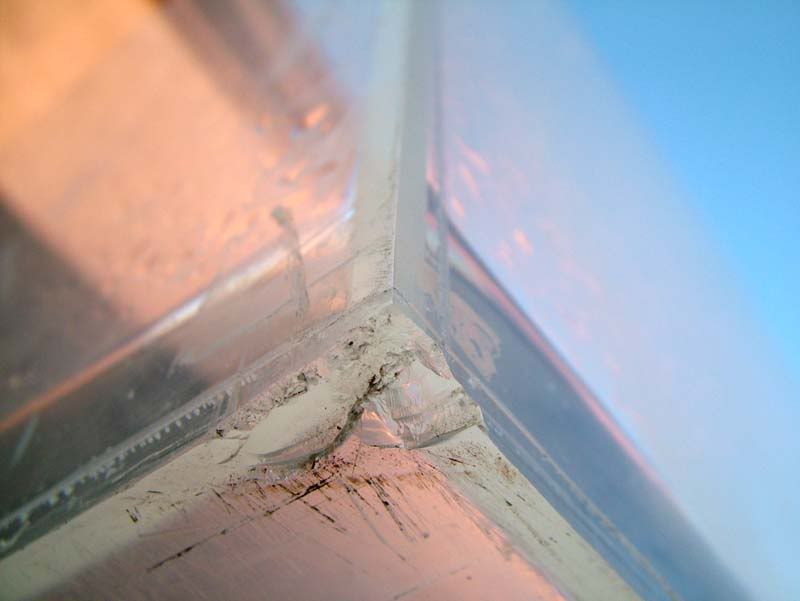
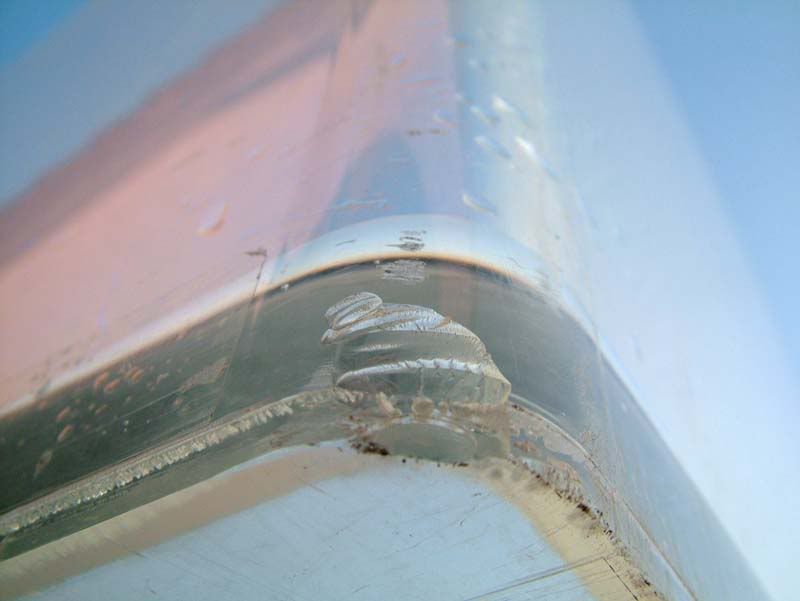
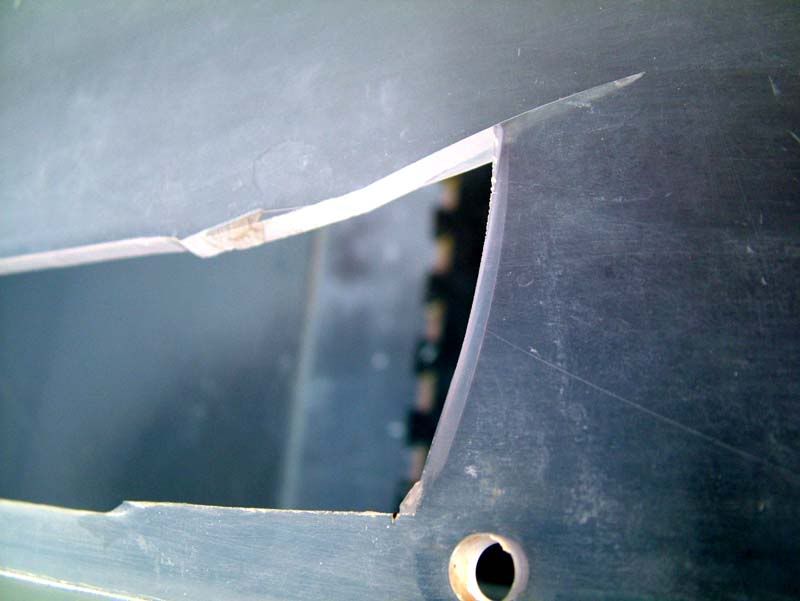
There are only 3 spots of concern, two bottom corner chips and one spreading crack from the corner of the top panel where the privious owner enlarged the back filter slot with what appears to be a dull shoehorn.

Tomorrow I start polishing but tonight I left the tank with 2 gallons of water tilted to the side where the two bottom corners are chipped to verify no leaking. Im planning after I have finished all polishing to sandpaper the inside of those 2 bottom corners (photo below) and apply silicone used for plastics. Also a drill hole to intersect the top panel crack (photo below) and 1 inch top and bottom acrylic patch.

Any thoughts, concerns or recommendations on doing that?


AquariaCentral.com