Pics, as requested.
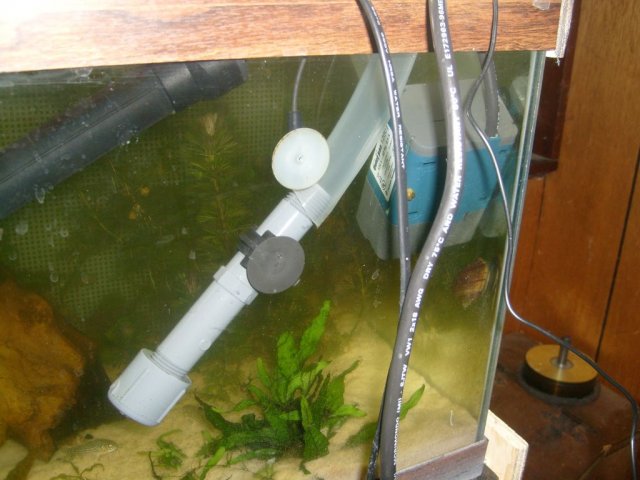
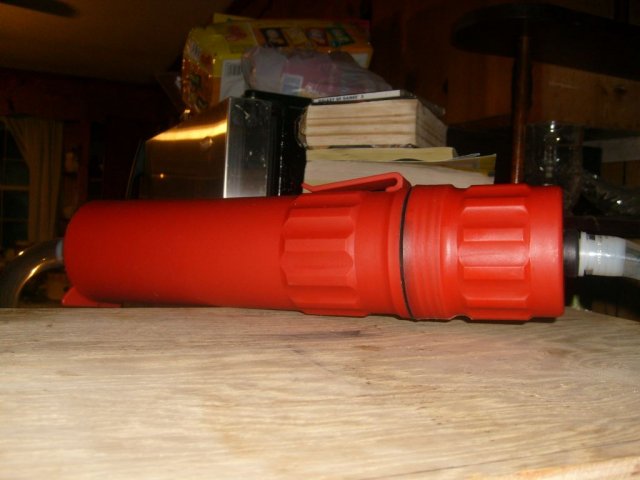
Please note that this is aimed at smaller tanks where HOBs are problematic for CO2 injections.
This stemmed from two factors
1. my Rena SF was not enough for a 20 gallon (80GPH)
2. Alot of CO2 was lost due to surface agitations from the HOB filter
so I went about making my own canister filter, that rid me of both problems, I payed more than I would have liked, but would be cheaper the next time for lack of experimenting.
Directions.
1. figure your needs as far as turnover rate, roughly 5-10 times per hour is ideal. Now double this number, expect your pump to lose about half its GPH, figuring in the head and so forth.
2. take your canister and make sure that it is strong, and sealable. In this case I used a welding rod holder that can be purchased at the local home depot.
3. While in said store, pick up correct size tubing, barbs and a PVC pipe (see above pic)
4. Pick up a few pot scrubbies from the store, the more the merrier.
5. Head on over to your local auto parts store, look for a PCV (positive crankcase ventialtion) grommet, if using a 3/4 barb, Dorman part number 04701 works well.
6. When all parts are collected, take a piece of plastic and a drill and drill bit, and start drilling holes to experiment with the proper hole size for the grommets. (if using a 3/4 barb, use a 7/8 spade) Make sure the grommet and barb a tight fit.
7. Make your marks on each end of the cannister for your holes, drill, insert grommets. DO NOT try to add the grommets with the barb in, will not work well.
8. Insert the barbs, tapping or pounding them in may be necessary.
9. When all said and done, add bio-media and filtering agent into canister.
10. Close cannister TIGHT, depending on the pump, you may be looking at a considerable amount of pressure build up.
11. Take your PVC pipe and drill small holes into it, this makes your spray bar
12. route pipes, mount your pump and turn on, inspect for leaks. Also, if its a little bit of a drip, might ignore it, mine went away after a couple hours.






