Brown algae problem

Soldaneg

AC Members
May 22, 2008
50
0
0
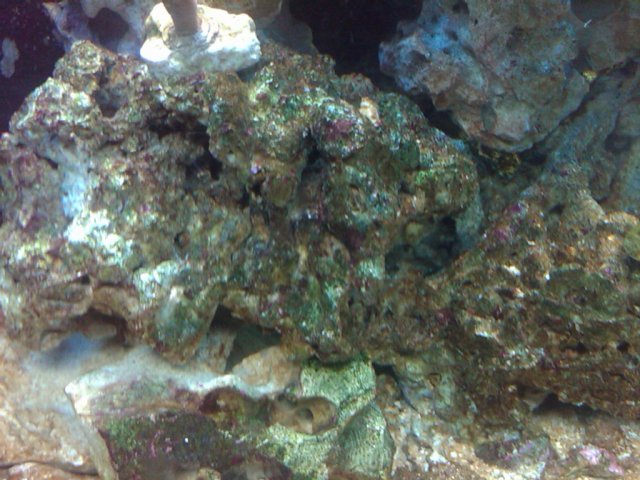
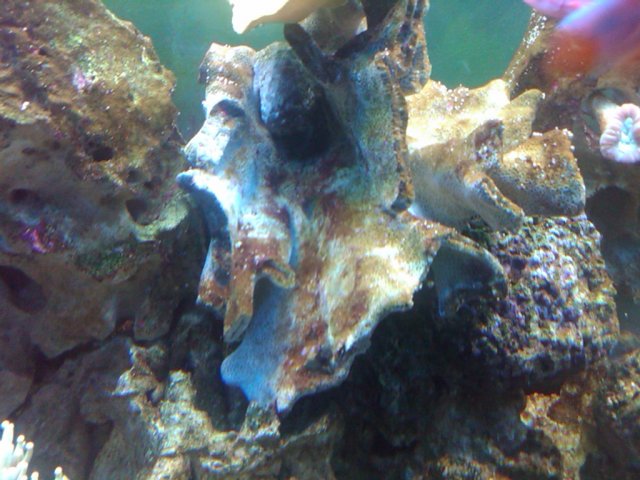
I am having trouble with brown algae in my tank. I have a 72 gallon bowfront reef with with a 20 gallon sump underneath. The sump's return is powered by a mag drive 950, plus the inside of the tank has a hydor koralia 3 and a hydor koralia 1 to ensure proper flow. About 3-4 weeks ago I purchased a new 6x54 T5H0 light with 3 10K bulbs and 3 actinic. I also bought a torch coral, frogspawn, acropora, pumping xenia and a monti-cap at the same time. For the first week, all of the corals were thriving. After that, the torch coral and xenia shrunk and this brown algae started growing all over the rocks and sand. I figure it was due to the introduction of the new light so I did nothing. About 7 days later the brown algae was still there, the torch was still shrunk, and the xenia was fading fast. I did a water change of about 20 gallons hoping that would help. Now, a week after the water change, the torch coral is still withdrawn, the xenia is dead, and the brown algae is thriving. I tested my water and I have 1.022 -1.23 specific gravity, 0 ammonia, 0 nitrites, 0 nitrates, and .5 phosphates.

After all my research, I have found that what fuels this type of algae growth is nitrates and phosphates. With my readings, I don't believe that the amounts present in my tank can fuel this type of growth. I am really getting frustrated with this battle and running out of ideas. Any thoughts?
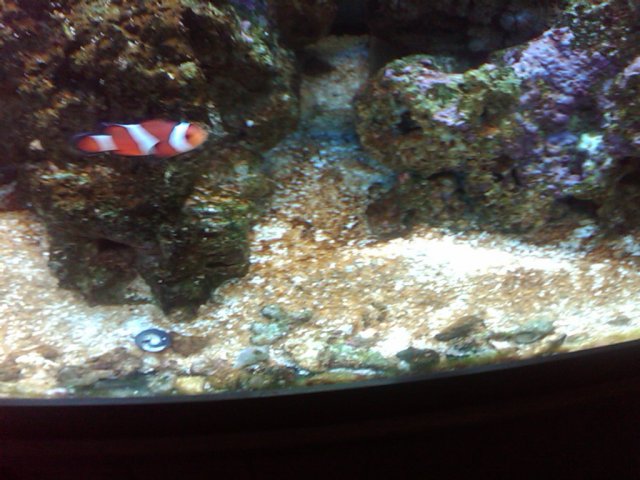
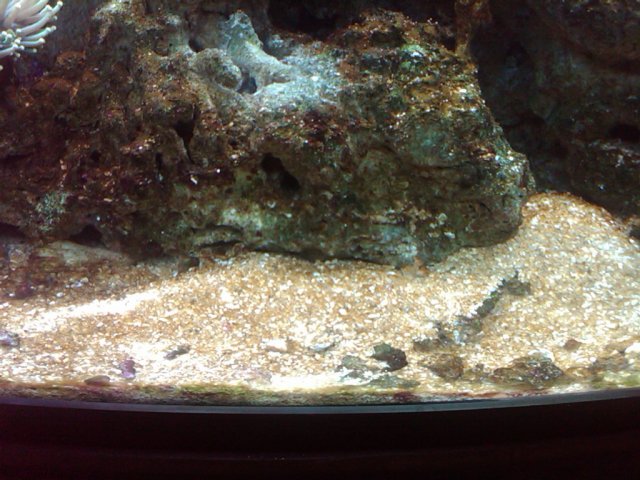
IMG00041-20090419-1944.jpg IMG00042-20090419-1945.jpg IMG00044-20090419-1945.jpg IMG00046-20090419-1946.jpg
 
Where do you get your water for water changes? If you're not using RO water, you may be introducing nitrates and phosphates that way.
 
I have struggled with the same issue from time to time and the item of most note is the phosphate level. Depending on the test kit your levels could actually be higher than the .5 which is on the high side. I have done a Salifert test at home and gotten a .1 level reading and then got a colorometer test done at the LFS and it was actually .6.

Are you currently using phosban or rowaphos or some other phosphate remover? If not you might want to check into using one of the more notable products. Also, you can help by watching the amount of food you provide (not overfeeding) and also you will benefit by water changes. That really is the best response until the phosphate remover is used...and then you should still keep up with regular interval water changes.

What is you water source? City water, well water, RO/DI?
 
We must have typed at the same time. Since you are using RO then the water change is important. When I water change I try to siphon the algae off and not go too deep into the sand bed. You can get past this, it is just frustrating in the interim.
 
A phosphate reading of 0.5 ppm is plenty high enough to start (or maintain) a nuisance algae bloom. The phosphate level in your tank (as well as your nitrate level) were likely measurably higher prior to the algae problem starting. As the algae are growing, they are pulling those nutrients out of the water, which can lead to test kit results that seem lower than one might expect. Corals dieing back can result in noticable nutrient level increases.

When you changed lighting, did you acclimate your tank to the new, likely more intense, lighting?
When the new corals were added, were they acclimated to the light in your tank?
 
How old is that tank? What kind of sand is it? Did you buy cheap sand? How olds the sand to?

Lets pray its not Dino's ..I have read some horror stories of that stuff being hard to destroy in a tank.

The other question I have is for the others in thread to think on. The substrate (if old) may have a detritus build up fueling his algae growth. ALSO...Diatoms and Cyano in early stages look very similar to... Lets hope it is diatoms...but still they thrive on silicates...and if this is old sand why now is what I am thinking.

The fact your other corals and even xenia died is troublesome.... things are dieing ...if those corals and even that xenia died I wonder if there is die off on the smaller level in that tank...adding to the decay.


from pics i am seeing a mix of diatoms and even cyano possibly..... you also have 162 watts of 10k over a 72 bow front... 3 actinics are useless (besides making things look pretty...the usefull lighting is those 3 10ks...

Honestly your lighting is insufficient for a tank that sized and your torch is not responding well to the pollution(what ever it is) and low lighting.

Currently lighting is the last problem on this list...but do replace those 3 actinics for 10ks OR....leave it be and add a MH 150watt or higher bulb....

I have the same tank.... I also advise a korilia #4 on the far left back wall far right back wall and put your #3 center.... aim them to the center front glass ...i dont know why...but i have a great flow even with 60+ lbs of lr i can see the stuff circulate when sand gets kicked up recently...


So basically get started on cleaning up..

Siphon off the top layer of your sand, Test your RO water maybe needs filter change, use Phosban in a Phosban reactor with activated carbon.

reposition the flow you have and consider upgrading later

The lighting... Ugh...I suggest if you are tight on money change those actinics out for the corals sake in the future ...for now You may want to consider having the store you got the coral from watch over it as you fix things..or change the light now....its insufficient.

ALSO How oftend do you feed? What do you feed the fish and coral...whats the schedule...? What was your maintenance schedule prior to this?
 
EDIT: before I advise anything drastic...

Please provide info on your maintenance in the past. Do you have a skimmer?
How often do you feed, what do you feed, ?

How olds that sand...what kind of sand? Other equipment besides skimmer you did not list?

Test your RO units water.. Keep an eye on the bubbles on those rocks..you see a deep maroon colored growth that has spaghetti like strands you have cyano. Not diatom.

report back and answer the questions... I seriously like to intercept this problem before you have a bigger problem.

And yes I have had a similar look in a first time tank... You are looking like you are at the beginning stages of a massive cyano break out.... problem is Cyano and Diatoms look similar on beginning stages..it could be a combo of both.

FYI if you add a lot of new live rock it triggers a mini cycle and adds decay to a tank from uncured live rock..(some stores fail to mention its not fully cured yet)....hell most stores...what am i thinkin lol.

I cant narrow down what caused it...i can say keep us informed I am on this site every day durring the week... I would like to help you turn this around asap.
 
Last edited:
There was a lot of questions and I will try to answer them all. But before I do, there are no bubbles in the substrate but there are the thread like algae attached to the overflow which apparently is cyanobacteria.

I have a euro-reef skimmer suited for a 125 gallon tank in my sump. Do water changes of 15-20 gallons every three weeks. Feed once a day in the evening alternating flakes and frozen brine shrimp (rinsed before feeding), food is given one drop of garlic extreme supplement. Corals are fed oyster eggs and cyclop-eeze twice a week. The tank itself has only been setup for 3-4 months and all of the equipment was purchased new (besides the tank) so the RO system is fine. The sand was given to me from a friend who decided to remove his refugium and give the sand inside to me to help speed up my cycle (he has no algae problems). No rock has been added since the intial setup.

I don't think the light is an issue because I have three SPS corals thriving in the tank and they are a more light demanding coral.
 
AquariaCentral.com