Velvet

cdawson

AC Members
Jan 6, 2003
1,231
1
0
46
Vancouver BC
Visit site
Anyone had to deal with Velvet before? I know to treat it just like ick, but the infected fish in my community tank do not seem to be getting any better. I've been treating the tank with aquarisol, and I've done so twice now. I don't want to expose my tank to another large dose of copper sulphate. Does anyone know the lifespan of the parasite when it's not free-swimming? Because the medication only treats the free-swimming larvae, not the actual parasite. Should I just give the fish a salt bath to remove the remaining parasites?
 
I do not know that most ich meds and treatments will do much good against velvet. I've dealt sucessfully before with it using Acriflavine, and it's not terribly expensive. It will stain your water and hands. Follow dosage instructions on the bottle and you should be good unless it's progressed beyond treatment.
 
unfourtuneatly I don't have that option, it's a heavily planted show tank. I had a ph crash and velvet showed up on one of my cories, it's just snowballed from there. I've pretty much lost all of my bottom dwelling fish, so I've resorted to destroying the infected fish in hopes that it will get rid of the infection. Aquarisol is supposed to treat velvet as well as ick, so I'm hoping that got rid of the larvae.
 
The Skeptical aquarist is down (as far as I can tell) and they had some pretty good info there, but essentially, with velvet, like ich, the parasite is encysted on the fish and can only be killed in freeswimming stage. Salt baths will not work for either. From the research I have done it seems that salt in the water column may help kill it off but is not a surefire treatment. formalin and malechite green will do fairly well, but velvet is tough enough to need a couple of rounds. As far as the freeswimmers, If I understand correctly, velvet is a photosynthesizing parasite, and can survive for a pretty good spell if given light even when no fish are present. With this in mind, even an empty tank can support it for several weeks. Blackouts are highly reccomended in conjunction with the other treatments. I know this is an issue with plants, but from everything I've read it is almost a must with Velvet. UI don't know haow fast it will die without light, and without a host fish but I'm sure it is pretty rapid as no parasite can live long without food.
Sorry i can't be a little more helpful, but that is as much as I can remember accurately. I'll see if I saved any of the articles I pulled, and If I did I'll get them to you somehow.
dave

 
Well the funny thing is that it hasn't affected any of the fish in the tank except for the bottom feeders. Nobody else has been affected at all from this.
From what I know copper sulphate will kill the larvae, so blackout is not completely necessary.
 
I'd still be inclined to go the acriflavine route, you may lose a few plants and a bit of follage, but most ussually bounce back. Last time I dealt with it I used an Acriflavine, Malachite Green, Methlylene Blue combination which worked extremely well, after 10 days treatment all my plants survived fine with the exception of some hornwort. At the end of the day though, I'd be willing to kill every plant in my tank to save even the most inexpensive fish.
 
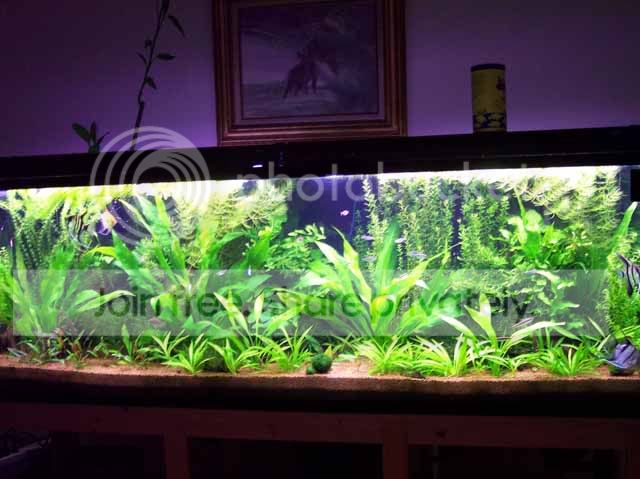
You'd be willing to destroy this?

planted135.jpg
 
I have treated Velvet successfully with a combination of higher temp and Mardel Coppersafe. I would definitely put the fish to a Q-tank. It took about a month for visible signs of improvement.

Make sure you take the charcoal out of your filter as well. Otherwise you will filter out the meds.
 
How long did you treat for? and how frequently? What was your exact procedure?

BTW I know to remove the carbon....I'm not stupid =)
I also don't have a q-tine tank, it's full of angel fry right now. =)
 
It was sometime back when I had to treat the fish but I pretty much followed the directions on the bottle exactly. I believe it was one table spoon of the meds each day? I raised the temp up from 78ish to mid 80;s as well. It took some time to treat and often it looked like things were getting worse then it turned around. That particular fish is still alive and well today.
 
AquariaCentral.com