View Full Version : Lux, Lumens, Etc.
Nolapete
01-30-2009, 4:27 PM
Does anyone know the formula to convert the initial lumens of a bulb to a lux value if it is not provided?
Lux = 1 lumen per square meter
Square meter = 1550 square inches
How would you get lux per square inch?
If you have 2340 lumens displayed over 576 square inches, what would be the lux value?
What does bulb wattage have to do with any of this?
Canuck
01-30-2009, 5:23 PM
I think:
1550 sq in/576 sq in * 2340 lumens = 6297.17 lux or or more intuitively
2340/576 * 1550 = 6297.17
(Posing math questions on Friday nite is totally unfair) ;)
Now this assumes that all of the light falls within the 576 sq inches and does not account for lumens that fall outside of it (light spillage).
Hope I got this right.
I am assuming this is in response to Rex Griggs LSI rule. I also assume based on your values you probably have a 55 gallon tank with about 50 or so watts of light. Rex's table contains arbitrary values which apply only to 55 gallon tanks and not much else. If you do calculations for tanks smaller or larger and try to determine your light level using his table, you will get completely whacky results.
Take my 20 gallon long. Surface area is 360 square inches and light is supplied by three 23 watt bulbs of 1600 lumens each. Total of 4800 lumens.
Lux= 4800 lumens/360 square inches * 1550 square inches = 20,667 lux
LSI= 57.4
Therefore, using Rex's table, I should have an aquarium waaay over "very high light--all doubts removed" Using the wpg rule, I have around 3.4 watts per gallon, which is considered merely "high light", and not the very high light in which I could grow any plant I wanted. From first hand experience I can grow a huge variety of plants, but some plants are still off limits. Under Rex's table I should be able to grow anything I wanted--which is simply not true.
If you are still not convinced, I can roll out more and more examples.
Take my 6 gallon tank. It has surface area of 161 square inches and 600 lumens of light (15 watt light fixture).
Lux= 600 lumens/ 161 square inches *1550 square inches= 5776 lux
LSI= 36
Again, according to Rex's table I can grow any plant I want. Admittedly the wpg rule does break down in smaller tanks, but even so the rule says I have 2.5 wpg--which translates to medium light. From experience I can grow low light plants and medium light plants perfectly fine. No "high light" plants survive in this tank for very long, regardless of supplimentation. Rex's LSI rule is wrong again.
Sounds like you need a PAR meter.
Nolapete
01-30-2009, 11:12 PM
I'm not interested in your opinions of Rex's theory that is why I didn't post this as such. I am not attempting to use his formulas or math or tables or whatnot. I just want to figure out the math for myself.
Take my 20 gallon long. Surface area is 360 square inches and light is supplied by three 23 watt bulbs of 1600 lumens each. Total of 4800 lumens.
Lux= 4800 lumens/360 square inches * 1550 square inches = 20,667 lux
LSI= 57.4
That is not Rex's formula nor is it correct.
Nolapete
01-31-2009, 12:19 AM
Since my 40 long is not taken as a good example, I'll use my 75.
48x18=864
2340 = initial lumens of 1 40 watt 48" 9325K bulb
I'm assuming that I'd need 2340*8 bulbs = 18720 initial lumens
Assuming zero light loss, what is the lux value of 1 2340 40 watt 48" 9325K bulb above 864 square inches of tank?
Making the same assumption, what is the lux per square inch of 18720 initial lumens?
How does a smaller surface area change the lux value?
That is not Rex's formula nor is it correct.
I'm not using anyone's formula here. I am using "unit cancellation," though not all the steps are shown. You can learn more about using unit cancellation methods by watching the following slide show. It may seem kind of kiddy with the cheesy clip art, but the step by step animation is really really good:
http://www.dmacc.org/medmath1/UNITCANCEL/Unitcanhtml/sld001.htm
Assuming zero light loss, what is the lux value of 1 2340 40 watt 48" 9325K bulb above 864 square inches of tank?
Here is how you "do the math" using unit cancellation for this particular questions. (please ignore all the periods, they are place holders):
1 lumen = 1 lux, (aka "1 lumen per square meter= 1 lux))
....m2
Using your lumen and surface area values:
2340 lumens * 1550 in2 = 4198 lumens/m2, aka 4198 lux
864 in2 ...............1 m2
4198 lux = 4.86 lux per square inch
864 in2
Making the same assumption, what is the lux per square inch of 18720 initial lumens?
Here is it calculated with the light you assume you will need (ignore all the periods, they are place holders so you can see the units):
18720 lumens * 1550 in2 = 33583 lumens/m2, aka 33583 lux
864 in2..................1 m2
4198 lux = 38.86 lux per square inch
864 in2
How does a smaller surface area change the lux value?
The basic way to get lux is here:
x lumens * 1550 in2 = z lumens/m2, aka z lux
y in2..................1 m2
Keeping lumen values constant, if you have a smaller surface area you will have a bigger lux value. If you have a larger surface area you will have a smaller lux value.

bluekrissyspike
01-31-2009, 1:27 AM
i'm confused by all the numbers and don't care to try to do the math, but i think you are over thinking things and making it more complicated than it needs to be. from what i read growing plants is not an exact science so you can't really fit your plants needs into an equation anyhow.
Nolapete
01-31-2009, 4:05 AM
I looked at a good part of the unit cancellation so that I could understand what you were trying and while it does make sense I don't think it works for this. Here's why and maybe you can tell me if it makes sense or not:
1 lux = 1 lumen per square meter or 1550 square inches
If I have 864 square inches, it is within the 1550 square inches. I'm thinking that there's still a 1 to 1 ratio, so 1 lumen over anything less than or equal to 1550 square inches equals 1 lux.
2340 / 864 = 2.71 Lux per square inch
2340*8 / 864 = 21.6 lux per square inch
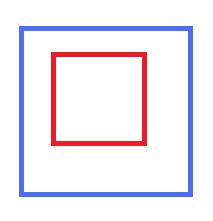
Blue square = 1550 square inches
Red square = 864 square inches (not accurate ratio in drawing, but you get the idea)
Nolapete
01-31-2009, 4:48 AM
if I changed to 4x55 watt 6700K CFL from ahsupply.com,
I'd have:
4600*4=18400 / 864 = 21.30 LSI
Both examples would put me in the medium light category if you used Rex's chart that says I could grow most aquarium plants.
Two things are true here:
1) I could indeed grow just about any plant, so his theory does work
2) His chart needs a bit of tweaking IMHO to lower the LSI levels.
Additionally, the degree to which the reflectors are able to get the light down into the tank is something that will make a huge difference. Something else that Rex has advocated strongly.
****
Applied to a 10 gallon 200 square inch tank
4600x1 / 200 = 23 LSI
That's 1x55 watt 6700K over 10 gallons. 5.5 wpg which is pretty much what you'd need over 10 gallon tanks to grow just about anything.
Cory Keeper
01-31-2009, 6:40 AM
That's 1x55 watt 6700K over 10 gallons. 5.5 wpg which is pretty much what you'd need over 10 gallon tanks to grow just about anything.
Funny, I recall hearing about 10g planted with 2x15w CFLs over them, growing lots of stuff.
Canuck
01-31-2009, 6:53 AM
If I have 864 square inches, it is within the 1550 square inches. I'm thinking that there's still a 1 to 1 ratio, so 1 lumen over anything less than or equal to 1550 square inches equals 1 lux.
No this would be like saying a car that gets 40 mpg is the same as a car that gets 30 miles per half gallon. Lux is a measure of light per unit of area. thats why I kind of missed the part where you asked for lux per square inch, which is kind of like asking for miles per gallon and then asking for the translation to miles per gallon per quart.
cellodaisy
01-31-2009, 9:42 AM
No this would be like saying a car that gets 40 mpg is the same as a car that gets 30 miles per half gallon. Lux is a measure of light per unit of area. thats why I kind of missed the part where you asked for lux per square inch, which is kind of like asking for miles per gallon and then asking for the translation to miles per gallon per quart.
EXACTLY!
lux = lumens/sq.meter
"lux per square inch" would mean "lumens per square meter per square inch"
It is a completely nonsensical term! GAHHH! FUZZY MATH! *runs away*
Nolapete
01-31-2009, 11:02 AM
No, because 1 lux = 1 lumen per square meter or 1 lux = 1 lumen per 1550 square inches.
1 square meter = 1550 square inches
864 square inches is inside of 1550 square inches, so the same value is for both.
You have an umbrella that covers 1 square meter. It still only covers 1 square meter whether the people under it take up 864/1550 square inches or 1550/1550 square inches.
Lux per square inch isn't a nonsensical term. It is the conversion of the square meter part of lumen per square meter to square inches by which we measure our aquariums surface area.
Lux per square inch is the same thing as saying that 40 mpg is 80 mp half gallon. The amount of gallons doesn't change. The unit of measure is all that changes.
If I have a 75 gallon tank and I only fill it up half way, it still has 864 square inches of surface area. If I only have 75% of it planted, the surface area doesn't change either.
I was hung up on the conversion of lumens per square meter to lux per square inch thinking that the lux value increased because the area it was covering was smaller. This would make it impossible for the bulb manufacturers to have any measurement that follows a standard.
I realized that when they rate a bulb for lumens they are also rating it for lux. Since there's a 1 to 1 ratio (1 lux = 1 lumen per square meter), my logic that the lux value would increase was incorrect.
Nolapete
01-31-2009, 11:25 AM
No this would be like saying a car that gets 40 mpg is the same as a car that gets 30 miles per half gallon. Lux is a measure of light per unit of area. thats why I kind of missed the part where you asked for lux per square inch, which is kind of like asking for miles per gallon and then asking for the translation to miles per gallon per quart.
You wouldn't ask for miles per gallon per quart. You have to convert to quarts first and ask for miles per 4 quarts.
I'll concede that lux per square inch isn't the best way to describe this theory.
cellodaisy
01-31-2009, 11:40 AM
You have an umbrella that covers 1 square meter. It still only covers 1 square meter whether the people under it take up 864/1550 square inches or 1550/1550 square inches.
I think you'd misunderstanding something. For simplicity's sake, let's set aside the fact that lumens are a poor measurement when it comes to plants/coral/etc. Let's also set aside the fact that not all of a bulb's light output goes into the tank, so all of these calculations are approximate. Say we have a light hood that puts out 100 lumens and we have a tank with a surface area of 1 square meter; that would be 100 lux. Now let's say we have a tank with a surface area of 1/2 square meters and a hood that fits that tank and puts out 100 lumens; that would be 200 lux. Your analogy assumes that we would use the same 1 sq.meter hood on the 1/2 sq.meter tank, in which case you are absolutely right that the lux would remain the same. Some of that light would be in the tank and some would be outside. Most people, however, use hoods that fit their tanks so most of the light goes in the tank, and therefore the size does change the lux.
Lux per square inch isn't a nonsensical term. It is the conversion of the square meter part of lumen per square meter to square inches by which we measure our aquariums surface area.
Lux per square inch is the same thing as saying that 40 mpg is 80 mp half gallon. The amount of gallons doesn't change. The unit of measure is all that changes.
What you're describing isn't lux per square inch, it's lumens per square inch. If you want to use square inches instead of square meters, that's fine, but it is not "lux" because "lux" is defined as lumens per square meter.
I was hung up on the conversion of lumens per square meter to lux per square inch thinking that the lux value increased because the area it was covering was smaller. This would make it impossible for the bulb manufacturers to have any measurement that follows a standard.
I realized that when they rate a bulb for lumens they are also rating it for lux. Since there's a 1 to 1 ratio (1 lux = 1 lumen per square meter), my logic that the lux value would increase was incorrect.
No, bulb manufactures cannot give a lux rating because lux depends on the surface area the light is shined at. They can ONLY give lumen ratings. The manufacturer only knows the amount of light that gets put out, not how that light is spread over your particular surface.
jmhart
01-31-2009, 11:48 AM
So, I'm chiming a bit late, and I don't have a whole lot to say, however I wanted to comment on the box inside a box thing.
This is from wikipedia and I think it will help you understand why the box inside a box model doesn't work. I recognize wikipedia isn't a credible source when it comes to legitimate research, but here on the internet it seems to pass the litmus test. That being said:
A flux of 1,000 lumens, concentrated into an area of one square metre, lights up that square metre with an illuminance of 1,000 lux. However, the same 1,000 lumens, spread out over ten square metres, produces a dimmer illuminance of only 100 lux.
Nolapete
01-31-2009, 12:21 PM
I agree that it's a bad term and that logically it doesn't work. The point of this exercise is that I wanted to show that the term was the problem.
Jm I agree. The outside box is only 1 square meter though, so anything within that box (assuming no light escapes the 1 square meter box, would have the same lux.
However, as Cellodaisy said, if we can contain the same lumens within a smaller area than 1 square meter, the lux value has to go up. The same way as it goes down when you get outside the square meter area.
jmhart
01-31-2009, 12:46 PM
I agree that it's a bad term and that logically it doesn't work. The point of this exercise is that I wanted to show that the term was the problem.
Jm I agree. The outside box is only 1 square meter though, so anything within that box (assuming no light escapes the 1 square meter box, would have the same lux.
However, as Cellodaisy said, if we can contain the same lumens within a smaller area than 1 square meter, the lux value has to go up. The same way as it goes down when you get outside the square meter area.
And Aye, there's the rub....
But if the light is focused on the inside box, despite being quoted for the large box, then it's lux will increase, not remain the same. Lux doesn't mean that the light puts out lumens in 1 square meter, it means if you measure the lumens on the surface of 1 square meter, it will be equal to that many lux. So if you measure those same lumens focused on a smaller area, the lux goes up.
Because we're dealing with glass boxes instead of solid boxes, it makes it difficult to say what the lux are. The best you can do is look at the lumen output of the light your working with, make the assumption that your reflectors reflect all light into your tank, and then compute the lux based on the surface area of your tank.
It's full of error, because A) not all lumens put out by the bulb make to the surface of the water B)even there, the light bends and reflects outside the glass, so it doesn't all remaine inside the "box".
Nolapete
01-31-2009, 1:12 PM
Absolutely. Notice that 1 lux = 1 lumen per SQUARE meter not CUBIC meter, so when we're dealing with lux the strongest it will be is at the surface of our aquariums. Once it penetrates the water, there's a lot of other factors to deal with; turbidity and TDS in example.
jmhart
01-31-2009, 1:39 PM
Yes, square, but you have to make the assumption that no light is lost in that area.