Hey, if you're into Bolivian Rams, I recommend you read this article:
http://www.cichlid-forum.com/articles/mikro_altispinosa.php
Also, this thread is chock full of info about breeding them, feeding them, the sexing guide I created (with pictures) is in there, recomendations on substrate, tankmates, etc etc etc.
http://cichlid-forum.com/phpBB/viewtopic.php?t=138543&postdays=0&postorder=asc&&start=0
It is long, but it's all in there.
This is my sexing guide:
Ok,
Let me try and help you out in determining sex. Take into account the only real way of knowing is venting them or seeing them spawn, the other details I will show you are just generalisations of what you would expect in differences between the sexes....
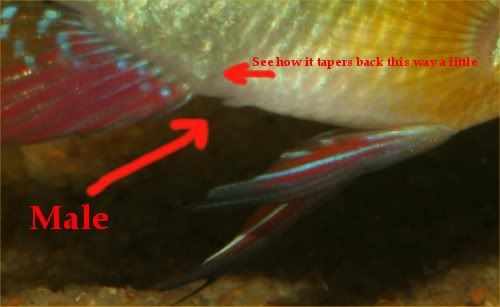
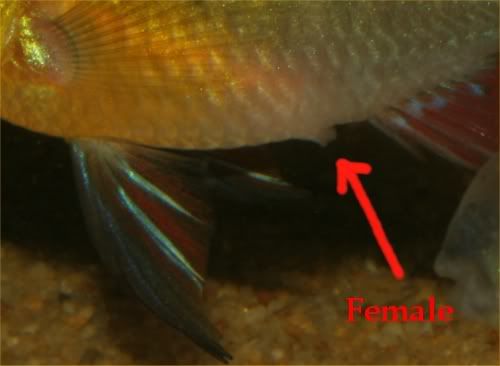
First up, ventrical differences:
Click to enlarge images:
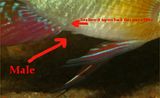
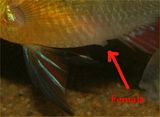
Notice how the males tapers back and is considerably smaller whereas the females points more downwards and is visibly fatter.
You can also see the difference in the length and shape of the pelvic fins, although this is not a sure-fire way of telling it can be an indicator.
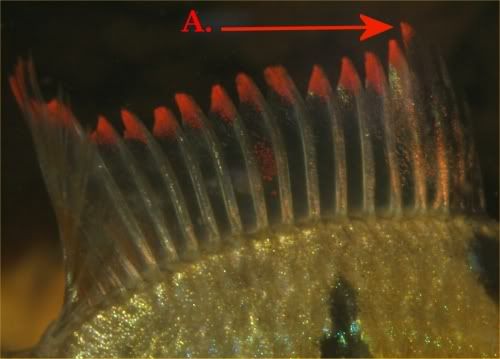
Picture A. is of a female, I'm pointing this out first as you can see here that the females dorsal looks similar to what one would expect from a male:
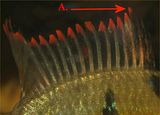
You can clearly see her extended ray on the dorsal fin. So I'm not saying this is a way to sex them. You can see for yourself that females too can express these predominantly male characteristics.
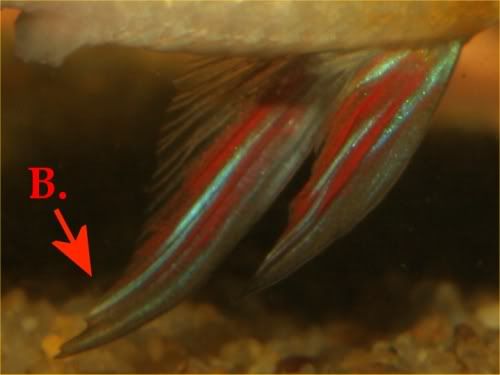
Picture B. is also of a female:
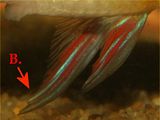
Here too you can see the extended pelvic fins that you could expect on a male....
Point made?
Now onto the comparisons (generalisations, whatever you want to call it.)
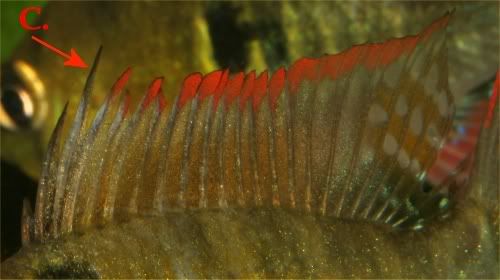
With that said, picture C. is of a male - you can clearly see the extended 3rd and 4th rays on his dorsal fin:
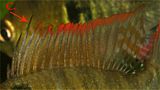
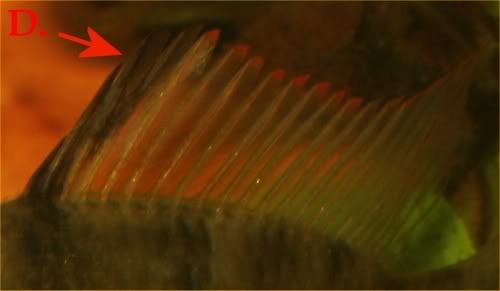
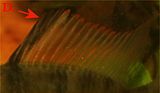
Picture D. shows a "typical" female dorsal fin, you can see the progressive slope that I with no particular spine elongated.
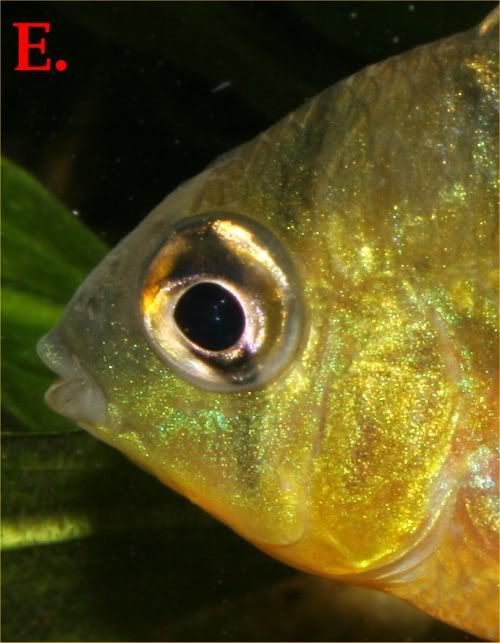
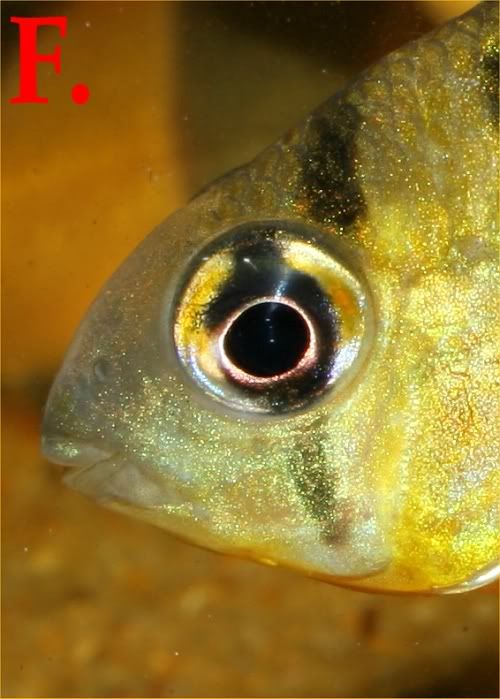
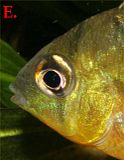
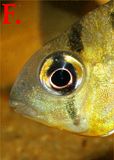
Picture E. shows a "typical" female head shot. You can see it is more rounded when compared to Picture F.
Picture F. is the male head shot:
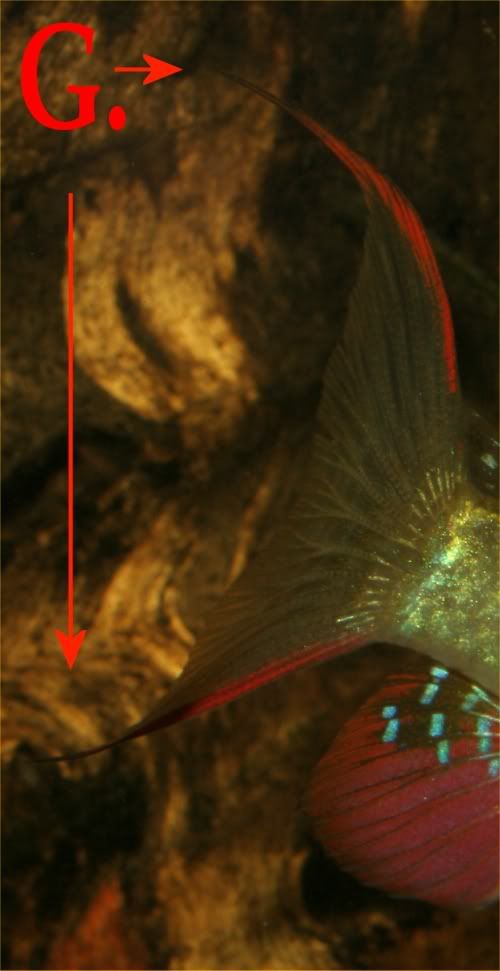
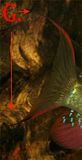
Pic G. showing the extended rays on the Males tail fin:
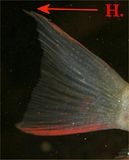
Pic H. shows the "typical" female tail and as you can see, even they can possess slightly extended rays:
Like I said other than venting or seeing them spawn, there is no guaranteed way of knowing, however the differences you can see above (however slight) can help.
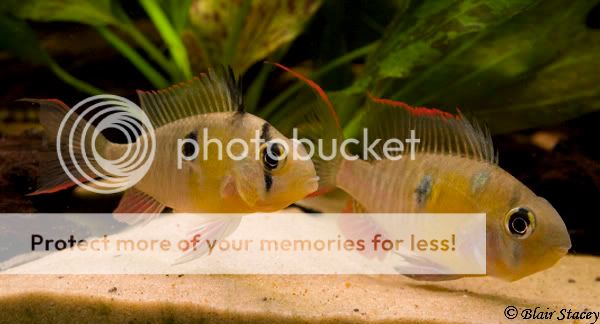
Side by side male and female (female on left

)
-----------------
I really recommend a sand substrate for these fish, gravel is fine as well but ideally you want a sand or small grain gravel (I currently use Hagens fine river gravel). The name
Mikrogeophagus is what really emphasises this - "
mikro" meaning small, "
geophagus" meaning eartheater. They are very much sand sifters, not at all unlike
Geophagus sp.
Unlike many of the other Cichlids, they are not excessive "diggers", only making small pits in the sand around the tank when preparing to raise fry. They will on occasion make such a deep fry pit that they can uproot a plant (as they tend to use the roots as cover over the pits) but this behaviour is usually only spawning/breeding related, at other times they simply scoop up food with a mouthful of sand and sift it - about the extent of their sand disturbance.
In the article above (written by a friend and I) you will find recommendations on water parameters, aquascaping etc, as well as several pictures. I can't stress enough how much you will also learn from the BRC thread I linked to.
I wouldn't recommend mixing Bolivians with a Parrot fish, and certainly not in a 30 gallon tank. A 30 gallon tank is suitable for a pair of Bolivians, or two males and three females (or one male, four females, if he's really lucky!).
HTH.
Blair.