

Red Picta fish

SJInverts

AC Members
May 24, 2009
31
0
0
53
San Jose, CA
Hi Everyone,

I'm interested in purchasing some Red Picta fish, but I don't know much about them. Anyone know anything about them and/or have any experience with them? What is there scientific name?

Any forum members keep/breed and or willing to sell?

Thanks.
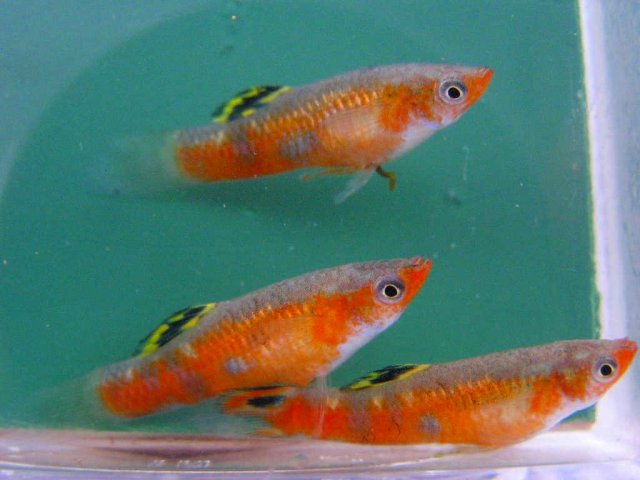
red picta.jpg
 
They're Micropoecilia picta 'red'. It's a red morph of the wild Micropoecilia picta.

Their care should be quite easy, probably not much different than other Guppies, but if I remember correctly, they actively eat their own fry and would require more effort to breed than other micro-livebearers.
 
What Vampie said. A beginners fish to keep, a bit more work to breed and raise young.
 
They're Micropoecilia picta 'red'. It's a red morph of the wild Micropoecilia picta.

Their care should be quite easy, probably not much different than other Guppies, but if I remember correctly, they actively eat their own fry and would require more effort to breed than other micro-livebearers.

They can also inter-breed with reg Guppies(Poecilia Reticulata) and Endler's Live Bearers(Poecilia Wingei) so efforts have to be made to keep them separate.
 
I'm about to do my Honors Program Thesis on these guys! Our lab will be ordering more sometime in the near future, so I'll give an update when I find out where we get our red picta from.
 
The red variety of Micropoecilia picta is found in small numbers in wild populations so they may well be available from wild collections as well as from breeders. As already stated, they have a reputation for easy care but some difficulty in breeding. I wish that I had a source other than Aquabid but I don't.
 
NYC, can you post any links to articles suggesting that they will interbreed? Everything I have read states that they will not. Not entirely sure if this is directly applicable to the pictas, but I was extremely surprised at how incredibly agressive the micropoecilia parae are. Even the females are extremely scrappy, and it took less than a week for the dominant male to dispatch of the other male, even in a very sparsely populated and heavily planted 29. Apparently with these species, the key to success is a very female heavy sex ratio, which can be hard to accomplish since they are mostly sold in pairs.
 
AquariaCentral.com
