Treatment Question

do you have an airstone?

betta can breath air but the water quality iis suspect with those readings.

I would do daily water changes..add an airstone and some more media from you other tank.

an airstone will create aggitation and water movement at the surface

this will boost the O2 level in yourtank.
even tho the betta can breath air the ammonia and nitrite can still damage the gills and burn the skin, fins etc.
 
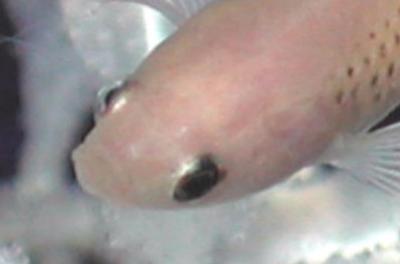
Ok, so some posts got deleted here. But, he seems no better at all and I've been doing daily water changes. I'm going to add a tiny bit more of the meds to replace what I may have taken out... I posted a pic but it got deleted and it showed nothing anyway ( not even the "velvet"...) I don't know if it's velvet, the coppersafe seems to not be helping at all and he's getting worse.... A description: He looks dusty, but with white-ish flecks all over him, especially on the edges of his scales. Is this just taking a long time to go away or am I treating it wrong? Please :help: I don't want to lose another betta...:(
 
^^^^

Also...
Update: This morning he finally ate again!! I was literally dancing around this morning, I was so happy...LOL This is the first time in over a week he has eaten anything at all!
 
an unfiltered tank (or bowl if you may) will not cycle. the bacteria require water flow and oxygenation to stay alive (flow and oxygen that is found via a running filter). your ammonia and nitrite amounts are there because it is an uncycled environment.

i'd suggest a near 100% water change immediately (put the betta in a tupperware with about 10% of the old tank water while you do). when you go to put the betta back in the bowl, do it the same as you would drip acclimate a new fish. i've used this method many times without issue. daily changes for at least a week and monitor for improvement.
Absolutely, positively UNTRUE! As long as the water contains dissolved oxygen and a usable nitrogen source like ammonia bacteria will colonize every square inch of surface in the tank. Flow and aeration make this process more efficient and capable of supporting a higher bioload, but are not necessary to the process.
 
OK, desperation mode here. He's been sick a fairly long time and not getting better.
I think he has a bacterial infection called Columnaris, caused by Flexibacter. I think poor water quality is the cause and the toxic byproducts, even at trace amounts, have to be removed by daily water changes.

Water changes to give him pure water will be less stressful than being in water with toxic byproducts ammonia and nitrite. He will feel better just on the basis of having pure water, alone, but more importantly this is needed to help him fight this infection.

I would follow BettafishMommy's water change recommendation. Star_Rider's recommendation about water aggitation to help add O2 to his water. A small filter, without the carbon, will help oxygenate the water as will a bubble stone.

If you can go quickly in the morning to a petstore for Kanamycin (Kanaplex, Kanacyn) this is the best antibiotic for columnaris. Actually medicated food is best but at this time he probably won't eat the antibiotic food.

If you can't find the Kanamycin then get these two: Maracyn and Maracyn II. These two antibiotics together will fight gram negative and gram positive bacteral infections.

Keep the temperature of his tank stable at around 76 degrees or slightly less, cooler than the 78 degrees bettas prefer since bacteria like warmer water.

Each day you must do the big water change, using Prime conditioner to help detoxify the ammonia and nitrite. I seem to remember you have a conditioner that says it detoxifies ammonia and nitrite, so it would be OK to use.

Then dose the tank as directed on packaging.

24 hours later do the big water change and then dose the tank.

Keep doing this every day.

Water changes won't interfere with the antibiotics as they aren't available after a few hours in the tank anyway.

Water changes will be less stressful to him than being in water that is not pristine. Pristine water will help him fight this. Ammonia must be 0. Nitrite must be 0. Nitrates 20ppm or less.

I didn't notice if you have any silk plant in there, but he needs something to rest on close up to the surface of the water, so he doesn't struggle to come to the surface.

Keep the room low light, as much as possible. If he is fond of you spend time with him. Keep the room free from harsh noise.

Water change, dose, 24 hours later - water change, dose. Keep this up for at least 10 days. If it is helping there should be some change that lets us know he is improving. There may not be obvious physical changes, but he may act like he is feeling better. Less lethargy, more swimming.

You will have difficulty measuring the dosages with him in the tank you have. The med is packaged in dosages for a 10 gallon. I needed to use half a packet each time I dosed since my hospital tank is 5 gallons, but the powder is so scanty it's hard to do exactly half. You can't use measuring spoons.

I wound up making lines of powder, like cocaine lines (I've seen movies, lol, I never did drugs), using card stock to pour it out on, and another piece of card stock to drag and smooth and make lines that seemed to be even. Then I cut the line in half and carefully scraped it back into the little foil pouch.

It might be easier to get a 10 gallon sterilite container from Wallyworld, then the packets will be just right.

One way or another this is going to be a lot of work. I'm sorry your betta is sick. You've really been trying to help him, remember that if things take a turn for the worse.

I know it's late now, and the pet stores are closed (wallyworld doesn't have the meds you need), but hopefully first thing in the morning you can get the things you need to get him started on antibiotics.

I hope you little guy pulls through this. We're all pulling for him, and you. Keep working hard, he's depending on you. Keep us posted

 
Here is an excerpt from an article by "Dr. Barb", a veterinarian that posts on the "Flippers 'N' Fins" website, regarding treatment with food that contains antibiotics. If your Betta is not eating you have to go the "in the water" route.


"The treatment of Flexibacter is best accomplished by feeding medicated food, containing oxytetracycline, tetracycline or kanamycin. Other antibiotic-laced foods may contain antibiotics, to which Flexibacter is resistant, such as ormetoprim and sulfadimethoxine, so, substitutes are not acceptable. The unfortunate problem with this disease is that the infected fish rapidly becomes ill and stops eating, especially if it has “Mouth Fungus”, therefore, treating with medicated food may not be an option."
Dr. Barb


Here are pictures for you to look at to compare with your Betta, since you are unable to provide pictures for us to review. Hopefully these pics can help you help us confirm if this is Columnaris.

Flex1 red betta.jpg

Columnaris pic.jpg

Columnaris mouth 1.jpg
Not all cases will present with severe signs around the mouth
columnaris mouth 2.jpg

Columnaris mouth 3.jpg

Columnaris pale betta.jpg

Columnaris pale betta 2.jpg

Columnaris pale betta Maracys beginning to work.jpg
Betta getting better with the two Maracyns

Columnaris pale betta redness and fuzz oing away.jpg
Redness and fuzz going away with the two Maracyns


I hope the photos help. Please update us when you can.

Flex1 red betta.jpg Columnaris pic.jpg Columnaris mouth 1.jpg columnaris mouth 2.jpg Columnaris mouth 3.jpg Columnaris pale betta.jpg Columnaris pale betta 2.jpg Columnaris pale betta Maracys beginning to work.jpg Columnaris pale betta redness and fuzz oing away.jpg
 
Melody, thank you so much for all your help!! Unfortunately I don't think he has columnaris after looking at the pics. He looks more like this: http://www.ibcbettas.org/pages/images/stories/faq/velvet.jpg which is velvet... He isn't showing improvement as far as the spots/dust goes, but he is more active today and swimming a bit more. He ate again yesterday, so that's good... Shall I try treating with the Maracyns I & II? I have them already so it's no problem, but will it interfere with the Coppersafe? I started out by treating with Maroxy, which did nothing, so I'm not sure the Maracyns will work but I'd be willing to try. Another member suggested a salt bath, but I'm a little nervous about him getting too stressed.It is day 7 (or something, lol) of the daily water changes and I've pretty much kept up with them, and it's definitely helping. I use prime, and I overdose a little for him to help with the ammonia and nitrite in case I miss a water change. Should I keep his light off? I don't want to hurt the java fern (which almost reaches the surface so he can rest on that) but there is light in the room so I think it should be fine. I think the tank temperature may be a little high, maybe 78-80*, but it may be lower since the air conditioning's on. The post where I said it got deleted, but I got him a filter and heater for the tank. And I can't remember if I was going to say something else, but if I remember I'll post it. lol.
 
Sorry it took me so long to get back to this. I have been away for hours, though I left still logged in on the site.

I'm glad if it's not columnaris. It can be pretty difficult, but he's having a pretty rough time with this, too, isn't he..

I've read that Acriflavin is good, and also Mardel or Aquarisol. Coppersafe is supposed to be a good treatment, but you tried that and had no success so far.

If it is Velvet, then the two Maracyns won't help, unless a secondary bacteria developes.

If possible, increase the tank temperature to 82-84 degrees F. This will speed the life cycle of Velvet, which is a parasite, so the medications will kill it faster. Secondary infection is not uncommon so you have to watch out for that because Velvet can weaken his resistance.

Keep doing the big water changes and keep his water temperature stable. I would use carbon in his filter to clear out the coppersafe and do a big water change before starting any other meds. Keep doing daily water changes. I would keep his tank dark as possible, the plants should be alright while you're treating him.

Each day after a water change, then dose the tank with the medication. Do that every day and follow the directions on the medication packaging. Be careful to keep his water temperature stable. It's good you have Prime.

Clean, pristine water is vital to help him fight this.

I hope a Betta expert will chime in if there are better recommendations that can be made. I'm not really sure which of the three meds I mentioned would be the best choice.

I worry a little that the coppersafe was not helping. I"m a little concerned that he may already have a secondary infection.

We're all pulling for your little guy. Please keep us posted.
 
Sounds like velvet AND a secondary bacterial infection.
 
Last edited:
AquariaCentral.com