What exactally is a refugium and how does it work?

pyrocreep

AC Members
Oct 26, 2008
105
0
0
I've been on these boards about as long as I have been back into the hobby now, about 3 months, and I keep seeing people talk about refugiums. What I can't seem to find is any other information regarding them on this site. So I ask you all...

What exactally are they?

What do they do?

When do you set one up?

Why would you need one?

Ect...

I know that it is generally a smaller tank hooked up with a bigger tank, but is it just a large filter for that tank? Can the refugium be stocked? If so does it follow the same rules as a regular tank for stocking?

Really does anyone have a good link that I'm missing here?

Thanks

 
I've never kept a refugium and I know they are popular with marine keepers. I *think* a refugium is basically a biotope where ley anything that wants to grow, grow. The idea is that it locks up by products of normal filtration such as nitrates and phosphates. I think that plants and weeds are often a large part of refugiums bacause of their ability to lockup phosphates and nitrates which can then be pruned and removed from the system :).

Might be wrong, tho :D.
 
Its more extensive than that, its a refuge to keep useful critters such as pods from being eaten inside the display tank where larger fish are prone to eating them. To a FW system I can see this useful in cases like daphnia or something like that, but for most systems, a few nitrates never hurt anyone.
 
IME, a freshwater refugium works like a wet/dry or sump filter, with the addition of plants. water is pumped from the tank, passes through the refugium where the plants take up ammonia/nitrate and add O2, then is pumped back into the main tank. usually you'd use something pretty fast-growing, like moss, hornwort, duckweed, etc. that will take up a lot of wastes without needing too much maintenance (expensive lights or fertilizers, etc.). you wouldn't stock a refugium separately from the main tank, but you can use it temporarily to isolate weak or small fish that need to be taken out for a while, or maybe a new fish that has trouble competing for food.
 
I've been on these boards about as long as I have been back into the hobby now, about 3 months, and I keep seeing people talk about refugiums. What I can't seem to find is any other information regarding them on this site. So I ask you all...

What exactally are they?

What do they do?

When do you set one up?

Why would you need one?

Ect...

I know that it is generally a smaller tank hooked up with a bigger tank, but is it just a large filter for that tank? Can the refugium be stocked? If so does it follow the same rules as a regular tank for stocking?

Really does anyone have a good link that I'm missing here?

Thanks


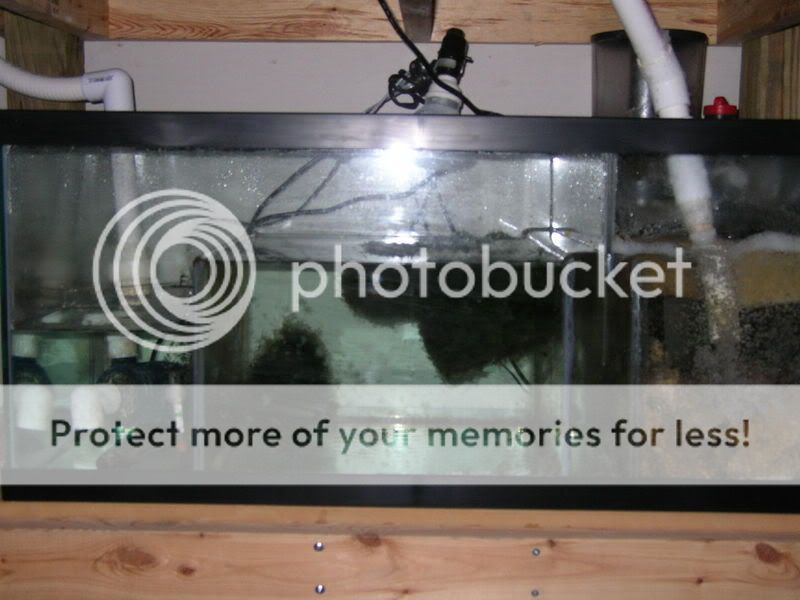
This is My fuge. This is on my reef tank.

DSCN0908.jpg


A refugium is either another seperate tank, or a sump that has a fuge built into it. A fuge is a place for algae's to grow to help reduce nitrates and phosphates. It is also used to house live foods for breeding.

They are a great addition. In my case since I have the fuge built into my sump(filter) It makes water changes a breeze. Everything settles in the sump and can easily be cleaned out without disturbing the main tank.

You can set one anytime you like.
 
Ever seen those shrimp feeding kits they sell at your LFS that hatch brine shrimp in a little box that hangs off/inside your aquarium, and when the brine shrimp get big and strong, they leave the roost and meet their doom at the hands of your fish?

That is, in essence, a refugium. It's to grow tiny, easily annihilated lifeforms in a safe environment, so they can spill over into your display, and feed voracious and picky eaters. More common with Marine tanks as there are more fish with a bigger/more exclusive appetite in reef systems, such as the Moorish Idol.

It is also used in a somewhat inverted sense, that instead of adding to the bioload, it subtracts! By this I mean that people use them to house unsightly/weed-like plants or large quantities of liverock, that specialize in consuming a large amount of waste/pollutants. It is also useful to have as a "time out" spot for fish that are breeding, temporarily aggressive, or competitive eaters, without the risk of water shock.
 
AquariaCentral.com