


My first 29gal Fowlr
- Thread starter egkid
- Start date
You are using an out of date browser. It may not display this or other websites correctly.
You should upgrade or use an alternative browser.
You should upgrade or use an alternative browser.

Thank you. Heres more pics with the 10k's on.
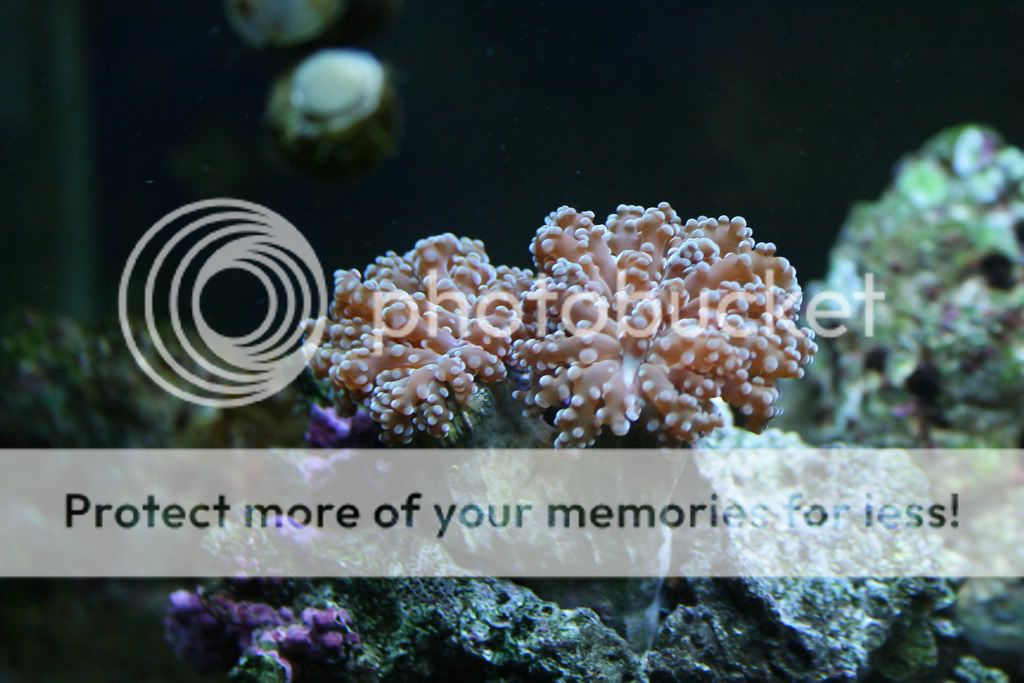
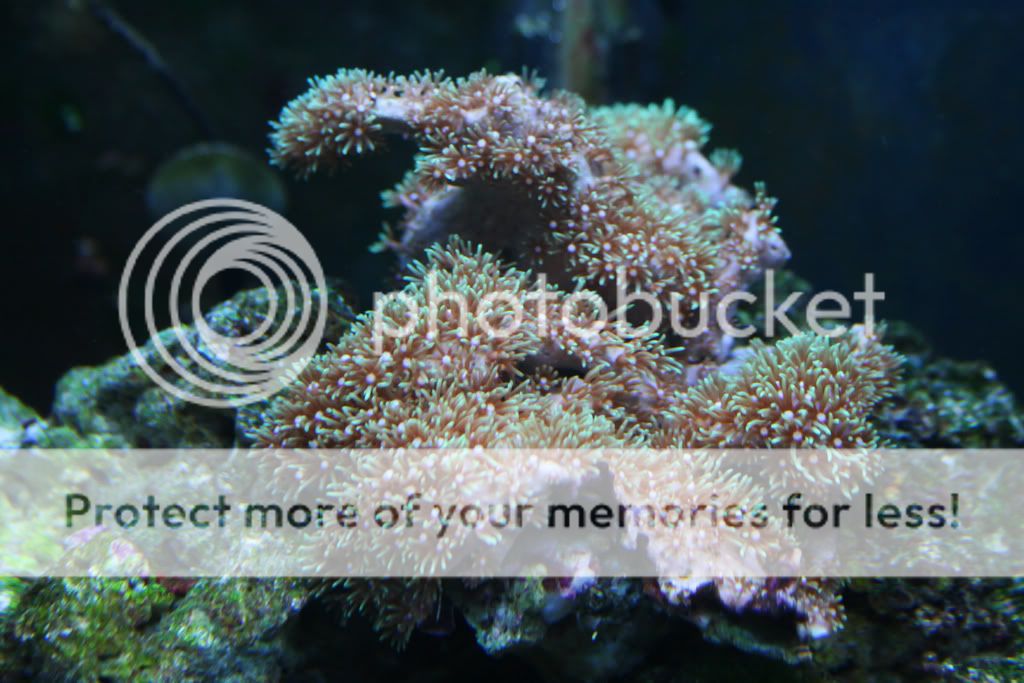
My GSP's finally came out
And how nasty the tank looks, I vacuum the substrate once a week during a water change but the cyano seems to come back twice as much. I'm thinking all the algea and everything was caused by me initially filling the tank with tap water so far that is my only regret with the tank.
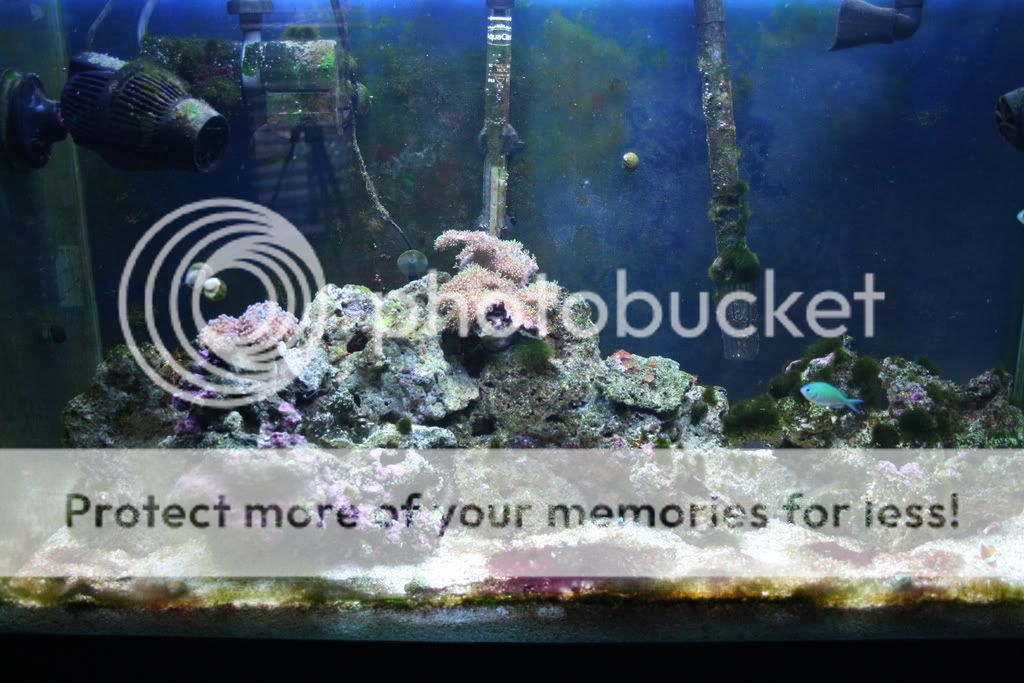
My GSP's finally came out
And how nasty the tank looks, I vacuum the substrate once a week during a water change but the cyano seems to come back twice as much. I'm thinking all the algea and everything was caused by me initially filling the tank with tap water so far that is my only regret with the tank.
Is the cyano just on the sand?
What are your params at?
Is your photo period at a minimum, as well as nitrates and phosphates?
How is the flow over the bad spots?
Next time you vacuum it, use a slow sypon flow, allowing you to get it all without removing water to quickly. Once you get it all, vacuum any you see daily. It may be a pain, but as you know it grows really fast. Do your best to starve it of what it needs: light, trates, phos, low flow areas. Your tank is new and is going through some very common stages. Keep at it, you'll be through it soon.
What are your params at?
Is your photo period at a minimum, as well as nitrates and phosphates?
How is the flow over the bad spots?
Next time you vacuum it, use a slow sypon flow, allowing you to get it all without removing water to quickly. Once you get it all, vacuum any you see daily. It may be a pain, but as you know it grows really fast. Do your best to starve it of what it needs: light, trates, phos, low flow areas. Your tank is new and is going through some very common stages. Keep at it, you'll be through it soon.

I agree with BToast on everything. Syphon the sand daily, maybe cut back on light cycle, cut back on feeding, maybe get some turbo snails to help clean the hair algae, and get some more flow going.
What you are going through is definately typical to what most people setting up their first SW tank deal with. This is usually the make or break point for most people though. Now you have to really get involved with maintanence/testing or else the algae will consume everything and crash the tank. Either people start to do more and get things under control, or they throw in the towel and this very common stage in a tanks development.
Here are some helpful items I have found and use from years of experience:
1. Phophate remover, aka GFO, is a must have item IMO. Personally I swear by RowaPhos and only use that in a reactor, but it is about 2x as much as Phosban. In your case I would suspect you have high silicates as well due to using tap water in the beginning.
2. Chemi-Pure + Purigen, 2 great products to help remove bad stuff in the tank.
3. Red Slime Remover - Great product to remove Cyano, follow the instructions and do back to back treatments to really remove cyano. Everyone deals with cyano, no matter how long the tank is setup. One or 2 days of higher than normal heat will bring out cyano fast in anyones tank. This won't get rid of it if you don't address the cause of it though, but it is a good product to get the tank back into a more manageble state so you can find and solve the source of the problem, either heat, overfeeding, lack of flow are the culprits.
4. Phosguard - Great product to remove phosphates and silicates in a hurry. Media only last a few days though, but another great product to get your parameters back down to a managable state while you find the source and solution to phosphate/silicate issues.
High Phosphates = lots of hair algae/diatom (brown algae in sand)/cyano - caused by overfeeding/bad water
High Silicates = usually caused by bad water, either tap, or bad membranes on RO filters
High Nitrates = Not enough bacteria in the tank to balance the bio-load + not enough water changes. You can have less live rock in a tank if your willing to do greater water changes to keep nitrates low.
Low Flow = cyano and hair algae outbreaks in spots
What you are going through is definately typical to what most people setting up their first SW tank deal with. This is usually the make or break point for most people though. Now you have to really get involved with maintanence/testing or else the algae will consume everything and crash the tank. Either people start to do more and get things under control, or they throw in the towel and this very common stage in a tanks development.
Here are some helpful items I have found and use from years of experience:
1. Phophate remover, aka GFO, is a must have item IMO. Personally I swear by RowaPhos and only use that in a reactor, but it is about 2x as much as Phosban. In your case I would suspect you have high silicates as well due to using tap water in the beginning.
2. Chemi-Pure + Purigen, 2 great products to help remove bad stuff in the tank.
3. Red Slime Remover - Great product to remove Cyano, follow the instructions and do back to back treatments to really remove cyano. Everyone deals with cyano, no matter how long the tank is setup. One or 2 days of higher than normal heat will bring out cyano fast in anyones tank. This won't get rid of it if you don't address the cause of it though, but it is a good product to get the tank back into a more manageble state so you can find and solve the source of the problem, either heat, overfeeding, lack of flow are the culprits.
4. Phosguard - Great product to remove phosphates and silicates in a hurry. Media only last a few days though, but another great product to get your parameters back down to a managable state while you find the source and solution to phosphate/silicate issues.
High Phosphates = lots of hair algae/diatom (brown algae in sand)/cyano - caused by overfeeding/bad water
High Silicates = usually caused by bad water, either tap, or bad membranes on RO filters
High Nitrates = Not enough bacteria in the tank to balance the bio-load + not enough water changes. You can have less live rock in a tank if your willing to do greater water changes to keep nitrates low.
Low Flow = cyano and hair algae outbreaks in spots
Is the cyano just on the sand?
What are your params at?
Is your photo period at a minimum, as well as nitrates and phosphates?
How is the flow over the bad spots?
Next time you vacuum it, use a slow sypon flow, allowing you to get it all without removing water to quickly. Once you get it all, vacuum any you see daily. It may be a pain, but as you know it grows really fast. Do your best to starve it of what it needs: light, trates, phos, low flow areas. Your tank is new and is going through some very common stages. Keep at it, you'll be through it soon.
Parameters as of now are
Ammonia 0
Nitrite 0
Nitrate 0
Phosphate 0
Salinity 1.025
Temp 79.0F
Actinics come on at around 10:30am off at 8pm
10ks on at 10:45am off at 7:00pm
The flow isn't too great where the cyano is I have the koralia 2 aimed slightly above where the worst area is in the front. If I aim it any lower my frogspawn will be in the direct path and I think that'd be too much flow for it, and the spot where it's now I really like. Hopefully syphoning everyday will take care of the problem, along with a phosphate remover will do the trick.
I agree with BToast on everything. Syphon the sand daily, maybe cut back on light cycle, cut back on feeding, maybe get some turbo snails to help clean the hair algae, and get some more flow going.
What you are going through is definately typical to what most people setting up their first SW tank deal with. This is usually the make or break point for most people though. Now you have to really get involved with maintanence/testing or else the algae will consume everything and crash the tank. Either people start to do more and get things under control, or they throw in the towel and this very common stage in a tanks development.
Here are some helpful items I have found and use from years of experience:
1. Phophate remover, aka GFO, is a must have item IMO. Personally I swear by RowaPhos and only use that in a reactor, but it is about 2x as much as Phosban. In your case I would suspect you have high silicates as well due to using tap water in the beginning.
2. Chemi-Pure + Purigen, 2 great products to help remove bad stuff in the tank.
3. Red Slime Remover - Great product to remove Cyano, follow the instructions and do back to back treatments to really remove cyano. Everyone deals with cyano, no matter how long the tank is setup. One or 2 days of higher than normal heat will bring out cyano fast in anyones tank. This won't get rid of it if you don't address the cause of it though, but it is a good product to get the tank back into a more manageble state so you can find and solve the source of the problem, either heat, overfeeding, lack of flow are the culprits.
4. Phosguard - Great product to remove phosphates and silicates in a hurry. Media only last a few days though, but another great product to get your parameters back down to a managable state while you find the source and solution to phosphate/silicate issues.
High Phosphates = lots of hair algae/diatom (brown algae in sand)/cyano - caused by overfeeding/bad water
High Silicates = usually caused by bad water, either tap, or bad membranes on RO filters
High Nitrates = Not enough bacteria in the tank to balance the bio-load + not enough water changes. You can have less live rock in a tank if your willing to do greater water changes to keep nitrates low.
Low Flow = cyano and hair algae outbreaks in spots
To run a phosphate remover such as rowaphos or phosban would I need a phosphate reactor, bare with me as I haven't researched these kind of things

Phosgaurd would just be inserted into my canister filter correct? Now would this be the cheaper solution to using a phosphate reactor, but not as long term?
How many degrees would it be safe to raise the temp too? during the day it gets as high as 81F and at night my heater kicks on at 78F
Maybe I'll add another koralia nano temporarily to get more flow to those areas.
And how do I know what's causing this outbreak? Going by my parameters it either has to low flow or too much light right?
Phosban and rowaphos can be run in a bag in a canister filter, but like most media, it works much better in a reactor.
Phosguard is like a super fast phosphate reactor for short term use. It will do the same as a phosphate reactor but the media will be used up much faster. Yes, you can put this in a bag in a canister filter as well.
Anything above 82 you usually start having cyano problems. Still, I find even above 80 it starts to get difficult to keep cyano away. It just doesn't get out of control fast in the 80-82 range, but it does slowly appear if other conditions are right.
The most common thing I think causes cyano and hair algae is overfeeding. For me, I can put in a small piece of Rod's food the size of my pinky fingernail and that is enough to feed 14 fish. I make my fish work the rest of the time keeping the tank clean, picking off rocks, sifting sand, etc. If you keep your fish too well fed they will neglect their natural duties. I have seen that with angels and gobies especially. When I used to overfeed they would never sift sand or pick algae off the rocks, but since learning more restraint in the feeding area, they work harder and the tank stays cleaner, and my fish look as fat and healthy as ever.
Phosguard is like a super fast phosphate reactor for short term use. It will do the same as a phosphate reactor but the media will be used up much faster. Yes, you can put this in a bag in a canister filter as well.
Anything above 82 you usually start having cyano problems. Still, I find even above 80 it starts to get difficult to keep cyano away. It just doesn't get out of control fast in the 80-82 range, but it does slowly appear if other conditions are right.
The most common thing I think causes cyano and hair algae is overfeeding. For me, I can put in a small piece of Rod's food the size of my pinky fingernail and that is enough to feed 14 fish. I make my fish work the rest of the time keeping the tank clean, picking off rocks, sifting sand, etc. If you keep your fish too well fed they will neglect their natural duties. I have seen that with angels and gobies especially. When I used to overfeed they would never sift sand or pick algae off the rocks, but since learning more restraint in the feeding area, they work harder and the tank stays cleaner, and my fish look as fat and healthy as ever.
Hmm I've been feeding a pinch of pencil tip sized pellets once a day for my 2 clowns, 2 green chromis, 15 blue legged hermits, 5 olive nerite snails, 1 astrea snail and 13 nassarius snails. you think that would be too much? Should I feed every 2 or 3 days?
Naw, that sounds fine. As I said, that is usually the cause, but in your case with that amount of food that sounds good.
