Sand, sand sand.
Home Depot sand, silica sand, beach sand, pink sand, live sand, dead sand, shallow sand, deep sand and even deeper sand.
I see a lot of references to sand these days... entire sections of some sites are dedicated to it. IMHO, the jury is still out on using sand for marine fish set ups. I have spent a lot of time looking at this on many sites and there is clearly a lot of confusion, differing opinions and questions regarding the sand issue. Some are claiming their deep sand beds are becoming magic nitrate reducing machines, others are watching the DSB suddenly turn into a hydogen sulphide bomb or algae/diatom-fest.
Certainly the remote planted DSB refugium holds promise, but some are adding deep layers of sand, even silica sand, into the bottom of their fish tanks, and adding rock on top of that, often creating dangerous situations in my experience. Some very reliable sources claim the sand should be less than 1/2 inch or deeper than 5 inches. Some claim the sand should be sifted and maintained, others insist the sand should be layered and never disturbed. Some prescribe a plenum under the sand, others have seen their sand turn into solid concrete when their water chemistry strayed. Some call deep sand "mud" and suggest it will cure HLLE in your fish, others claim sand should not be used for marine fish tanks at all, esp. those with moderate to robust fish populations. It's no wonder we have such a high failure rate in this hobby. As usual, I am seeing a lot of confusion and mixed advice based on A:fish only/B:LR/C:true reef system esperience. My advice is; be careful with sand in fish tanks... be careful using mixed advice which often produces failure. 1/2 advice from source A and 1/2 advice from source B will produce a "hybrid" system which has no proven track record or limited long term results.
Research the systems you are seeking to mimic; when you decide on the best system, sand, plan, etc. then stick with it, but make sure the template has a long term success record and make sure you are following the pattern closely and not leaving out an important part or straying from the intended goals.
(for example trying to maintain a moderate to heavy bio load using a filter designed for sparse populations). As more and more hobbyists succeed and fail with sand perhaps we will all learn... but again, use caution; I remember not long ago when trickle filters were touted as the silver bullet to all our problems.
Home Depot sand, silica sand, beach sand, pink sand, live sand, dead sand, shallow sand, deep sand and even deeper sand.
I see a lot of references to sand these days... entire sections of some sites are dedicated to it. IMHO, the jury is still out on using sand for marine fish set ups. I have spent a lot of time looking at this on many sites and there is clearly a lot of confusion, differing opinions and questions regarding the sand issue. Some are claiming their deep sand beds are becoming magic nitrate reducing machines, others are watching the DSB suddenly turn into a hydogen sulphide bomb or algae/diatom-fest.
Certainly the remote planted DSB refugium holds promise, but some are adding deep layers of sand, even silica sand, into the bottom of their fish tanks, and adding rock on top of that, often creating dangerous situations in my experience. Some very reliable sources claim the sand should be less than 1/2 inch or deeper than 5 inches. Some claim the sand should be sifted and maintained, others insist the sand should be layered and never disturbed. Some prescribe a plenum under the sand, others have seen their sand turn into solid concrete when their water chemistry strayed. Some call deep sand "mud" and suggest it will cure HLLE in your fish, others claim sand should not be used for marine fish tanks at all, esp. those with moderate to robust fish populations. It's no wonder we have such a high failure rate in this hobby. As usual, I am seeing a lot of confusion and mixed advice based on A:fish only/B:LR/C:true reef system esperience. My advice is; be careful with sand in fish tanks... be careful using mixed advice which often produces failure. 1/2 advice from source A and 1/2 advice from source B will produce a "hybrid" system which has no proven track record or limited long term results.
Research the systems you are seeking to mimic; when you decide on the best system, sand, plan, etc. then stick with it, but make sure the template has a long term success record and make sure you are following the pattern closely and not leaving out an important part or straying from the intended goals.
(for example trying to maintain a moderate to heavy bio load using a filter designed for sparse populations). As more and more hobbyists succeed and fail with sand perhaps we will all learn... but again, use caution; I remember not long ago when trickle filters were touted as the silver bullet to all our problems.


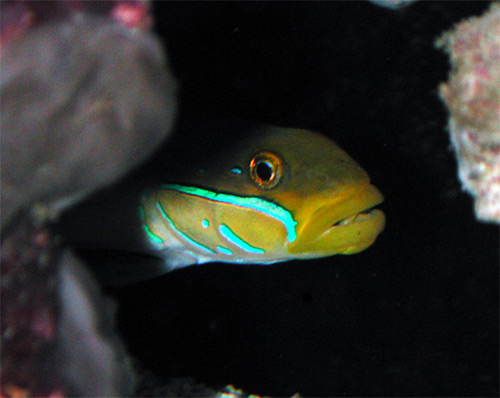
 Every Goby I've seen sits on the bottom and sifts sand. Ours swims all over the tank sprinkling sand everywhere
  I'm looking forward to adding a sump/refuge in a few weeks so I can maintain a normal sandbed with pods, etc. In the meantime, he's not afraid to eat chopped clams, flake food and whatever else is offered. I also ad Cyclopeeze so he gets something from his daily sand sifting. "Earthmover" as we call him also burrows under my LR so my sand bed is down to the glass in some areas and about 4" deep in other areas