PDA

View Full Version : Red Cherry Shrimp 101-The Basics


The Zigman
02-01-2009, 5:48 PM
I have seen quite a few people with questions concerning RCS lately, so I thought I would put this little tutorial together...

Scientific Names:
New - Neocaridina Heteropoda (red)
Formerly Known as - Neocaridina Denticulata Sinensis (red)

A few facts:
Adult RCS are about 1 inch long (2.2cm)
They are scavengers, they eat small amounts of algea, plant matter, left over fish food, just about anything.
They will not rid your tank of algae, they aren't an effective algae control device.
Average life span is 1.5-2 years.

Temp
65F -80+F (I have several in my 85F discus tank)
Ph
from slightly acidic to alkaline 6.5 - 8.0
Hardness
3.5-15dkh

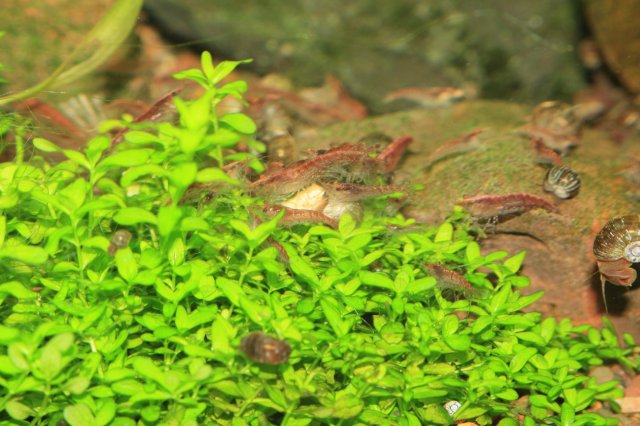
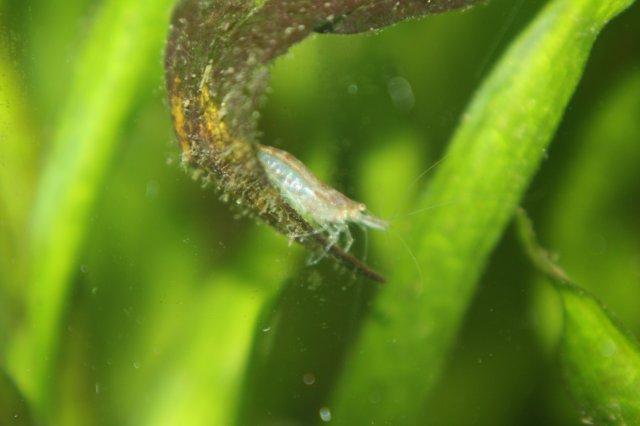
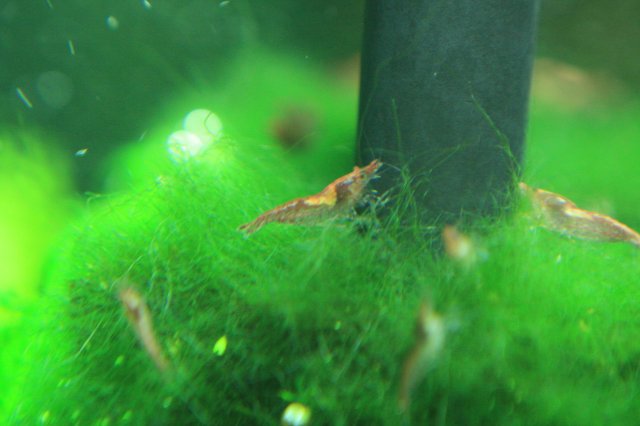
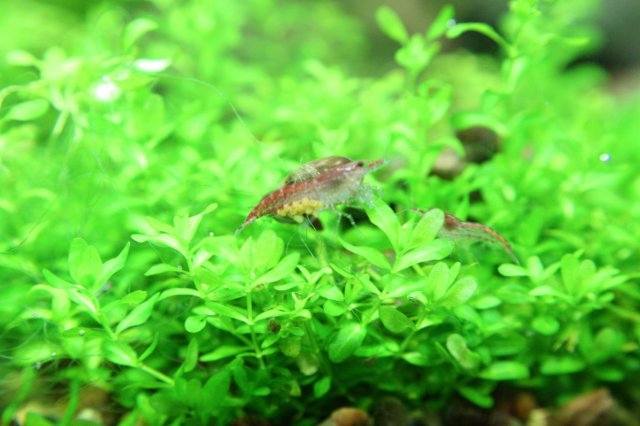
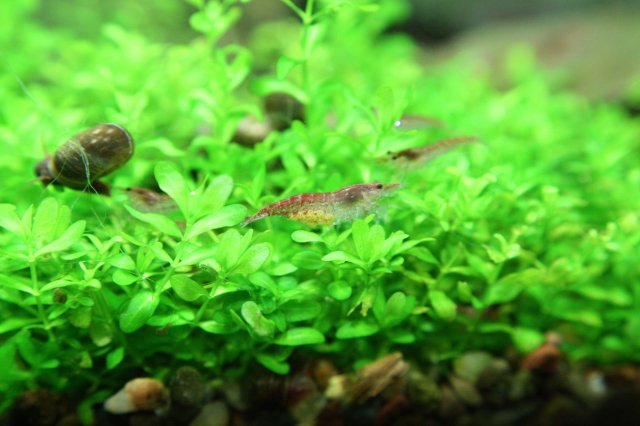
these are adult RCS
The Zigman
02-01-2009, 5:50 PM
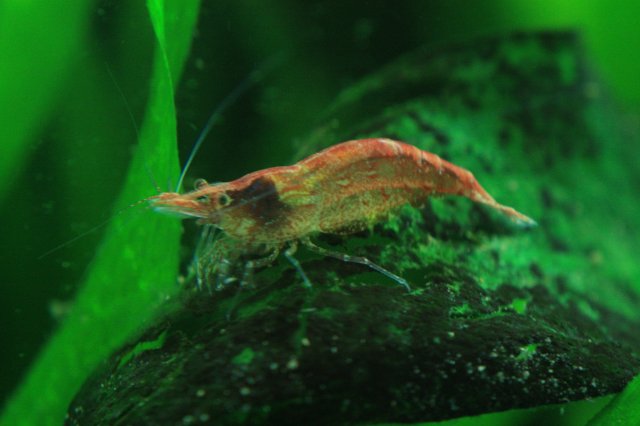
This is an adult Female..
Notice the even red coloration...

The Zigman
02-01-2009, 5:52 PM
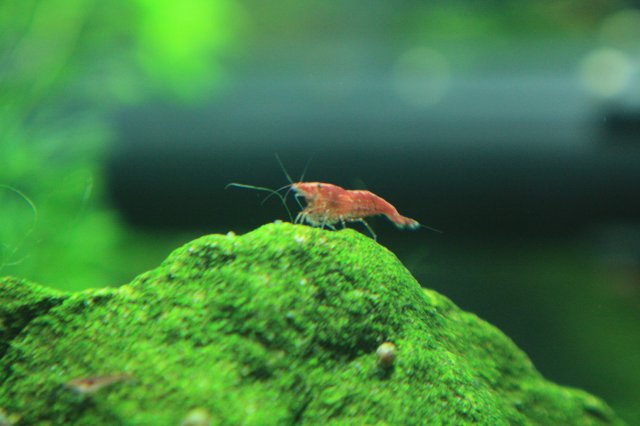
This is an Adult Male RCS.
Notice the thinner abdomen, and lack of red coloration..
Looks like a large juvenile shrimp

The Zigman
02-01-2009, 5:55 PM
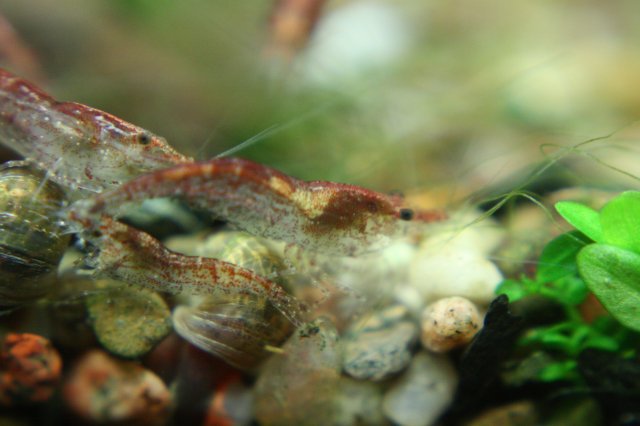
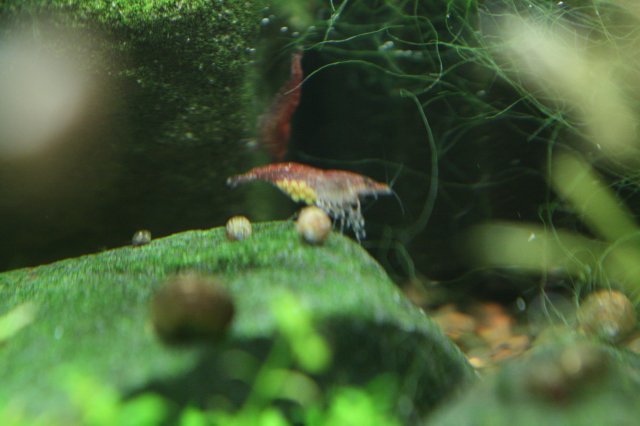
These are saddled females. The visable yellow "saddle" is the reproductive organs of the shrimp getting ready to do their job, these female shrimp are now producing eggs..

The Zigman
02-01-2009, 6:01 PM
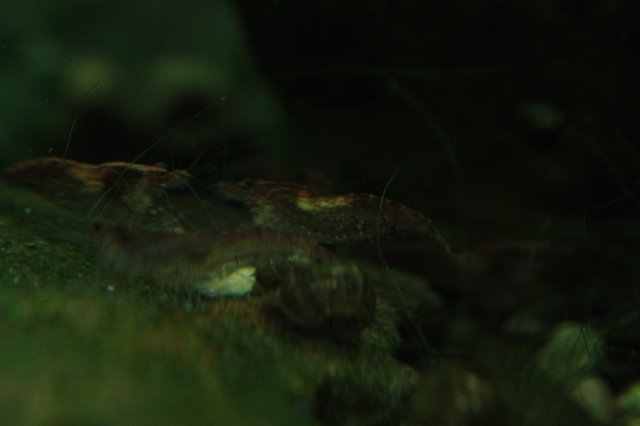
Soon a saddled female mate with a male, and produce eggs, she then carries the fertilized eggs under her swimmerettes in her tail area.. note the yellow eggs..."


Egg color can vary from yellow to green..

The Zigman
02-01-2009, 6:06 PM
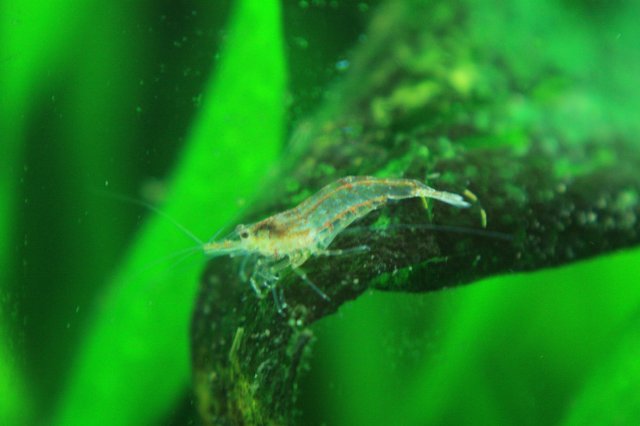
Soon the eggs will hatch into baby RCS, these little shrimplets are TINY versions of their parents. They are very small when they are newborns, and these pics show them a little bigger that that.

if you are looking to breed any RCS, be aware that your filter will suck them in, so it is recommended that a foam pre-filter be installed on the intake tube of your filter. Also the shrimplets should be protected from any predators, even adult RCS are a tasty snack to any fish big enough to eat them..

The Zigman
02-01-2009, 6:10 PM
Well thats it! this concludes my tutorial, I hope you have enjoyed the ride.
RCS are fun to watch, they are very active, and reproduce rapidly. They are easy to take care of, and with a little patience, a few shrimp can start a whole colony!

One thing I forgot to mention, it that RCS are a little sensitive to nitrate, so keep up with the water changes, and keep that nitrate level at 20PPM or less.

All Images contained in this thread are of shrimp in my tanks, and all images were shot by me using a Canon Eos XSI.

Thanks for coming, and enjoy your day.
Class Dismissed!!

leeser28
02-01-2009, 6:12 PM
Excellent tutorial. I'm getting my first RCS this week and looking forward to watching the cycle first hand! Great pics too!!! Lisa

Hollygirl
02-01-2009, 6:41 PM
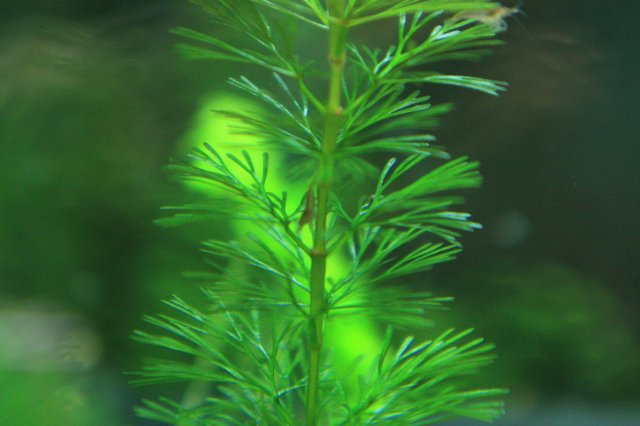
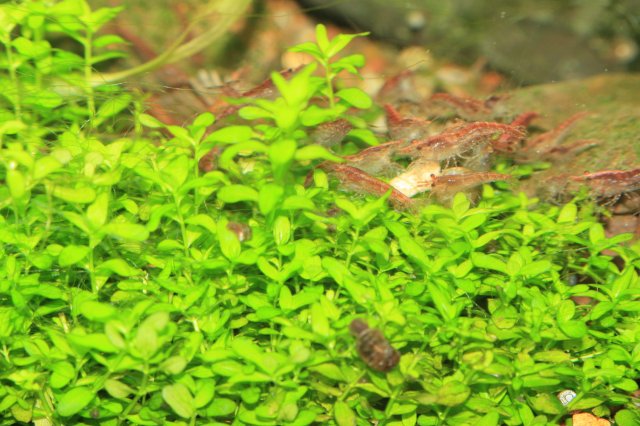
Thank you Mr. Zigman! Very educational! What is that leafy plant in several of the shots? Is that moneywort?

Hollygirl
02-01-2009, 6:41 PM
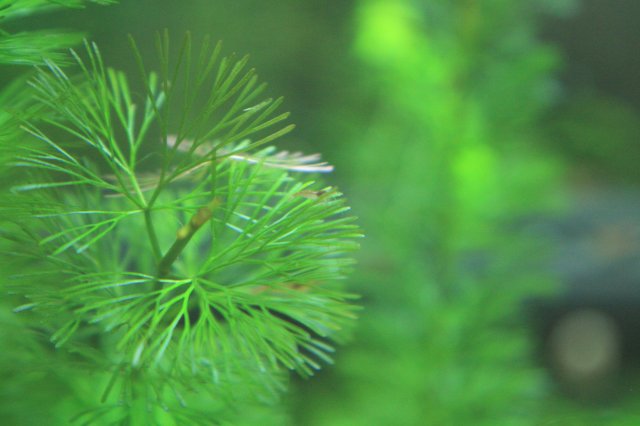
Top pics - not the cabomba

msjinkzd
02-01-2009, 6:59 PM
HM? Nice tutorial zig :)

pik01
02-01-2009, 7:03 PM
an excellent tutorial! I always appreciate one with pictures :D

Might I suggest that you mention that it's very easy to overfeed and they eat very little? How do we go about getting this stickied? :)

Hollygirl
02-01-2009, 7:21 PM
A sticky for this thread is an excellent idea.

The Zigman
02-01-2009, 7:57 PM
Thank you Mr. Zigman! Very educational! What is that leafy plant in several of the shots? Is that moneywort?


You're Welcome!

That is HM.
Hemianthus Micranthemoides
AKA baby Tears.

Thanks for fixing my typos Jinkzie!
I was going to re read it, and had to go get some parts..

DSeucrocher
02-11-2009, 4:00 PM
Can a bristlenose pleco live with them? And not eat the babies? What about pond snails? They arent quick enough are they for the babies? Trying out breeding them, guy at LFS gave me what he thought were females all pretty red, and I have a clearer cherry already that will hopefully do the biznazz:) How long does it take a female to hatch her eggs? Does the shock from transport ruin the brood?

Are pencilfish and featherfin rainbows OK? Temp and PH are fine just need to stay on top of water changes. Last question, if I left my tap water sit for 24 hours, does it remove all the chorline rending it good for fish? Is it the same as using Prime?

The Zigman
02-11-2009, 4:08 PM
I'll answer what I can.


Can a bristlenose pleco live with them?
IDK, I dont have one..
And not eat the babies? What about pond snails?
Pond snails are fine.
They arent quick enough are they for the babies?
Pond snails dont eat baby shrimp.
Trying out breeding them, guy at LFS gave me what he thought were females all pretty red, and I have a clearer cherry already that will hopefully do the biznazz:) How long does it take a female to hatch her eggs?
Usually after a shrimp becomes berried , the eggs hatsh in about 2weeks. Does the shock from transport ruin the brood?
they handle transportatioon very well


Are pencilfish and featherfin rainbows OK? Temp and PH are fine just need to stay on top of water changes. Last question, if I left my tap water sit for 24 hours, does it remove all the chorline rending it good for fish? Is it the same as using Prime? I would suggest using prime if you have chlorinated water, just to be sure.

DSeucrocher
02-11-2009, 4:13 PM
Thank you!

shawnhu
02-11-2009, 4:14 PM
Zigman,

I read somewhere that Neocaridina species reproduce sexually, with sexual organs. The make deposits his man-juice in the female, allowing the eggs that pass through to get fertilized. I've never witnessed such, but that is my readings. From my understanding, your tutorial seems to mention that the females drop their eggs, the male fertilizes them, then she picks them back up?

Just wanted to clarify, a great overview of these fine shrimp though.

pik01
02-11-2009, 4:15 PM
tap water may have chlorine in it which will gas off eventually but many cities now also use chloramine, which will not gas off. Prime treats for both :)

The Zigman
02-11-2009, 4:21 PM
Zigman,

I read somewhere that Neocaridina species reproduce sexually, with sexual organs. The make deposits his man-juice in the female, allowing the eggs that pass through to get fertilized. I've never witnessed such, but that is my readings. From my understanding, your tutorial seems to mention that the females drop their eggs, the male fertilizes them, then she picks them back up?

Just wanted to clarify, a great overview of these fine shrimp though.

Hmm, I have never read that, I have always read about the external fertilization, but have not witnessed it either..
I'll watch a little more closely and see what happens when the lights go out.. Now where is that Barry White CD?

H3D
02-11-2009, 6:06 PM
I think it should be pointed out that not all Neocaridina Heteropoda are red.

Mokomon
02-11-2009, 6:19 PM
*Takes notes*


:D

shawnhu
02-17-2009, 10:56 AM
Hmm, I have never read that, I have always read about the external fertilization, but have not witnessed it either..
I'll watch a little more closely and see what happens when the lights go out.. Now where is that Barry White CD?

http://www.petshrimp.com/articles/faq.html

There's the read. I've not witnessed it as well.

Here's a quote for you lazy folks:


"2. How do shrimp reproduce?
Shrimp reproduce via eggs. Eggs are produced in the ovaries of the female, which may or may not show up (depending on coloration of species) as a light or dark patch right behind the head area of the female. After the female molts, the male mates with the female (facing each other) depositing his sperm at the opening of the female genital opening. Shortly after, the eggs migrate from the female's ovaries through her genital opening to the abdomen. As the eggs pass through the female genital opening, they are fertilized by the sperm that had been deposited there by the male earlier. The eggs rest in the pleopod ("swimmerettes", swimming legs) area of the female. She carries them around wherever she goes. Depending on species, it may take anywhere between 2 weeks to 2 months for the young to hatch. Most dwarf shrimp species take 3-4 weeks to hatch. The hatchlings are tiny, barely visible and only a few millimeters long. Some shrimp species produce fully developed young, whereas others produce free-floating larvae that usually need a special saltwater/brackish water setup to be reared to the postlarval (i.e. benthic mini-shrimp) stage, at which point they can be acclimated to freshwater. Time until hatching depends on temperature. The higher the temperature (within reason of course) the shorter the time until hatching. The young hatch directly from among the pleopods. The female does not deposit the eggs anywhere. " - Mustafa Ucozler

bs6749
02-17-2009, 9:05 PM
I also wanted to point out that RCS are in fact great algae eaters depending on the type of algae present. I put an algae covered plant into my 55g RCS tank and that thing was spotless in less than 15 minutes, not kidding.

saram521
02-17-2009, 9:35 PM
I also wanted to point out that RCS are in fact great algae eaters depending on the type of algae present. I put an algae covered plant into my 55g RCS tank and that thing was spotless in less than 15 minutes, not kidding.

It also depends on how many shrimp you have in your colony as to how well certain kinds of algae will disappear. Not very many people dedicate a 55g to shrimp, and instead have smallers tank of a couple hundred shrimp. I think zig wanted to make people aware that they cannot rely on neo shrimp to get rid of their algae problems.

pik01
02-17-2009, 9:45 PM
*imagines a 55g shrimp-only tank* Shrimptropolis!

The Zigman
02-18-2009, 2:14 AM
It also depends on how many shrimp you have in your colony as to how well certain kinds of algae will disappear. Not very many people dedicate a 55g to shrimp, and instead have smallers tank of a couple hundred shrimp. I think zig wanted to make people aware that they cannot rely on neo shrimp to get rid of their algae problems.

Yep!
That was my point. I have about 200 RCS in a 10 gal tank, and there is plenty of algae.. If you want an algae eater buy a Bushynose or a few SAEs..

looney417
02-18-2009, 2:42 AM
hey, i know they are sensitive to nitrate, but if i stuff the tank (a 10gal) with java moss, would it be safe to conclude that there is always little nitrate? and theres nothing in the tank besides the shrimps (about 10) and moss...

pik01
02-18-2009, 2:51 AM
java moss is a slow grower and isn't a very efficient nitrate soaker, but it will help. The best way to get rid of nitrate is regular partial water changes. And it's not advisable to assume where you can be sure: it would be wise to invest in a liquid test kit if you don't already have one. The API freshwater master test kit will allow you to track ammonia, nitrite, nitrate, and pH.

Lupin
02-18-2009, 2:56 AM
Zig, it would be a wonderful idea if you compile all of this into an article.

wendamus
02-18-2009, 3:23 AM
Trying to catch a few leftover questions.


Can a bristlenose pleco live with them? And not eat the babies?


My BN and Dwarf BN both did fine, completely ignored them. They're so exclusive to a veggie diet that I have never seen them pay any attention to anything that moves.


Are pencilfish and featherfin rainbows OK?


I doubt it -- almost any fish that eats live food is big enough to eat the newborn shrimp, even day old guppy fry left my population static. Think of it this way, newborn Red Cherry shrimp are almost the same size as baby brine shrimp -- anything that will eat BBS will eat baby RCS.

Que
02-18-2009, 6:23 AM
Very true. All my small mouthed fish (neons, cardinals, harlequin rasboras and rummy nose) eat shrimp fry. The trick is to have enough plants to provide enough cover so that enough shrimp survive to maturity and continue the life cycle to keep a nice population working for you. It doesn't hurt to keep a small shrimp only tank to be on the safe side.

Q

The Zigman
02-18-2009, 9:41 AM
IME, if the shrimplets will fit in the fishes mouth, they will become food..
except for the ones that can hide really well.

shawnhu
02-19-2009, 5:47 PM
I just wanted to also add this link as to how these shrimp mate.

http://www.planetinverts.com/shrimp_reproduction.html

mak3mydae
02-19-2009, 5:51 PM
in the first picture of the saddled females, what kind of moss is that?

pik01
02-19-2009, 6:54 PM
impossible for me to tell, i don't even know if it's a moss

Chuxter
02-19-2009, 7:41 PM
Not really worried about them reproducing but can the adults survive with Angel Fish in the tank?

Que
02-19-2009, 8:35 PM
Not really worried about them reproducing but can the adults survive with Angel Fish in the tank?


Not in my tank. I have 3 angels in a 75 and whenever I put RCS in the tank they're gone in days. This is a tank with good plant cover. The SAEs root 'em out and the angels snap 'em up.

Q

werecatrising
03-01-2009, 11:33 PM
How big do they need to be before they start breeding?

thincat
03-02-2009, 1:45 AM
Okay, I got my RCS in saltwater. Will they breed in water that is sg 1.025 and a PH of 8.0...?

bitbot
03-02-2009, 2:02 AM
Great tutorial.
A little more help on how much to feed RCS would be helpful - I am a bit at a loss with this, since they eat so much slower than fish, and graze almost constantly.

Cliff
03-04-2009, 11:12 AM
Thanks for info. Well presented.

The Zigman
03-04-2009, 11:28 AM
Great tutorial.
A little more help on how much to feed RCS would be helpful - I am a bit at a loss with this, since they eat so much slower than fish, and graze almost constantly.

I just see how long it takes them to eat. Now with about 200 shrimp they eat everything i drop it the tank. I usually feed them every day, but in the beginning, i fed them every other day. I usually mix it up, shrimp pellets, algae flakes, and even cichlid pellets. they eat nearly anything.


Thanks for info. Well presented.
hey thanks man!

yhbae
03-13-2009, 1:18 AM
Do you need to keep the tank top tight? i.e. are they good at escaping from the tank if you have any narrow spaces? I'm talking about spaces around heater wires as an example.

ayra321
07-30-2009, 11:51 AM
wow good job.great pics.great info!

Wycco
07-30-2009, 12:00 PM
Okay, I got my RCS in saltwater. Will they breed in water that is sg 1.025 and a PH of 8.0...?

They're tolerant of salt? I knew a lot of f/w shrimp were didn't realise RCS were.

Interesting... I assume you have to aclimatise them slowly. They should be fine for a brackish tank too then I assume.